
July 2026, Volume 37, Issue 3
Editor’s Note: The Journal of Democracy’s Next Chapter
Read the full note here.
July 2026, Volume 37, Issue 3
Read the full note here.
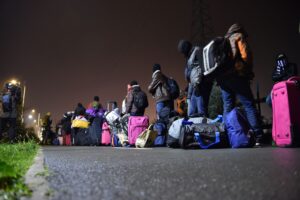
July 2026, Volume 37, Issue 3
Global migration is quietly altering democratic politics in the places people leave behind. It is not just a shift in labor; it is a shift in democratic values. It may be gradual, but it can become a hidden demographic underpinning of authoritarianism.
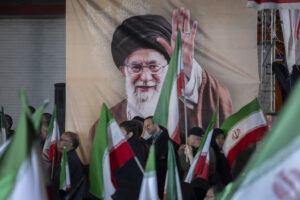
July 2026, Volume 37, Issue 3
The U.S.-Israeli war in Iran has elevated the Islamic Revolutionary Guard Corps from the regime’s chief coercive tool to the regime itself. Expect an Iran that is more aggressive abroad and more repressive at home.
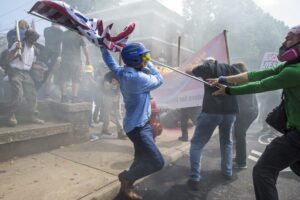

July 2026, Volume 37, Issue 3
Democracies have always sparked conflict, disagreement, and deep ideological divisions. Polarized politics are hardly rare in democratic life. So under what conditions does polarization turn violent, and how can this danger be contained?
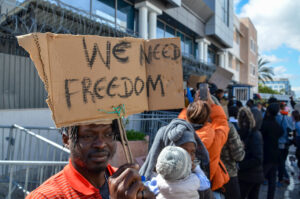
July 2026, Volume 37, Issue 3
Less than one percent of philanthropy is directed to democratic freedoms. Yet freedom is essential for everything—health, education, climate—philanthropy tries to accomplish. It is the most underpriced asset, and we are due for a market correction.
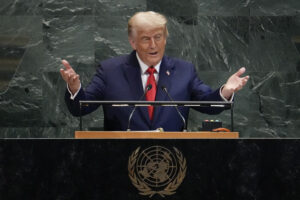
July 2026, Volume 37, Issue 3
No other democratic power will be able to uphold a new international order. Autocrats and illiberal coalitions are already rushing into the breach, and if they go unchecked, the damage will be lasting.
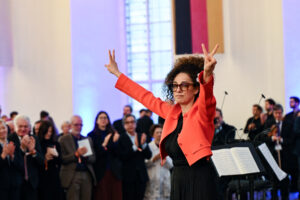
July 2026, Volume 37, Issue 3
Authoritarians actively threaten, intimidate, and murder exiles and opponents wherever they find them. While justice for victims is hard won, it is possible. Here is how democracies can push back.

July 2026, Volume 37, Issue 3
He did the hard work of defeating Viktor Orbán. But Hungary’s new prime minister faces the harder task of undoing the damage his predecessor wrought. Can he do it while avoiding the traps Orbán left in his wake?
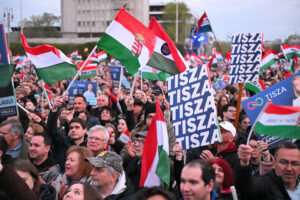
July 2026, Volume 37, Issue 3
Viktor Orbán was ousted by an innovative, grassroots, nationwide campaign run by local civic groups called Tisza Islands. Their success offers a new playbook for civic mobilization against aspiring autocrats.
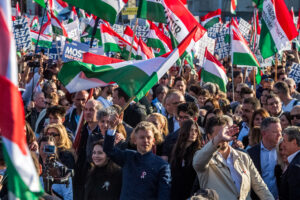
July 2026, Volume 37, Issue 3
It was long thought that, to be successful, oppositions needed to form broad-based alliances ahead of elections. But Hungary and Turkey show that a single challenger has real advantages against a would-be autocrat.
July 2026, Volume 37, Issue 3
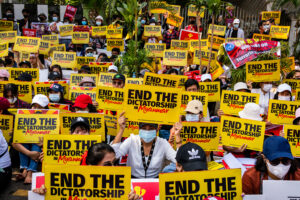
The coercive tools of modern autocracies are highly integrated, with an ability to monitor, restrict, and shape behavior at scale and in real-time. It is time for democratic movements to adapt and respond with a decentralized resistance of their own.
July 2026, Volume 37, Issue 3
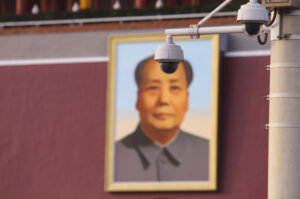
Beijing knows digital surveillance of the world’s most populous nation is technologically demanding. So the Party has hired corporations to occupy the “public-opinion battlefield” and spot the trouble before it spreads.
July 2026, Volume 37, Issue 3
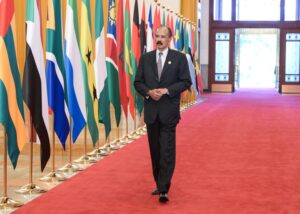
Eritrea is one of the world’s most implacable dictatorships, led by an octogenarian who shuns any hint of accountability. The country’s democratic path was never genuinely open, and it now poses a grave risk to the Horn of Africa.
July 2026, Volume 37, Issue 3
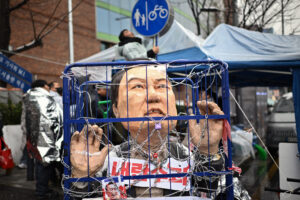
Japan, South Korea, and Taiwan are typically seen as democratic stalwarts, on par with older established democracies. But all three countries face growing pressures that threaten its political foundations.
April 2026, Volume 37, Issue 2
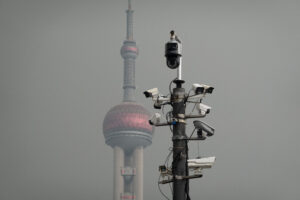
Artificial intelligence is often seen as a silver bullet for authoritarians, a breakthrough technology making repression cheaper, faster, and more precise. But it has inherent weaknesses, and dictators can’t escape these dilemmas.
April 2026, Volume 37, Issue 2
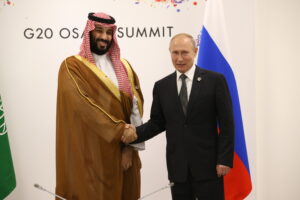
The world’s “middle powers” were once bastions of defense for a liberal rules-based international order. But no more. A new kind of authoritarian middle power has emerged, undermining democratic norms and safeguards.
April 2026, Volume 37, Issue 2
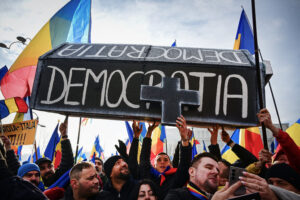
Democracy’s present difficulties were predictable. History and older theories of democratic stability should have prepared us for both democratic backsliding and the vulnerability of Western democracy we are experiencing today.
April 2026, Volume 37, Issue 2
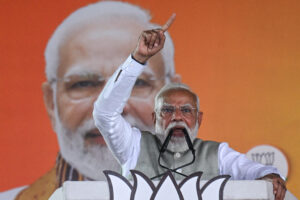
Today, the principal challenge to democracy is coming not from coups but from democratic erosion driven by elected leaders. What is behind this shift, and how can prodemocracy forces push back?
April 2026, Volume 37, Issue 2
The judiciary is widely assumed to defend democracy. Yet in reality, even when independent of elected governments, courts can endanger democracy—sometimes by enabling executives and sometimes by aggressively fighting them.
April 2026, Volume 37, Issue 2
Populism is too often treated as if it is all one thing. But what if populist politics and democratic backsliding didn’t have to go together? A closer look reveals two kinds of populism, one of which is less threatening to liberal democracy.

April 2026, Volume 37, Issue 2
Venezuela has a path to democracy, but it requires dismantling the old regime. María Corina Machado, the country’s true democratic leader, must signal her credibility as a moderate through a framework of transitional justice. It won’t be perfect justice, but it is Venezuela’s best hope.
April 2026, Volume 37, Issue 2
Decentralized governance allows communities to enact policies that reflect their values. But in the digital age, when news spreads far and fast, what’s happening in one place may inflame citizens’ attitudes thousands of miles away, magnifying political differences and division.

April 2026, Volume 37, Issue 2
Oppositions resisting autocrats or antidemocratic incumbents could once get help internationally. But the space for democracy promotion has narrowed, while oppositions face divisions within their own ranks over how to best fight back.

April 2026, Volume 37, Issue 2
Georgian society has long aspired to join the West, but the ruling party—led by the country’s richest man—is dragging the country closer to Vladimir Putin’s Russia. Georgians are still resisting, but can they halt their country’s authoritarian slide?

April 2026, Volume 37, Issue 2
An opposition party that swept into power with a 2021 electoral win was swept out by voters four years later. It failed to deliver on its promises and was beset by the same authoritarian leanings of those it had replaced.
April 2026, Volume 37, Issue 2
The military has long had the final say in Pakistani politics. In response to Imran Khan’s populist surge, the military adapted, making use of selective repression and writing its control more deeply into the country’s institutions.
April 2026, Volume 37, Issue 2
Over the last half-century, a surprising share of new democracies have put their former dictators, or the children of those dictators, back in power. What explains the electoral success of these “dictocrats” and “dictobrats”?
January 2026, Volume 37, Issue 1
Young people from Peru to Madagascar to Nepal—furious with political elites reaping the spoils of privilege and corruption—are rising up to demand change. But what happens when their movements succeed?
January 2026, Volume 37, Issue 1
While attending to the risk of majoritarian abuse, we must also guard against institutions that empower—and even entrench—authoritarian minorities.
January 2016, Volume 27, Issue 1
Across East-Central Europe, the political center ground has long been characterized by the uneasy cohabitation of liberal and illiberal norms, but the latter have been gradually overpowering the former.
January 2016, Volume 27, Issue 1
Is democracy in East-Central Europe suffering because of a lack of liberal zeal among elites, as Dawson and Hanley contend, or is it because liberal policies have failed to deliver on their promises?
January 2016, Volume 27, Issue 1
China’s government looks to Singapore, the only country in the region to modernize without liberalizing, in hopes of finding the key to combining authoritarian rule with economic progress and “good governance.”
January 2016, Volume 27, Issue 1
Although the leading authoritarian regimes are today integrated in many ways into the global system, they have not become more like the democracies; instead, they have been devising policies and practices aimed at blocking democracy’s advance.
July 2013, Volume 24, Issue 3
Authoritarian regimes that have their origins in revolutionary struggle have a much higher survival rate than other brands of authoritarianism. What accounts for their durability?
July 2013, Volume 24, Issue 3
The left-populist authoritarianism that is taking hold across a swath of Latin America bears many resemblances to the rightist populism that was once widespread in the region. There are signs, however, that the leftist variant will be an even bigger problem for liberal democracy. Listen to the podcast.
July 2013, Volume 24, Issue 3
President Rafael Correa, now entering his third term, has built a curious form of populist-authoritarian regime. He champions redistributionism and a kind of technocratic leftism while assaulting the traditional left along with such mainstays of a liberal society as the freedom of the press.
July 2013, Volume 24, Issue 3
Can a regime built by and centered around a populist strongman survive that strongman’s death? A natural experiment is now unfolding in Venezuela as a resurgent opposition and a crisis of governability converge on the would-be heirs of Hugo Chávez.
July 2013, Volume 24, Issue 3
Today’s Russian protest movement in many ways resembles past civil-rights and civil-resistance efforts in other parts of the world, from its commitment to nonviolence to its key demands—a vote that counts and equality under the law. Listen to the podcast.
July 2013, Volume 24, Issue 3
The Putin regime, having faced its first real challenge in the form of mass protests after the 2011 Duma elections, is responding with a series of laws intended to intimidate its civil society opposition, if not stamp it out altogether.
July 2013, Volume 24, Issue 3
The Arab world’s old autocracies survived by manipulating the sharp identity conflicts in their societies. The division and distrust that this style of rule generated is now making it especially difficult to carry out the kind of pact-making often crucial to successful democratic transitions.
July 2013, Volume 24, Issue 3
Not only did the Algerian regime survive the “Arab Spring,” it hardly deviated from its normal methods of authoritarian governance—patronage, pseudodemocratization, and effective use of the security apparatus.
July 2013, Volume 24, Issue 3
When this small island kingdom in the Gulf joined the wider Arab world’s political upheavals in March 2011, it was a reaction to regional events, but also a reflection of internal problems that had been festering for a decade.
July 2013, Volume 24, Issue 3
The Hashemite monarchy still fails to understand the challenges that threaten Jordan’s political order. The old playbook of limited, manipulated reform is no longer enough, but key players fail to realize it.
July 2013, Volume 24, Issue 3
In March 2013, Kenyans took to the polls in what turned out to be another disputed election. Why did the peace hold this time, unlike in 2007, and what are the implications for democracy in Kenya?
July 2013, Volume 24, Issue 3
In an effort to avoid repeating the 2007 electoral debacle, Kenya’s election commission turned to technology, but its high-tech voter-registration and vote-count processes fell short. Its experience has important lessons both for emerging democracies and for international donors.
October 2012, Volume 23, Issue 4
The Burmese transition that began in 2011 will be a protracted process. The main challenge now is to build a state in which democracy can take root and grow.
April 2012, Volume 23, Issue 2
The upheavals that have been shaking the Arab-Muslim world are revolutions in discourse as well as in the streets. Arabs are using not only traditional and religious vocabularies, but also a new set of expressions that are modern and represent popular aspirations.
April 2012, Volume 23, Issue 2
The strong state in Malaysia and Singapore best explains why their authoritarian regimes have proved so stable and enduring. That is also the reason why democratization would go smoothly in both countries—yet, paradoxically, might never happen there at all.
January 2012, Volume 23, Issue 1
If there is going to be a great advance of democracy in this decade, it is most likely going to emanate from East Asia.
January 2012, Volume 23, Issue 1
Is “authoritarian resilience” in China a passing phenomenon, or is it something more durable?
January 2012, Volume 23, Issue 1
Morocco was not immune to the 2011 upheavals in the Arab world, but the country’s monarchy deftly managed the crisis through cosmetic constitutional reform.
January 2012, Volume 23, Issue 1
Indonesia, a populous, poor, predominantly Muslim society, has been able to maintain democracy thanks to a vibrant associational life.
January 2012, Volume 23, Issue 1
The AKP’s 2011 election victory confirmed its status as the dominant force in Turkish politics, but also sparked fears that its unchecked power might threaten civil liberties. Now it must face the challenges of adopting a new constitution and dealing with the Kurdish question.
January 2012, Volume 23, Issue 1
Read the full essay here. Recent years have seen a transformation in Turkish civil-military relations—away from the traditional picture of weak elected officials overseen by a strong military, to one of a strengthened civilian government and a military with decreased influence. This article explores the questions of how this transformation has occurred, whether it will…
January 2012, Volume 23, Issue 1
Read the full essay here. In the West, Turkey is considered a model for a secular democracy in the Muslim world, yet the country finds itself mired in a crisis of civil rights and liberties under a third term of the pro-Islamic AKP government. Ironically, while the government maintains a discourse on political reform—including constitutional…
January 2012, Volume 23, Issue 1
Read the full essay here. Turkish state policy toward the Kurds, the Republic of Turkey’s largest ethnic minority, has evolved from denial and mandatory assimilation to cultural recognition to acknowledgment of the Kurds’ contested status as a political problem demanding political solutions. The election of 36 Kurdish-nationalist lawmakers, most of whom now sit in parliament…
January 2012, Volume 23, Issue 1
India’s Right to Information Act discourages corruption by giving every citizen the right to access information from any public authority.
January 2012, Volume 23, Issue 1
Contrary to popular wisdom, emerging democracies might be better off with a majoritarian electoral system rather than one based on proportional representation.
October 2011, Volume 22, Issue 4
Although the Arab revolts have a long way to go before they can be counted as gains for democracy, they do underline what is perhaps democracy’s greatest source of strength worldwide—its superior legitimacy.
October 2011, Volume 22, Issue 4
The Arab events of 2011 may have some similarities to the wave of popular upheavals against authoritarianism that swept the Soviet bloc starting in 1989, but the differences are much more fundamental.
October 2011, Volume 22, Issue 4
Across the Arab world, militaries have played a key role in determining whether revolts against dictatorship succeed or fail. What factors determine how and why “the guys with guns” line up the way they do?
October 2011, Volume 22, Issue 4
Methods of electing legislatures are fraught with consequences for the shape and quality of democracy, and must balance a number of competing goals. Amid the current political ferment of the Arab world, what kinds of electoral systems are emerging and what will they mean for democratic hopes there?
October 2011, Volume 22, Issue 4
Saudi Arabia looked for a time in early 2011 as if it too would become swept up in the Arab uprising. Yet it never quite happened—why?
October 2011, Volume 22, Issue 4
Nigeria’s 2011 presidential election offered its citizens the most competitive and transparent contest in decades, but also the bloodiest.
October 2011, Volume 22, Issue 4
Despite the presidential victory of Ollanta Humala, Peru’s 2011 elections had some continuities with the 2006 contest. The electorate is dividing along regional and socioeconomic rather than partisan lines.
October 2011, Volume 22, Issue 4
In a runoff between candidates with dubious democratic credentials, former antisystem outsider Ollanta Humala defeated Keiko Fujimori by attracting votes from the middle class.
October 2011, Volume 22, Issue 4
Though justly vaunted as the world’s largest democracy, India will in all likelihood remain reluctant to take on the mantle of “democracy promoter” for a mix of historical, ideological, and strategic reasons.
October 2011, Volume 22, Issue 4
Since its transition to democracy barely a decade ago, Indonesia has begun projecting its newly democratic values across international borders. So far, however, its efforts have been largely rhetorical.
October 2011, Volume 22, Issue 4
Long an “ultrarealist” power, Turkey has over the last decade begun taking human rights and democracy more seriously as aspects of its diplomacy, albeit still in a decidedly selective way.
October 2011, Volume 22, Issue 4
When it comes to backing democracy and human rights in international forums, the behavior of the world’s six most influential rising democracies ranges from sympathetic support to borderline hostility.
October 2011, Volume 22, Issue 4
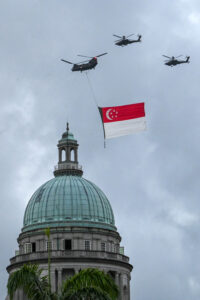
Singapore has long been known for combining economic development with strict limits on political opposition. But its 2011 parliamentary elections suggest that it is moving toward “competitive authoritarianism.”
July 2011, Volume 22, Issue 3
The wave of unrest that swept through the Arab world at the end of 2010 and the beginning of 2011 originated in Tunisia. What happened— and what are the prospects that Tunisia will make a successful transition to democracy?
July 2011, Volume 22, Issue 3
Egyptians threw off the thirty-year dictatorship of Hosni Mubarak, but now find themselves under essentially the same military tutelage that they had hoped to escape.
July 2011, Volume 22, Issue 3
Widely reported as “Facebook revolutions,” the upheavals in Tunisia and Egypt show that social media not only can ignite protests but also can help to determine their political consequences.
July 2011, Volume 22, Issue 3
Strongman Alyaksandr Lukashenka’s suspiciously lopsided 2010 electoral victory—and subsequent crackdown on dissent—may seem like a repeat of the events of 2006, but much has changed in the interval, and his regime is much more precarious today.
July 2011, Volume 22, Issue 3
Despite signs of a cautious willingness to allow more political competition, the regime of newly reelected president Yoweri Museveni fell back on familiar habits of brutal repression when public unrest followed a sudden spike in the cost of living.
July 2011, Volume 22, Issue 3
Many new democracies have faltered due to high levels of inequality and a deep polarization between the rich and poor. What is the relationship between modern liberal democracy and socioeconomic inequality?
July 2011, Volume 22, Issue 3
Despite India’s impressive achievements in democracy, economic development, and the rule of law, it remains home to a third of the world’s poor. Although it has successfully averted famine since independence, it still struggles to prevent chronic hunger.
July 2011, Volume 22, Issue 3
Despite improvements in South Africa’s socioeconomic landscape and the expansion of the black middle class since the end of apartheid, the country’s levels of poverty and inequality remain high and heavily correlated with race.
July 2011, Volume 22, Issue 3
How did South Korea lift itself from destitution to affluence? And how was its ruthlessly authoritarian regime able to metamorphose into a stable democracy? Coopting the business and voluntary sectors to deliver welfare positioned the country to accomplish both.
July 2011, Volume 22, Issue 3
After decades of civil war, Sudan is set to divide into two nations on 9 July 2011. Yet a number of explosive issues—including the drawing of borders and sharing of oil revenue—have still not been resolved, and the prospects for peace appear to be dimming.
July 2011, Volume 22, Issue 3
Having thrown out a corrupt, authoritarian president for the second time, this Central Asian republic has gained a new chance at securing a real democratic transition.
April 2011, Volume 22, Issue 2
Why are the unfree regimes of the former Soviet world proving so durable? A lack of ideology and—perhaps surprisingly—a degree of openness are proving to be not so much problems for authoritarianism as bulwarks of it.
April 2011, Volume 22, Issue 2
The past decade began at a high point for freedom but ended with freedom in peril. Yet the setbacks of the last five years do not outweigh the democratic gains of the last forty.
April 2011, Volume 22, Issue 2
Chinese authoritarianism has deftly adapted to the Internet Age, employing various forms of technological controls. China’s brand of networked authoritarianism serves as a model for other regimes, such as those of Iran and Russia.
April 2011, Volume 22, Issue 2
In China, the Internet is not merely contested space between citizen and government. It is also a catalyst for social and political transformation, offering the possibility of better governance with greater citizen participation.
April 2011, Volume 22, Issue 2
Paradoxically, the rising profile of “liberation technology” may push Internet-control efforts into nontechnological areas—imprisonment rather than censorship, for example—for which there is no easy technical “fix.”
April 2011, Volume 22, Issue 2
Dilma Rousseff won the 2010 presidential election as the handpicked successor of a towering political personality. Now she must assert firm sway over a ruling party and coalition to which she has remarkably slender ties, and face new challenges that her country cannot meet with “more of the same.”
April 2011, Volume 22, Issue 2
Wracked by postelection violence in 2007 and 2008, Kenya embarked upon a course of constitutional change that culminated in an August 2010 referendum. How was the new basic law framed and passed, and what will it mean for democracy in this key East African country?
April 2011, Volume 22, Issue 2
Even before Argentina’s landmark gay-marriage law was passed in July 2010, a gay-rights revolution was well underway across Latin America. But do gay rights by law equal acceptance of gays in practice?
April 2011, Volume 22, Issue 2
In late 2010, not long before seismic political change was to erupt across the Middle East, Jordan held parliamentary elections. Officials were eager to present these as a fresh start, but a closer look tells a different tale.
April 2011, Volume 22, Issue 2
Having only recently emerged from a prolonged and remarkably bitter civil war, Sri Lanka is now slipping steadily under the hardening authoritarian control of President Mahinda Rajapaksa and his family.
April 2011, Volume 22, Issue 2
Are laws guaranteeing citizens freedom of access to public information (FOI laws) among the most important democratic innovations of the last century?
April 2011, Volume 22, Issue 2
Once dismissed as an “overcrowded barracoon,” this Indian Ocean island nation has more recently been hailed as one of Africa’s “emerging success stories,” but the truth is that some troublesome shadings haunt this rosy picture.
January 2011, Volume 22, Issue 1
A powerful “salafist” public norm has taken root in the Arab world, becoming the main symbol of resistance to Westernization. At the same time, however, new cultural forces in the private domain are promoting a dynamic of secularization.
January 2011, Volume 22, Issue 1
As an analysis of recent electoral results shows, the world’s emerging democracies are weathering the global economic crisis surprisingly well. Yet they remain under an even sharper threat from their own failures to deliver good governance.
January 2011, Volume 22, Issue 1
The financial crisis did not deal a fatal blow to any democracies, but it did hasten an erosion of the influence of the West. In the future, the balance of power among competing regime types may be decided by the emerging-market democracies.
January 2011, Volume 22, Issue 1
Striking the right balance between freedom and security is hard, especially in Latin America. Hybrid forces combining military and police elements may be the best means for meeting security challenges without imperiling freedom.
January 2011, Volume 22, Issue 1
For the first time ever in the history of Hong Kong, local democratic leaders and Chinese officials have forged a pact on limited democratic reforms. That may have marked a step forward for the cause of democracy in Hong Kong, but it has also led to a sharp split in the democratic camp.