
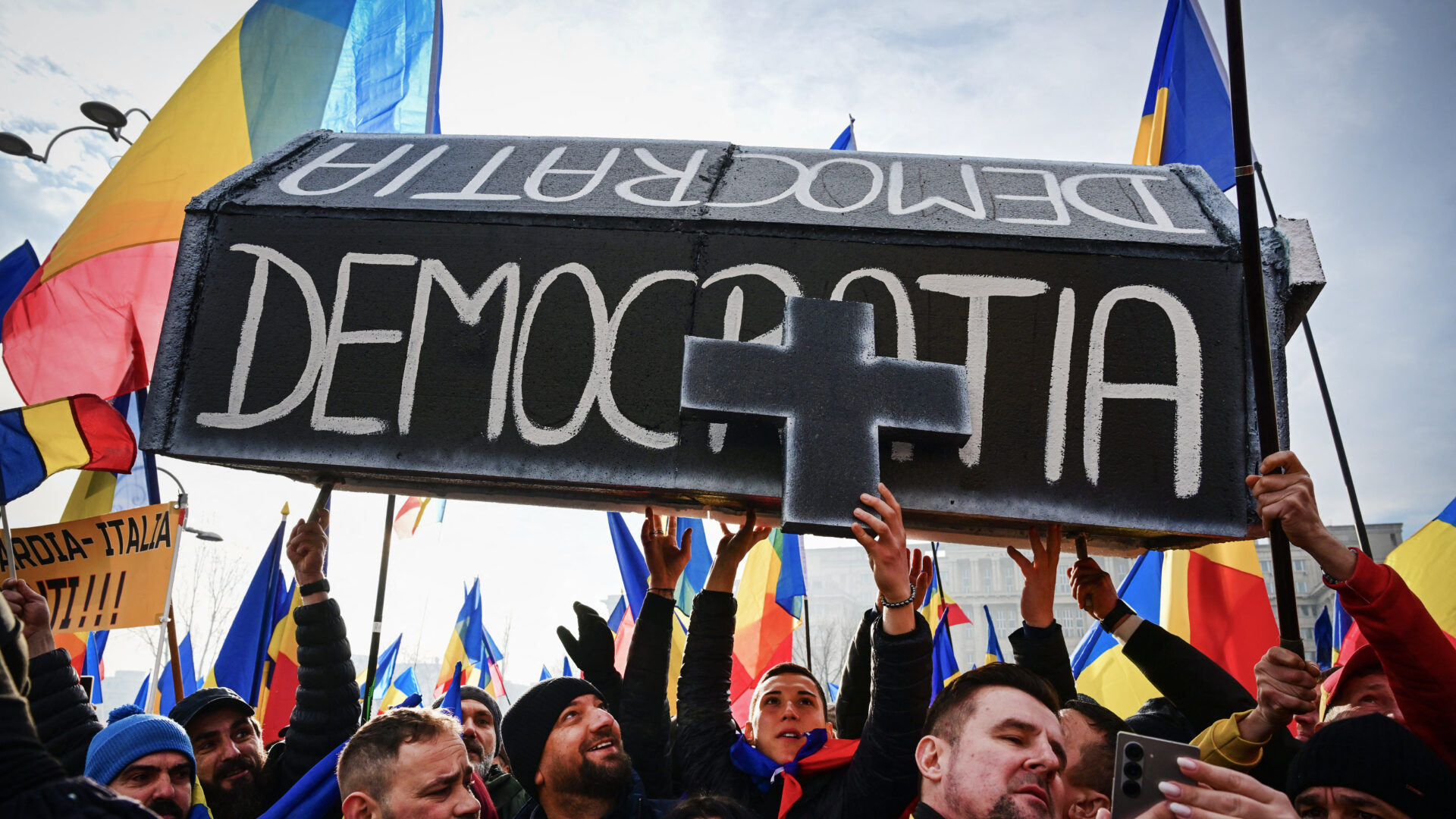
Barely a generation ago, democratic optimism reigned; today it has given way to deep pessimism about democracy’s future. Critics charge political science with failing to anticipate this reversal. This essay argues that democracy’s current difficulties were predictable, if not widely predicted. Although many contemporary theories struggled to explain recent developments, historically grounded approaches and earlier theories of democratic stability would have highlighted the risks of backsliding, including in Western and particularly U.S. democracy. By moving away from deep historical analysis and neglecting the insights of an earlier generation of democratic theorists, the field was left less prepared to recognize warning signs of global democratic decline and institutional fragility.
Hard to believe today, but barely a generation ago democratic optimism reigned. The end of the twentieth and beginning of the twenty-first centuries marked a period of dramatic democratic expansion. In 1987, roughly 28 percent of the world’s countries were democratic; by 2005, more than 60 percent were. Democracy appeared to be advancing not just empirically, but intellectually and morally as well.
Political leaders and intellectuals across the ideological spectrum converged on the view that democracy was both normatively superior and historically inevitable.1 In a 2003 address before the U.S. Congress, the then U.K. prime minister Tony Blair insisted that democracy and freedom were “not Western values . . . but values in the common ownership of humanity,” and that “anywhere, anytime ordinary people are given the chance to choose, the choice is the same: freedom, not tyranny; democracy, not dictatorship.”2 Similarly, U.S. president George W. Bush, in his 2001 inaugural address, described democratic faith as “the inborn hope of our humanity, an ideal we carry but do not own.”3 From the postcommunist left, Czech president and former dissident Václav Havel described democracy as a civilizational achievement, telling the U.S. Congress in 1990 that his country had “set out on the road to democracy,” a journey he believed to be historically irreversible.4
Leading intellectuals echoed this confidence. The Nobel Prize–winning economist Amartya Sen argued in these pages that democracy was not only a “universal value” but also practically superior, noting the “staggering developmental failures” of authoritarian regimes.5 The Peruvian writer and politician Mario Vargas Llosa similarly maintained that democracy and market society were inseparable, with political and economic liberty reinforcing one another.6 Perhaps best capturing the era’s near-universal optimism about democracy’s progress was Francis Fukuyama’s 1989 declaration that liberal democracy represented the “end of history.”7
Today, of course, this optimism has vanished, replaced by profound pessimism about democracy’s future given the dramatic democratic backsliding of recent years. According to the V-Dem Institute, by 2024 the world had fewer democracies than autocracies for the first time in more than twenty years, and 45 countries were “autocratizing,” that is, moving away from democracy and toward authoritarianism.8 One recent report noted that experts are now “pulling the alarm . . . warning of rapid democratic decline.”9 Viktor Orbán’s 2018 declaration that “the era of liberal democracy is over” captures the contemporary Zeitgeist.10
Political scientists and other experts have faced growing criticism for failing to anticipate these developments. As with Sovietologists who did not foresee the collapse of the Soviet Union or economists who missed the 2008 financial crisis, democracy scholars have been charged with a failure to predict global democratic backsliding and the fragility of Western democracies. As one critic put it, political science, “along with the legions of analysts, columnists, and talking heads” who relied on a “simplistic popularization of political science,” proved to be “woefully ill-equipped to make sense of” democracy’s current problems.11
Although these critiques have some merit, I argue that democracy’s present difficulties should, in fact, have been predictable. While many contemporary theories and approaches have struggled to anticipate or fully explain recent political developments, a more historically grounded understanding of political development and familiarity with older theories of democratic stability would have anticipated both democratic backsliding and the vulnerability of Western, and particularly U.S., democracy. Unfortunately, over recent decades American political science, most notably, moved away from deep historical analysis and neglected the insights of an earlier generation of democratic theorists who had sought to understand the collapse of democracy in what was then the world’s most economically advanced and highly educated region: Western Europe, and Germany in particular. This left the field less well-prepared than it might otherwise have been to recognize warning signs about the trajectory of global democracy and the growing fragility of many democracies in the West.
The Historical Record
More countries transitioned to democracy at the end of the twentieth century and beginning of the twenty-first century than during any other period in history. Following Samuel Huntington, scholars and analysts described this as a democratic “wave.”12 But that term implies more than a period when many countries move in a similar direction. Waves are always followed by undertows, periods when much of the forward motion is reversed. This pattern occurs because toppling dictatorships has always been easier than building durable democracies, particularly liberal ones with institutions and norms capable of protecting individual and minority rights, sustaining independent civil society, ensuring impartial rule of law. Such institutions and norms take time to develop; they cannot easily be built from scratch.
This pattern is reflected in numerous historical cases.13 Consider France, where Europe’s modern struggle for democracy began with the French Revolution. Like the fall of communism and the third wave more generally, the collapse of the monarchy in 1789 was greeted with jubilation. Disappointment soon followed: After a republic was declared in 1793, Europe’s first modern democracy descended into the Reign of Terror, and by 1799 an exhausted France submitted to a coup by Napoleon Bonaparte.
Political instability racked France throughout the nineteenth century. In 1848, another democratic transition occurred, but within a year, the populist authoritarian Louis-Napoleon Bonaparte (the previous Napoleon’s nephew) had gained power and begun gutting democratic institutions. His regime collapsed in 1870, giving way to another turbulent transition. The resulting Third Republic proved more durable than its predecessors, but its legitimacy was contested and many citizens did not play by the democratic “rules of the game.” The Third Republic survived the interwar years, but just barely, and was crushed by the Nazis in 1940. France became a democracy again after World War II, but instability returned; the Algerian crisis in 1958 led a section of the army to rebel, Charles de Gaulle stepped in, the Fourth Republic collapsed, and a Fifth Republic emerged.
Many European countries followed similarly difficult paths. A unified Italy emerged in the 1860s, but chronic corruption and poor governance fueled left- and right-wing extremism. After World War I (1914–18), Italy’s young democracy, plagued by disorder and violence, collapsed into fascism in 1922. Only after World War II (1939–45) did a relatively well-functioning democracy emerge in Italy. Germany’s story is even more chastening. The country, which emerged in 1871 under a semi-authoritarian regime, democratized after World War I. From its birth in 1918, the Weimar Republic was plagued by extremism and violence; it collapsed into Nazi dictatorship in 1933. After World War II, Germany was partitioned under Allied occupation, eventually becoming two separate nations in 1949: The Western-allied Federal Republic of Germany (West Germany) and the Soviet-allied German Democratic Republic (East Germany). West Germany became an impressive liberal democracy, while East Germany languished for decades under communist dictatorship. Spain likewise endured repeated regime changes and military interventions during the nineteenth and early twentieth centuries. After a failed democratic experiment in the 1930s, a civil war (1936–39) that killed hundreds of thousands, and decades of dictatorship, Spain made a durable transition to democracy in the mid-1970s.
These country cases reflect a broader historical pattern. Democratic waves occurred in 1848, after World War I, and after World War II, and each one was followed by a reverse wave that erased much of the democratic progress that had preceded it. If we look at, for example, the interwar years, a period increasingly compared to our own, it is important to note that the democratic failures of that period occurred in new democracies, where democratic institutions and practices had been only recently established.14
In short, even a cursory knowledge of the history of democratic development should have made it predictable that an autocratic undertow would follow the late twentieth-century democratic wave. That many new democracies would prove fragile and some would ultimately fail should not have surprised anyone.15
What does, at least initially, appear surprising — even from a historical perspective — is that democratic erosion has not been confined to new or poor democracies. Older, wealthy ones long considered consolidated and secure are experiencing major difficulties as well. Even historically aware and perceptive observers have acknowledged that they “didn’t have a sense or a theory for how” such democracies could “go backward,” and that they “never [expected] to be asking” whether American democracy itself was in decline.16
Yet just as a historically grounded understanding of political development would have led us to expect the autocratic undertow of recent decades, older theories of democratic stability would have made the difficulties now facing many long-established democracies if not predictable, at least unsurprising.
Postwar Theories of Democratic Stability
After World War II, a generation of scholars turned their attention to understanding the tragedies of the interwar years and, in particular, why so many democracies collapsed. One conclusion that many of these scholars reached is particularly relevant for understanding democratic fragility in many long-established democracies today: Although democracy is defined by its political institutions, its success depends on certain social or socioeconomic conditions. These conditions were seen as generating the norms and patterns of behavior that allow democratic institutions to function well. Where they were absent, even well-designed democratic institutions would fail.
This conclusion was reinforced by the fact that democracies with varying electoral systems, constitutional frameworks, and presidential as well as parliamentary structures faltered during the interwar period. In other words, institutional design alone could not explain democratic collapse. The German case was particularly influential. The constitution of the Weimar Republic was widely regarded at the time as exemplary. Drafted with input from some of Germany’s most distinguished social scientists, including Max Weber and Hugo Preuss, it was described by the historian and journalist William Shirer as “the most liberal and democratic document of its kind the twentieth century had ever seen,” and “full of ingenious and admirable [institutional] devices which seemed to guarantee the working of an almost flawless democracy.”17 Yet despite this, the Weimar Republic collapsed — not merely into authoritarianism, but into Nazi barbarism. From Germany and other cases, scholars concluded that when democratic institutions are layered onto incompatible social or socioeconomic foundations, they will not endure, regardless of their formal design.
This emphasis was central to the most influential postwar school of democratic theorizing: what came, perhaps unfortunately, to be known as “modernization theory.” Scholars working in this tradition began with the observation that there was a strong correlation between economic development and democracy. As Seymour Martin Lipset famously put it: “Perhaps the most common generalization” in political science was that “democracy is related to the state of economic development. The more well-to-do a nation, the greater the chances that it will sustain democracy.”18
What is sometimes forgotten, however, is that these theorists did not argue that wealth or economic development alone sustained democracy. Rather, they believed that economic development tended to produce the social or socioeconomic conditions that fostered the norms and behaviors necessary for democracy to flourish — an assumption that was largely supported by the historical record up to that point. Reflecting this, Lipset titled his influential 1959 essay “Some Social Requisites of Democracy,” and his subsequent book Political Man bore the subtitle “The Social Bases of Politics” (emphases mine).
Scholars in this tradition argued, for example, that economic development reshaped the class structure. Poor, underdeveloped societies tended to be pyramid-shaped, characterized by a small elite at the top and a large mass of poor citizens at the bottom. By contrast, advanced industrial societies tended to be diamond-shaped, dominated by a broad middle class with comparatively fewer people at the extremes. As a result, advanced industrial societies were substantially less unequal than poorer ones — a condition these theorists, along with thinkers dating back to Alexis de Tocqueville and the American Founders, emphasized as crucial for democratic stability. High levels of inequality, they argued, opened “the door for societal tensions, instability, and even violence,” thereby undermining democratic stability.19
This, in turn, was related to the way in which economic development and associated changes in the class structure were presumed to change the norms and behaviors of various socioeconomic groups. In advanced industrial societies, there were comparatively fewer poor citizens, and those in the lower strata were better off than their counterparts in less developed societies. Crucially, the less well off in advanced industrial societies also enjoyed greater social mobility and could thus reasonably expect that they or their children would not be permanently stuck in the lower rungs.20 This gave these citizens more faith in the system and accordingly made them less susceptible to extremism — a central concern for postwar theorists who were shaped by the experience of fascism and acutely aware of the contemporary communist threat.
Economic development was also assumed to reshape the norms and behavior of the middle and upper classes. In advanced industrial societies, the middle class was thought to enjoy rising living standards, greater economic security, and increased opportunities for social mobility, which would also lead the middle class to develop a stake in the system, thereby making it a stable support base for moderate parties. The upper strata, meanwhile, were expected to have less reason to fear the lower classes or dismiss their needs. Greater social mobility, reduced social isolation, and diminished “differences in ways of life” — including access to education, safety, and good health — were thought to narrow the social distance between classes and, in turn, make the wealthy less likely to view other socioeconomic groups, and hence democracy, as a threat to their interests.21
Alongside changes in the class structure, modernization theorists believed that economic development would foster the broader “habits of the heart” necessary for democracy in other ways. One key mechanism was the expansion of education: Wealthier societies were more educated, and education, these theorists argued, promoted rationality, tolerance, moderation, empathy, and universalism — that is, concern for the nation as a whole rather than solely for one’s immediate in-group. As Daniel Lerner put it, economic development enhanced individuals’ “cognitive capacity to imagine oneself in someone else’s shoes or in a different situation.”22 Other postwar theorists, working outside the modernization tradition broadly agreed. Democratic stability, Harry Eckstein argued, depended on whether the norms produced in society were “congruent” with the functional requisites of democracy, including compromise, toleration, cooperation, and a shared sense that “we are all in this together.”23
Another crucial social characteristic emphasized by modernization theorists as well as other influential postwar scholars of democracy, including Robert Dahl and Talcott Parsons, was the presence of cross-cutting cleavages.24 Democratic stability, they argued, depended on the fact that the multiple social divisions characteristic of advanced industrial societies cut across rather than reinforced each other. When cleavages are cross-cutting, individuals experience “cross-pressures”: They will align with political opponents on one dimension while disagreeing on another. The normative and behavioral effect of these cross-pressures were salutary, diminishing the intensity of conflict and the tendency toward extremism, increasing tolerance, facilitating compromise and cooperation, and making politics less likely, therefore, to harden into a zero-sum struggle — an outcome fundamentally incompatible with democratic stability.
By contrast, scholars warned that when social divisions were reinforcing, democratic norms and patterns of behavior eroded. Reinforcing cleavages encourage what some of these theorists described as weltanschauung politics — politics organized around morally charged, comprehensive worldviews sustained by the segregation of citizens into homogeneous political enclaves. Isolation from opposing viewpoints weakens pressures for tolerance and compromise, eroding the willingness to accept opponents in power. Where citizens instead maintain multiple, politically inconsistent affiliations, emotional intensity in politics is reduced and political competition is less likely to escalate into the sort of existential conflicts that, as noted above, are incompatible with democratic stability.
In short, a broad conclusion reached by postwar democratic theorists was that certain social and socioeconomic conditions were necessary to generate the norms and behaviors required for sustaining a healthy democracy. Modernization theorists believed that economic development was the most powerful force producing many of these conditions — an assumption, as noted, that the historical record and especially the experience of the postwar decades seemed to confirm. These scholars recognized, however, that if economic development failed to produce the requisite social and socioeconomic conditions — and thus the norms and behaviors — in a country, democracy would falter. This was, many postwar theorists argued, crucial to understanding the German case.
By the early twentieth century, Germany had achieved very high levels of economic development. On the eve of World War I, the country had passed Great Britain to become Europe’s industrial powerhouse. Germany was the richest country on the continent, home to many of world’s leading universities, and its citizens had won more Nobel prizes between 1901 and 1932 than Britons and Americans combined. Yet democracy collapsed in Germany. There were, of course, many reasons for this, but perhaps most crucial was the incompatibility between “society and democracy in Germany,” as Ralf Dahrendorf argued in his influential book of the same name.25 Germany, Dahrendorf and others maintained, had modernized economically while leaving many premodern social structures, and the norms and behaviors associated with them, largely intact. Social-status hierarchies remained powerful; elites were reluctant to accept the political equality of their fellow citizens and the loss of their own political dominance; civil society tended to reinforce rather than cut across political cleavages; and so on. 26 As the historian Fritz Stern put it, this made Weimar “a republic without republicans, a democracy without democrats.”27 Under these inauspicious social, normative, and behavioral conditions, democratic institutions — no matter how well designed — would face extraordinary challenges, even before considering those emanating from the severe turmoil of the interwar years.
The Contemporary Period
Although the contemporary period differs greatly from the interwar years, and the United States today is not Weimar Germany, consideration of some of the central insights of postwar democratic theory should have made today’s democratic fragility far less surprising. In much of the advanced democratic world, and especially in the United States, economic development no longer appears to be producing the social and socioeconomic conditions — and thus the norms and behaviors — necessary for democracy to flourish. This is, of course, how many scholars understand the failure of democracy in many resource-rich countries, particularly in the Middle East. These countries are wealthy, but the accumulation of this wealth did not produce the social and socioeconomic conditions and thus norms and behaviors associated with well-functioning democracies.
Over the past decades, Western countries and especially the United States have become vastly more unequal. Inequality in the United States is now greater than at any time in its history, with the possible exception of the Gilded Age — and greater than in any other high-income country. This inequality has translated into a growing divergence among citizens of different socioeconomic strata in “ways of life,” including access to higher education, health outcomes, marriage and divorce rates, and vulnerability to addiction. Making matters worse, as inequality has risen, social mobility has declined, leaving those in the lower and even middle strata with diminishing expectations that they or their children will move up the socioeconomic ladder.28
At the same time, the cross-cutting cleavages that postwar theorists viewed as essential to democratic stability have also weakened dramatically, particularly in the United States.29 Through the postwar period, the Democratic and Republican Parties functioned as “big tent” coalitions, including conservative Democrats and liberal Republicans. This facilitated compromise and cooperation, and meant that partisan affiliations did not map cleanly onto ideological commitments. In recent decades, however, political sorting has eroded these cross-pressures. Both parties have become more ideologically homogenous — less big tent and more weltanschauung parties — and partisan and ideological identities have gradually come to align. A parallel process of social sorting has reinforced this trend, as Americans increasingly live among and associate with likeminded individuals, further reducing opportunities for sustained interaction with citizens who hold divergent views. Media fragmentation has compounded this trend: Democrats and Republicans increasingly consume news from different sources, further insulating them from opposing perspectives.30
Expanding access to higher education over roughly the same period, meanwhile, may very well have furthered rather than hindered these trends. Across Western societies, and especially in the United States, the views of college- and noncollege-educated citizens have diverged sharply. This educational divide has increasingly aligned with political affiliation, with the highly educated sorting into the Democratic Party and the less educated into the Republican Party; the same is true with geography, as the highly educated concentrate in prosperous coastal cities while the less educated are disproportionately located in economically stagnant or declining regions. In addition, there is little evidence that the growing numbers of college educated are more tolerant, less prone to biased reasoning, or more likely to prioritize the needs of the nation over those of their own or other favored in-groups.
The cumulative effect of these developments has been to create societies permeated by the pathologies that postwar theorists warned would undermine democratic stability. Norms of moderation, compromise, mutual toleration, and shared fate have weakened. Pessimism about the future has grown, along with declining faith in the capacity or willingness of the existing system, or more specifically, established political actors and institutions, to address underlying problems — conditions that create fertile ground for extremism.
In the United States, in particular, partisan and social sorting has produced extraordinarily high levels of affective polarization. Growing numbers of citizens no longer view their opponents simply as fellow citizens with differing views, but as people “who are not like us” or even as enemies and existential threats. Reflecting this, a nontrivial share of not only those on the far left and far right but also partisans in both parties express willingness to accept violations of democratic norms when their opponents are in power31 and agree that violence may be justified to prevent their opponents from gaining power.32 These attitudes make compromise and cooperation difficult, and push politics toward a zero-sum and existential logic. These are precisely the kinds of social, normative, and behavioral conditions under which democracy struggles to endure.
That we are aware of these developments is due to the work of innumerable political and social scientists. Yet despite growing recognition of these trends and their dangers, the widespread assumption persisted until very recently that the longevity of Western, and especially American, political institutions, combined with economic wealth, rendered democratic erosion highly unlikely. As one prominent scholar put it, the wealth of the United States, together with its longstanding democratic institutions and procedures, made the chances of democratic collapse “practically zero.”33 Another observed that “generations of scholars” assumed that the “wise design” of U.S. institutions made authoritarian capture virtually impossible.34
Even after democratic decay had become more visible, much scholarship remained focused primarily on institutions. From this perspective, understanding democratic decay required focusing on how would-be authoritarians undermine democratic rules and procedures. This literature generated invaluable insights into the “authoritarian playbook” — the tactics and strategies that elites use to undermine democratic institutions. What this scholarship often sidesteps, however, is the deeper causal question: not merely how democratic institutions are undermined, but why they become vulnerable in the first place.
Answering that question requires moving beyond institutional design and elite maneuvering to examine what makes institutional erosion possible. Elite assaults on democratic institutions are best understood as the final stage in a longer causal chain. They succeed only when institutions have already lost legitimacy and resilience. One major source of that vulnerability, emphasized by earlier democratic theorists, lies in the social and socioeconomic foundations on which institutions rest. Societies marked by widespread economic and regional inequality, reinforcing rather than cross-cutting cleavages, growing divergence between the preferences and values of the college- and noncollege-educated citizens, and the absence of a shared sense that “we are all in this together” will struggle to generate the norms and behaviors democracy requires. Such conditions — even in countries that remain objectively wealthy — undermine institutional legitimacy and increase support for, or at least tolerance of, actors willing to weaken or even dismantle democratic constraints.
What We Missed
We are living through a period of democratic decay. Set against the immense democratic optimism of the late twentieth and early twenty-first centuries, today’s troubles have come as a shock to many. Yet a deeper awareness of earlier democratic waves and of the insights developed by previous generations of democratic theorists would have made these developments, if not fully predictable, at least far less surprising.
This is not to suggest that the postwar scholarship discussed above was flawless or prescient. It was often impressionistic rather than rigorously data-driven, sometimes overly deterministic or linear, and occasionally unclear in its causal logic. Yet because much of it was rooted in political and historical sociology, traditions that have largely disappeared from political science today, it generated insights that later generations of scholars, particularly in American political science, did not fully absorb. Most important was its recognition of the deep and multifaceted connections between democracy and the societies and economies in which it is embedded. From this perspective, the social and socioeconomic trends of recent decades and their corrosive effects on democratic stability in the United States and much of Western Europe should not have been surprising.
The implications of this recognition are relevant for understanding democracy’s current troubles and devising solutions to them. It is, of course, important to address whatever institutional flaws or weaknesses exist in a democracy. In the U.S. case, this might include reforming the primary system, addressing gerrymandering, and limiting the influence of money in politics. But if the underlying social and economic pathologies — widening inequality, declining social mobility, reinforcing cleavages, geographic and educational sorting, and the erosion of a shared sense of fate — remain unaddressed, democratic institutions, however carefully designed, will remain fragile and vulnerable to decay.
NOTES
1.Larry Diamond, “Democracy’s Arc: From Resurgent to Imperiled,” Journal of Democracy 33 (January 2022): 163–79, https://www.journalofdemocracy.org/articles/democracys-arc-from-resurgent-to-imperiled/.
2. “An Address by Prime Minister Tony Blair of the United Kingdom to a Joint Meeting of Congress,” 17 July 2003, https://history.house.gov/Historical-Highlights/2000-/An-address-by-Prime-Minister-Tony-Blair-of-the-United-Kingdom-to-a-Joint-Meeting-of-Congress/.
3. George W. Bush, “Inaugural Address,” 20 January 2001, https://georgewbush-whitehouse.archives.gov/news/inaugural-address.html.
4. “Text of Havel’s Speech to Congress,” Washington Post, 21 February 1990, https://www.washingtonpost.com/archive/politics/1990/02/22/text-of-havels-speech-to-congress/df98e177-778e-4c26-bd96-980089c4fcb2/.
5. Amartya Sen, “Democracy as a Universal Value,” Journal of Democracy 10 (July 1999): 3–17.
6. Mario Vargas Llosa, “Mario Vargas Llosa’s Irving Kristol Lecture: Confessions of a Liberal,” American Enterprise Institute, 2 March 2005, https://www.aei.org/research-products/speech/confessions-of-a-liberal/.
7. Francis Fukuyama, “The End of History?” National Interest16 (Summer 1989), and Francis Fukuyama, The End of History and the Last Man (New York: Free Press, 1992).
8. Marina Nord et al., “Democracy Report 2025: 25 Years of Autocratization—Democracy Trumped?,” University of Gothenburg: V-Dem Institute, March 2025.
9. Neha Ahmed, “Pulling the Alarm: From Washington to Rome, Experts Warn of Rapid Democratic Decline,” Democratic Erosion Consortium, Arizona State University, 19 October 2025, https://democratic-erosion.org/2025/10/19/pulling-the-alarm-from-washington-to-rome-experts-warn-of-rapid-democratic-decline/.
10. Marc Santora and Helene Bienvenu, “Secure in Hungary, Orban Readies for Battle with Brussels,” New York Times, 11 May 2018, www.nytimes.com/2018/05/11/world/europe/hungary-victor-orban-immigration-europe.html.
11. Jason Blakely, “In the Land of the Data Blind: Why Political Science Can’t Grasp Trumpism,” Harper’s Magazine, January 2026, https://harpers.org/archive/2026/01/in-the-land-of-the-data-blind-jason-blakely-political-science-trumpism/.
12. Samuel Huntington, The Third Wave: Democratization in the Late Twentieth Century (Norman: University of Oklahoma Press, 1991).
13. Sheri Berman, Democracy and Dictatorship in Europe: From the Ancien Régime to the Present Day (Oxford: Oxford University Press, 2019).
14. Berman, Democracy and Dictatorship in Europe; Agnes Cornell, Jørgen Møller, and Svend-Erik Skaaning, “The Real Lessons of the Interwar Years,” Journal of Democracy 28 (July 2017): 14–28.
15. Of course, some scholars did recognize this. A good warning statement here came from Thomas Carothers, “The End of the Transition Paradigm,” Journal of Democracy 13 (January 2002): 5–21.
16. Ishaan Tharoor, “The Man Who Declared the ‘End of History’ Fears for Democracy’s Future,” Washington Post, 9 February 2017, https://www.washingtonpost.com/news/worldviews/wp/2017/02/09/the-man-who-declared-the-end-of-history-fears-for-democracys-future/; Steven Levitsky and Daniel Ziblatt, How Democracies Die (New York: Crown, 2018).
17. Harold James, A German Identity: 1770–1990(New York: Routledge, 1989); William Shirer, The Rise and Fall of the Third Reich (New York: Simon & Schuster, 1990), 56.
18. Seymour Martin Lipset, Political Man: The Social Basis of Politics (New York: Doubleday, 1960), 31.
19. Francisco Weffort quoted in Seymour Martin Lipset, “The Social Requisites of Democracy Revisited,” American Sociological Review 59, no. 1 (1994): 2; Robert Dahl, Polyarchy: Participation and Opposition (Yale University Press, 1971); Giovanni Sartori, The Theory of Democracy Revisited (London: Chatham House, 1987).
20. Seymour Martin Lipset, “Some Social Requisites of Democracy: Economic Development and Political Legitimacy,” American Political Science Review 53, no. 1 (1959): 83.
21. See, for example, Lipset, Political Man, 50–51; Lipset, “Some Social Requisites of Democracy” 83–84.
22. Lipset, “Some Social Requisites of Democracy.”
23. Harry Eckstein, A Theory of Stable Democracy (Princeton Center for International Studies, Princeton University, 1961), 6; Harry Eckstein, Division and Cohesion in a Democracy: A Study of Norway (Princeton: Princeton University Press, 1966), 234.
24. Modernization theorists believed cross-cutting cleavages were more likely to develop in advanced industrial societies since various consequences of economic development, including urbanization (which would bring together citizens from different backgrounds and with different perspectives) and the greater ability of citizens to participate in civil society activities, would promote them. See Robert Dahl, A Preface to Democratic Theory (Chicago: University of Chicago Press, 1956); Talcott Parsons, “Voting and the Equilibrium of the American Political System,” in Eugene Burdick and Arthur J. Brodbeck, eds., American Voting Behavior (Glencoe, Ill.: Free Press, 1959); Erik Allardt and Yrjö Littunen, Cleavages, Ideologies, and Party Systems: Contributions to Comparative Political Sociology (Helsinki: Helsinki University Press, 1964); Lipset, “Some Social Requisites of Democracy”; Michael Taylor and Douglas Rae, “An Analysis of Cross-Cutting Between Political Cleavages,” Comparative Politics 1 (July 1969): 534–47.
25. Ralf Dahrendorf, Society and Democracy in Germany (New York: Doubleday, 1965).
26. Sheri Berman, “Civil Society and the Collapse of the Weimar Republic,” World Politics 43, no. 3 (1997): 401–29.
27. Fritz Stern, The Failure of Illiberalism: Essays on the Political Culture of Modern Germany (New York: Columbia University Press, 1972).
28. Alan B. Krueger, “The Rise and Consequences of Inequality in the United States,” Remarks as Prepared for Delivery at the Center for American Progress, 12 January 2012; Anne Case and Angus Deaton, Deaths of Despair and the Future of Capitalism (Princeton: Princeton University Press, 2020).
29. Lilliana Mason, Uncivil Disagreement: How Politics Became Our Identity (Chicago: University of Chicago Press, 2018); Robert D. Putnam, “E Pluribus Unum: Diversity and Community in the Twenty-First Century. The 2006 Johan Skytte Prize Lecture,” Scandinavian Political Studies 30 (June 2007): 137–74, https://doi.org/10.1111/j.1467-9477.2007.00176.x.
30. Elisa Shearer et al., “The Political Gap in Americans’ News Sources: Exploring Use of and Trust in 30 Sources Across U.S. Political Lines,” Pew Research Center, 10 June 2025, https://www.pewresearch.org/journalism/2025/06/10/the-political-gap-in-americans-news-sources/; Tetsuro Kobayashi, Zhifan Zhang, and Ling Liu, “Is Partisan Selective Exposure an American Peculiarity? A Comparative Study of News Browsing Behaviors in the United States, Japan, and Hong Kong,” Communication Research, OnlineFirst, 10 October 2024, https://doi.org/10.1177/00936502241289109; Lakshya Jain, “Twitter Is Not Real Life,” 5 February 2026, https://www.theargumentmag.com/p/twitter-is-not-real-life.
31. Levente Littvay, Jennifer L. McCoy, and Gabor Simonovits, “It’s Not Just Trump: Americans of Both Parties Support Liberal Democratic Norm Violations More Under Their Own President,” Public Opinion Quarterly 88 (Fall 2024): 1044–58.
32. Domenico Montanaro, “Poll: More Americans Now Agree Political Violence May Be Necessary to Right the Country,” NPR, 1 October 2025, https://www.npr.org/2025/10/01/nx-s1-5558304/poll-political-violence-free-speech-vaccines-national-guard-epstein-trump.
33. Quote in Adam Przeworski, “Diary,” Substack newsletter, Adam’s Substack, 19 February 2025 (entry for Sunday, April 27), https://adamprzeworski.substack.com/p/diary. See also, Patrick Iber, “How Democracies Fall Apart: An Interview with Adam Przeworski,” Dissent Magazine, Fall 2025, https://dissentmagazine.org/article/how-democracies-fall-apart/; Przeworski has, of course, used these previous analyses as a springboard for trying to understand this American “exceptionalism”; Adam Przeworski et al., “What Makes Democracies Endure?,” Journal of Democracy 7 (January 1996): 39–55.
Copyright © 2026 National Endowment for Democracy and Johns Hopkins University Press
Image credit: DANIEL MIHAILESCU/AFP via Getty Images