
October 2008, Volume 19, Issue 4
Pakistan After Musharraf: The Media Take Center Stage
The military regime opened up the media sector to more competition and private broadcasters in 2002, and the ramifications turned out to be vast.
October 2008, Volume 19, Issue 4
The military regime opened up the media sector to more competition and private broadcasters in 2002, and the ramifications turned out to be vast.
October 2008, Volume 19, Issue 4
The military regime opened up the media sector to more competition and private broadcasters in 2002, and the ramifications turned out to be vast.
October 2008, Volume 19, Issue 4
Once hailed as liberators, Zimbabwe’s ruling party now clings to power through violent repression. How did the country’s founding father become its dictator, and what patterns in his party’s past foretold such an outcome?
October 2008, Volume 19, Issue 4
Many of today’s developing-world and postcommunist democracies are at risk of reversal. What are the key factors that lead to democratic collapse?
October 2008, Volume 19, Issue 4
"The Latin American Experience” argues that democratic stability requires policies that limit the society’s degree of substantive economic and social inequality.
October 2008, Volume 19, Issue 4
The more-democratic postcommunist countries have maintained stronger social safety nets than their authoritarian counterparts, but they must reassess their welfare policies to address emerging social challenges.
October 2008, Volume 19, Issue 4
Fifteen years after the wave of democratization crested in Africa, the region still grapples with an economic malaise that is disappointing popular expectations and undermining the legitimacy of electoral regimes.
October 2008, Volume 19, Issue 4
Bolivia now finds itself locked in a stalemate between forces bent on “refounding” the country and an eastern region insisting on greater autonomy.
October 2008, Volume 19, Issue 4
After the ethnic violence that marred its 2007 presidential election, Kenya must reform its institutions to better represent its diverse polity.

October 2008, Volume 19, Issue 4
Torn between populism and those who fail to respect democratic limits in combating it, Thailand badly needs to locate a middle ground where the best of its old traditions can help it adjust to the new challenges that it faces.
October 2008, Volume 19, Issue 4
A domestic political crisis began brewing in Georgia long before the current conflict with Russia. Since the Rose Revolution, the country has been troubled by flawed elections, a “superpresidency,” and a malleable constitution.
July 2008, Volume 19, Issue 3
The rise of Islamist parties poses new challenges to efforts to understand the relationship between Islam and democracy. A diverse group of authors investigates this new phenomenon and its implications for the future of democracy in the Middle East.
July 2008, Volume 19, Issue 3
The rise of Islamist parties poses new challenges to efforts to understand the relationship between Islam and democracy. A diverse group of authors investigates this new phenomenon and its implications for the future of democracy in the Middle East.
July 2008, Volume 19, Issue 3
The journalistic and policy communities have been alive with speculation as to whether Islamist groups involved in politics—including Egypt’s Muslim Brotherhood and Palestine’s Hamas— are true believers in democracy or calculating pragmatists who, in Steven Cook’s words, are “seeking to use democratic procedures in order to advance an antidemocratic agenda.”
July 2008, Volume 19, Issue 3
The rise of Islamist parties poses new challenges to efforts to understand the relationship between Islam and democracy. A diverse group of authors investigates this new phenomenon and its implications for the future of democracy in the Middle East.
July 2008, Volume 19, Issue 3
Read the full essay here. The debate on the compatibility of Islamism and democracy has tended to focus on two main scenarios. In the first, Islamist political parties become agents for democratization through their participation in freely held elections. In the second, Islamists use the democratic process to gain control and establish an antidemocratic regime—the…
July 2008, Volume 19, Issue 3
Read the full essay here. Political Islam is often cited as the key challenge to democratization in Muslim nations, but deep currents of authoritarianism may prove more of an obstacle. Traditions of monarchy, military rule, and weak civic institutions block the path of democratic transition throughout the Muslim world. Political Islam does of course present…
July 2008, Volume 19, Issue 3
Read the full essay here. This article makes a case of the basic distinction between Islam and Islamism and presents three central arguments: 1. through religious reforms and a rethinking of the Islamic doctrine, the cultural system of Islam can be put in harmony with democracy, 2. this (first) argument does not apply to Islamism…
July 2008, Volume 19, Issue 3
Read the full essay here. What role do mainstream Islamist movements play in Arab politics? With their popular messages and broad social base, would their incorporation as normal political actors be the best hope for democratization or democracy’s bane? For too long, we have tried to answer such questions solely by speculating about the true…
July 2008, Volume 19, Issue 3
The “color revolutions” in the postcommunist countries cannot be attributed to diffusion alone. Structural factors offer a better explanation of why such revolutions have succeeded in some countries and not in others.
July 2008, Volume 19, Issue 3
Can regionalism help to redress the uneven spread and internal weaknesses of democracy in Southeast Asia? Unforeseen events in the region and positive political entrepreneurship may yet transform ASEAN into a force for democracy.
July 2008, Volume 19, Issue 3
Conventional scholarly wisdom holds that ethnic diversity within a given society generally dims democracy’s prospects. Careful reflection on the experience of many post-Soviet states, however, suggests that this need not be so.
July 2008, Volume 19, Issue 3
The 1998 Good Friday Agreement provided a framework for peace and democracy in Northern Ireland. But it was a particular set of internal circumstances that allowed for the pact’s successful implementation.
July 2008, Volume 19, Issue 3
Latin America’s recent experience shows that effective democratic governance is difficult to achieve and depends on many factors, some of them context-specific. Nonetheless, it is possible to draw some general lessons.
July 2008, Volume 19, Issue 3
Despite South Korea’s messy democratic trajectory, it has miraculously achieved consolidation. Though far from perfect, South Korea’s democracy has turned obstacles into opportunities for reform and development.
July 2008, Volume 19, Issue 3
Emerging from one of the world’s most notorious failed states, Somaliland has become an oasis of relative democratic stability in the troubled Horn of Africa. What does its story teach us about democratic state-building?
July 2008, Volume 19, Issue 3
Ukraine gained independence in 1991, but its people gained their freedom only in 2004 with the Orange Revolution—an uprising of the human spirit in which Ukrainians joined together to gain a voice in their future.
July 2008, Volume 19, Issue 3
For years Kenya was regarded as one of Africa’s sturdiest democracies. The fraudulent 2007 presidential election, however, exposed the fragility of Kenya’s democratic framework.
April 2008, Volume 19, Issue 2
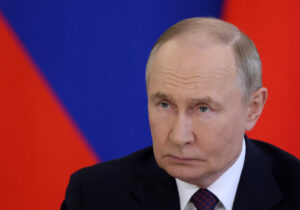
Just as Russia's leaders pretend that they are ruling over a democracy, they also pretend that they are ruling over an empire.
April 2008, Volume 19, Issue 2
Despite key improvements during Néstor Kirchner's presidency, Argentine democracy remains vulnerable to crisis. The near collapse of the party system and weakness of political and economic institutions continue to threaten stability.
April 2008, Volume 19, Issue 2
Brazil under Lula offers a test case of how politicians and societal interests in developing countries react when economic growth and new possibilities change the name of the game from shock and scarcity to boom and prosperity.
April 2008, Volume 19, Issue 2
Long an extreme case of institutionalized instability, Ecuador now has a dynamic young president who is determined to remake its constitution, and eventually its society, in the name of "twenty-first-century socialism."
April 2008, Volume 19, Issue 2
Authoritarian pushback continued to affect key regions and countries in 2007, but the courage, energy, and creativity that democrats continued to show gives reason to think that their cause has brighter days ahead.
April 2008, Volume 19, Issue 2
Do young democracies have to "deliver the goods" economically in order to win political legitimacy in their citizens' eyes? Public opinion data from Asia, Africa, Latin America, and the Arab world suggest some fascinating answers.
April 2008, Volume 19, Issue 2
Why has China's transition to democracy been so delayed, and what can be done to hasten it?
April 2008, Volume 19, Issue 2
In Africa today, investment flows in and civil societies grow stronger, yet many of the continent's leaders continue to behave autocratically, defending their privileges against the spread of law-based rule.
April 2008, Volume 19, Issue 2
Despite sweeping political and constitutional changes in Africa, a notable feature of the ancien régime survives—the imperial presidency. African presidents may be term-limited, but they have not been tamed.
April 2008, Volume 19, Issue 2
The legislature is emerging as a "player" in some African countries, though not in others. What is the relationship between legislative development and democratic consolidation in Africa?
April 2008, Volume 19, Issue 2
Africa is a battleground between formal democratic institutions and rule by the will of the "big man." Civil society groups are waging this struggle, and technology is equipping them with surprising new tools.
April 2008, Volume 19, Issue 2
Democracy assistance has been a growing priority for the United States since the end of the Cold War. The record shows that its focus goes well beyond elections and other procedural dimensions of democracy.
April 2008, Volume 19, Issue 2
In recent years, European aid in support of political development has been on the rise. What kind of programs have these funds been supporting, and where are they being spent?
January 2008, Volume 19, Issue 1
The history of twentieth-century European communist parties shows that extremists can be moderated by robust democratic institutions. Without them, however, the inclusion of extremist parties may undermine democracy.
January 2008, Volume 19, Issue 1
The program of carefully controlled reform-from-above that King Mohamed VI began almost a decade ago may now have reached an impasse amid signs of growing disaffection.
January 2008, Volume 19, Issue 1
Morocco is a country with a "defused" political game: Elections do not play their usual role in democracies of allowing citizens to choose among competing agendas for policy and governance.
January 2008, Volume 19, Issue 1
Since the 1990s, Moroccan civil society groups have been proliferating, and they are increasingly influential in addressing society-wide matters including the rights of women, ethnic minorities, and the poor.
January 2008, Volume 19, Issue 1
The most important aspects of Morocco's September 2007 parliamentary election may have been things that did not happen: The Islamists did not win, and many citizens either did not vote or spoiled their ballots.
January 2008, Volume 19, Issue 1
Events surrounding Turkey's 2007 elections reveal a country with a vibrantly democratic political sphere and a society badly split over the role of Islam in national life.
January 2008, Volume 19, Issue 1
Five years after the close of a horrifying civil war, Sierra Leone held the freest elections in its history. Voters turned out the party that had overseen the war's end, blaming it for having mishandled governance since then.
January 2008, Volume 19, Issue 1
While the people of South Asia, especially those with higher levels of education and exposure to the media, prefer democracy to authoritarianism, they are willing to relax some of the requirements of liberal democracy.
January 2008, Volume 19, Issue 1
Findings from the Arab Barometer say little about whether there are likely to be transitions to democracy in the Arab world in the years ahead, but they do offer evidence that citizens' attitudes and values are not the reason that authoritarianism has persisted.
January 2008, Volume 19, Issue 1
Attitudes toward democracy in Latin America vary from country to country, and within countries between left and right. Public opinion is strongly affected by the success or failure of political leaders in delivering social and economic change.
January 2008, Volume 19, Issue 1
In order for a country to move beyond mere electoral democracy, ordinary people must acquire resources and values that allow them to pressure elites. Human empowerment is essential for the development of "effective democracy."
January 2008, Volume 19, Issue 1
Asia's oldest democracy is sinking into a morass of corruption and scandal. The Philippines' president, Gloria Macapagal-Arroyo, continues to undermine the country's democratic institutions in order to remain in power.
January 2008, Volume 19, Issue 1
Senegal's 2000 presidential election marked the end of forty years of one-party rule. But the reign of President Wade has been a severe disappointment, dashing hopes for democratic consolidation. *This is a corrected text of the print and original online version of this essay, portions of which drew heavily on Tarik Dahou and Vincent Foucher's…
October 2007, Volume 18, Issue 4
The Editors’ introduction to “Is East-Central Europe Backsliding?”
October 2007, Volume 18, Issue 4
The countries of Central and Eastern Europe successfully transitioned to democracy. Do their ongoing political problems exist today because of or in spite of the European Union?
October 2007, Volume 18, Issue 4
The populist backlash against corruption, the CEE transition-era elites, and the liberal consensus has led to a democratic crisis, but does not portend systemic change.
October 2007, Volume 18, Issue 4
The real danger in East-Central Europe comes not from populist ideology or attempts to subvert democracy, but rather from the manipulation of democratic procedures by those in power.
October 2007, Volume 18, Issue 4
To understand how East-Central European societies have evolved since 1989, we must understand the building blocks that contribute to the establishment and functioning of open societies.
October 2007, Volume 18, Issue 4
Under the pressure of compliance with the Maastricht convergence criteria governments implement painful welfare state reforms.
October 2007, Volume 18, Issue 4
Having suffered under both of the twentieth century's most brutal brands of dictatorship—fascism and communism—the CEE peoples have been dreaming of a new and better future, the future of the European Union and the Euro-Atlantic community.
October 2007, Volume 18, Issue 4
The paradox of East-Central Europe is that the rise of populism is an outcome not of the failures but of the successes of postcommunist liberalism. *This is a corrected text of the print and original online version of this essay, which lacked proper citation for some of its sources. This is the only version that…
October 2007, Volume 18, Issue 4
Observers who focus too much on elections have failed to grasp the maturation of Iranian civil society, even as hard-liners have come to dominate the government.
October 2007, Volume 18, Issue 4
They are good signs for the future of democracy in Iran, but it will take time and energy to organize these promising pieces into a greater democracy movement.
October 2007, Volume 18, Issue 4
The failure of the elections has been partly mitigated by the hope of judicial review of electoral malfeasance, the stabilizing ingenuity of ethno-regional power-sharing, and renewed national discussions of electoral reforms.
October 2007, Volume 18, Issue 4
On 7 June 2007, the National Endowment for Democracy commemorated the twenty-fifth anniversary of the "Westminster Address" with a panel discussion and reception in Madison Hall at the Library of Congress.
October 2007, Volume 18, Issue 4
Where indigenous peoples constitute a smaller share of the electorate, their recent inclusion denotes a more generalized opening of the political system to excluded and vulnerable sectors of society.
October 2007, Volume 18, Issue 4
Some skeptics have asked whether ordinary people possess an understanding of democracy that allows them to evaluate it as a form of government. Our research yields three generalizations about popular understanding of democracy.
October 2007, Volume 18, Issue 4
This article assesses the historical record and current practice to argue that a form of autonomy that is appropriately grounded in China’s Constitution and international human rights practice may offer a path out of the current dispute.
July 2007, Volume 18, Issue 3
Countries taking the initial steps from dictatorship toward electoral politics are especially prone to civil and international war. Yet states endowed with coherent institutions—such as a functioning bureaucracy and the elements needed to construct a sound legal system—have often been able to democratize peacefully and successfully. Consequently, whenever possible, efforts to promote democracy should try…
July 2007, Volume 18, Issue 3
In certain circumstances, both liberalism and popular rule can obstruct rather than promote state-building.
July 2007, Volume 18, Issue 3
The history of many of today’s established democracies shows that “out-of-sequence” democratization can lead to eventual success.
July 2007, Volume 18, Issue 3
Unlike pessimistic scholars and recalcitrant autocrats, most ordinary citizens are inclined to take the risks of choosing democracy when they can.
July 2007, Volume 18, Issue 3
For more than two decades, President Yoweri Museveni has been building an authoritarian regime that answers closely to his personal will.
July 2007, Volume 18, Issue 3
Rising levels of wealth and schooling make it highly likely that China will be a "Partly Free" country by 2015 and a "Free" one ten years after that.
July 2007, Volume 18, Issue 3
East Asia’s “third-wave” democracies are in distress, and the economic success of nondemocratic regimes in the region creates a tough standard for comparison.
July 2007, Volume 18, Issue 3
Survey data indicate that Africans support democracy and its formal institutions, but also point to the importance of the informal realm, particularly when formal institutions fail to meet popular expectations.
July 2007, Volume 18, Issue 3
By world standards, Latin Americans ideologically are slightly to the right. But their attitudes are moving leftward, a trend with potential implications for democratic stability in the region.
July 2007, Volume 18, Issue 3
After a decade and a half, how do citizens of postcommunist Europe now feel toward their new governing regimes?
July 2007, Volume 18, Issue 3
Sub-Saharan Africa has been traditionally depicted as a place where formal institutional rules are largely irrelevant-yet in the past fifteen years these rules have come to matter, and this trend is unlikely to reverse.
July 2007, Volume 18, Issue 3
Since the early 1990s, many African countries have undergone political liberalization, and so far this trend has been accompanied by a significant drop in the incidence of military coups.
July 2007, Volume 18, Issue 3
Democracy is facing hard times in the region, but the shape of the problems varies according to the differing informal legacies of communism in individual countries.
April 2007, Volume 18, Issue 2
About two-thirds of the world's Muslims live under governments chosen through competitive elections. The remaining third lives mostly in the Arab world, a region that poses the hardest challenges for democratization.
April 2007, Volume 18, Issue 2
Closely fought elections are often fraught with conflict, splitting societies asunder. How can democracy survive such rough and close contests?
April 2007, Volume 18, Issue 2
By most theoretical accounts, Indian democracy should not even exist. Yet, despite serious challenges, it shows signs of enduring and even deepening.
April 2007, Volume 18, Issue 2
So far, economic liberalization and globalization have not served to undermine India's democracy. Indeed, they may even be strengthening it.
April 2007, Volume 18, Issue 2
Pervasive corruption hampers India's democracy, yet anticorruption movements may be helping to improve governmental accountability.
April 2007, Volume 18, Issue 2
India's courts have been playing a growing role in the country's political life. Yet even as judicial interventions have become more sweeping, the principles undergirding their legitimacy have become less clear.
April 2007, Volume 18, Issue 2
Much has been achieved both in the war against the Taliban and in the larger struggle to create a democratic Afghanistan, but dire problems remain.
April 2007, Volume 18, Issue 2
President Hugo Cháez's regime demonstrates how a public desire for change plus state resources can be exploited to undermine democracy.
April 2007, Volume 18, Issue 2
The Putin regime is plunging Russia into a deepening crisis. It is time to end the fiction that today's Russia is a democracy.
April 2007, Volume 18, Issue 2
There is a future for democracy in Russia, but it may have to wait until the people begin to feel the problems created by the current system.
April 2007, Volume 18, Issue 2
The Kremlin's ultimate need for democratic legitimacy, both at home and abroad, may be the key vulnerability of the Putin regime.
April 2007, Volume 18, Issue 2
Although the overall state of democracy in the world differed little from that in 2005, a series of worrisome trends seem to be contributing to a stagnation of freedom.
April 2007, Volume 18, Issue 2
The holding of competitive elections in this vast, strife-torn country must count as a significant achievement, even though voters signaled their disaffection with the entire array of political elites that had been ruling them.
April 2007, Volume 18, Issue 2
Tiny Montenegro gained its independence in a referendum in May 2006. What forces lay behind its completely peaceful break from its much larger neighbor, Serbia?
January 2007, Volume 18, Issue 1
Democracy is and always will be in some kind of crisis, for it is constantly redirecting its citizens’ gaze from a more or less unsatisfactory present toward a future of still unfulfilled possibilities.
January 2007, Volume 18, Issue 1
Many critics of democracy promotion assert that the rule of law and a well-functioning state should be in place before a society democratizes, but this strategy of "sequencing" is based on a set of mistaken premises.
January 2007, Volume 18, Issue 1
Those who argue that democracy requires preconditions often cite the example of gradual unfolding set by the established democracies. A glance at history, however, shows that even today's most placid democracies have "backstories" as turbulent as anything found in the developing world today.
January 2007, Volume 18, Issue 1
The recent "color revolutions" in the former Soviet Union should lead us to reassess the idea of revolution and also to consider the weaknesses of the concept of "democratic transition.