July 2002, Volume 13, Issue 3
Debating the Transition Paradigm: A Reply to My Critics
The author of “The End of the Transition Paradigm” responds to each of his critics in turn.
July 2002, Volume 13, Issue 3
The author of “The End of the Transition Paradigm” responds to each of his critics in turn.

July 2002, Volume 13, Issue 3
Until now, globalization and democratization have been mutually reinforcing, but in the future globalization may pose serious challenges for democracy.
July 2002, Volume 13, Issue 3
Talk about the Middle East and those who study it has become understandably heated. But we can learn more through a calm assessment of the achievements and weaknesses of this field.
July 2002, Volume 13, Issue 3
Is the field of Middle East studies as badly flawed as some critics charge? A fair-minded look at the last 10 or 15 years of research suggests otherwise.
July 2002, Volume 13, Issue 3
Middle Eastern autocracies rely ever more on repression of both their Islamist and secular critics, and therefore increasingly fear that any opening will be uncontrollable. Is there a way out?
July 2002, Volume 13, Issue 3
This region’s five republics have just lived through a remarkable first decade of independence that raises questions about “preconditions”-based theories of democratization.
April 2002, Volume 13, Issue 2
Although Islamist terror groups invoke a host of religious references, the real source of their ideas is not the Koran but rather Leninism, fascism, and other strains of twentieth-century thought that exalt totalitarian violence.
April 2002, Volume 13, Issue 2
Many countries have adopted the form of democracy with little of its substance. This makes the task of classifying regimes more difficult, but also more important.
April 2002, Volume 13, Issue 2
In recent years, new types of nondemocratic government have come to the fore, notably competitive authoritarianism. Such regimes, though not democratic, feature arenas of contestation in which opposition forces can challenge, and even oust, authoritarian incumbents.
January 2002, Volume 13, Issue 1
The year 2001 saw modest gains in the strengthening and consolidation of democracy worldwide, but in predominantly Muslim countries—especially the Arab states—the status of freedom and democracy lags far behind the rest of the world.
January 2002, Volume 13, Issue 1
The implicit social bargain that carried many East Asian countries through the Cold War has lost its currency. If the peoples of this region are to secure the blessings of peace, liberty, and prosperity in the century ahead, they will need to have a new and explicitly democratic bargain working for them.
January 2002, Volume 13, Issue 1
The United Nations did superb work in helping Mozambique to end its long-festering civil war and start down the path to recovery, but those gains could slip away amid ominous conditions of partisan polarization, excessive political centralization, and a winner-takes-everything electoral system.
January 2002, Volume 13, Issue 1
A review of Afghanistan’s Endless War: State Failure, Regional Politics, and the Rise of the Taliban by Larry P. Goodson; and Taliban: Militant Islam, Oil, and Fundamentalism in Central Asia, by Ahmed Rashid.
October 2001, Volume 12, Issue 4
How can Burma peacefully move away from military rule and toward a stable democratic system based on sound electoral and federal arrangements?
July 2001, Volume 12, Issue 3
The evidence clearly points to the growing incorporation into international law of the right to democratic governance.
April 2001, Volume 12, Issue 2
Read the full essay here.
July 2000, Volume 11, Issue 3
The promotion of democracy in Africa has become the dominant theme of South Africa’s foreign policy. Yet the dilemmas this policy has confronted in practice have forced the government to alter its approach.
April 2000, Volume 11, Issue 2
A country's political regime, regardless of its level of development, affects its social performance. Fewer children die in democracies than in dictatorships.
January 2000, Volume 11, Issue 1
For Tocqueville, democracy’s inevitability is not merely providential. Economic growth, property rights, technology, conflict, and enlightenment all push the march toward democracy. Such a powerful idea cannot be bound to a single religious community.
January 2000, Volume 11, Issue 1
Read the full essay here.
October 1998, Volume 9, Issue 4
Read the full essay here.
April 1998, Volume 9, Issue 2
Read the full essay here.
July 1993, Volume 4, Issue 3
Read the full essay here.
Fall 1991, Volume 2, Issue 4
A review of Exporting Democracy: Fulfilling America’s Destiny, by Joshua Muravchik and Exporting Democracy: The United States and Latin America, edited by Abraham F. Lowenthal.
Spring 1991, Volume 2, Issue 2
A review of To Craft Democracies: An Essay on Democratic Transitions, by Giuseppe Di Palma.
Winter 1990, Volume 1, Issue 1
The following text is based upon remarks presented by Wuer Kaixi in Washington, D.C. on 2 August 1989 at a meeting cosponsored by the Congressional Human Rights Foundation and the National Endowment for Democracy.
Winter 1990, Volume 1, Issue 1
Our goal at present is the thorough modernization of China. We all have a compelling sense of the need for this. There is a widespread feeling of dissatisfaction with the status quo among people in all walks of life.

On the anniversary of America’s independence, it is a good moment to consider the state of this unprecedented experiment.

With global democracy threatened by China, Russia, and their fellow autocrats, how can America help secure a democratic future? The world’s liberal democracies must pursue a strategy of “defensive liberalism” to defend the freedoms we value most.
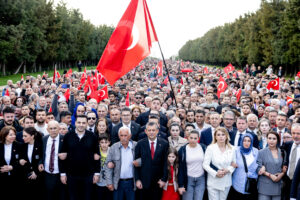
President Erdoğan’s rule has grown more repressive as he realizes he has no democratic path to power. But we are united in our resolve and determined to make Turkey a democratic republic worthy of its people.
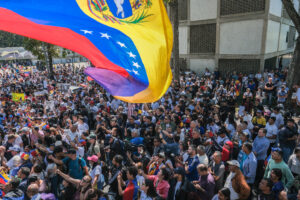
The country’s civil society is reemerging, opposition leaders are returning, and activists are taking to the streets. Even more, Washington has the leverage to bring about real change. Will it seize the moment?
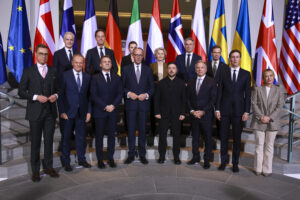
It certainly should be. But the reality is that Europe’s newfound autonomy isn’t producing the stalwart defense of democracy that the world now requires.
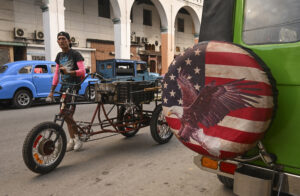
La administración Trump está aumentando la presión y la dictadura insular atraviesa una crisis profunda. Pero ¿cuál es el plan para recoger los pedazos?
The Trump administration is ratcheting up the pressure, and the island dictatorship is in deep crisis. But what is the plan for picking up the pieces?
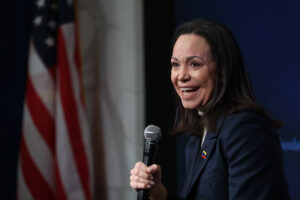
Que la captura de Nicolás Maduro conduzca a la democracia depende de Donald Trump — y de la capacidad de María Corina Machado para hacer que un futuro democrático sea su única opción atractiva.

Nicolás Maduro ha sido removido, pero la dictadura que él encabezó permanece. Si este período de tutela estadounidense se prolonga demasiado, será una receta para el desastre para Venezuela como para Estados Unidos.
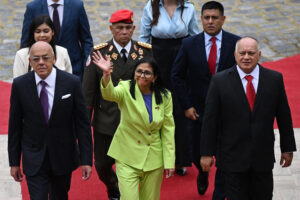
Delcy Rodríguez y sus compinches no se van a rendir así nomás. Piensan adaptarse y sabotear cualquier intento de restaurar la democracia en Venezuela. Esta es su estrategia.
Delcy Rodríguez and her cronies aren’t going to surrender easily. They plan to adapt and undermine any attempt to restore Venezuela’s democracy. This is their strategy.
Whether the capture of Nicolás Maduro leads to democracy depends on Donald Trump — and María Corina Machado’s ability to make a democratic future the only attractive choice.
Nicolás Maduro has been removed, but the dictatorship he led remains. If this period of American tutelage drags too long, it will be a recipe for disaster for Venezuela and the United States.
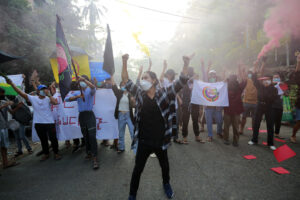
Burma’s democratic resistance has made impressive gains against the country’s corrupt junta. But they need help from the world’s democracies if they are to succeed and create an enduring peace.
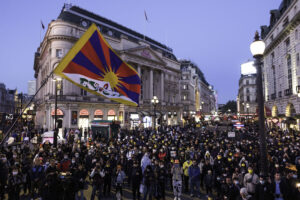
The CCP is engaged in a sprawling campaign to undermine democracy. Governments too often can be lumbering or weak in response. Look to civil society for the creativity and skill to keep the CCP on its heels.
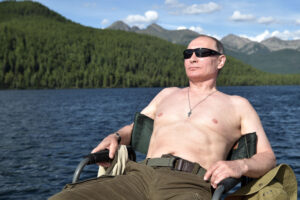
Vladimir Putin has become a one-stop shop for authoritarians around the world, providing them whatever they need to advance their cause. Democracy’s defenders don’t get the same support — but it’s time for that to change.
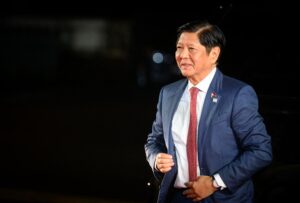
Many feared Ferdinand Marcos Jr.’s election would spell the end of Philippine democracy. But the dictator’s son has surprised nearly everyone, playing the role of a reformer while moving fast to sideline his populist rivals.
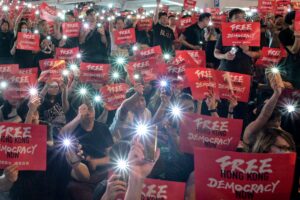
Many derided it as naïve idealism, but the vision undergirding the Freedom Agenda offers lessons for the biggest global tests of our time.