
January 2026, Volume 37, Issue 1
The Empty Quest for Muslim Democracy
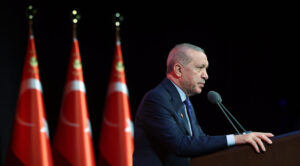
Two decades ago, there was a wave of optimism about the rise of “Muslim democracy,” but these hopes have not been realized. What are the real barriers to progress?
January 2026, Volume 37, Issue 1
Two decades ago, there was a wave of optimism about the rise of “Muslim democracy,” but these hopes have not been realized. What are the real barriers to progress?
July 2025, Volume 36, Issue 3
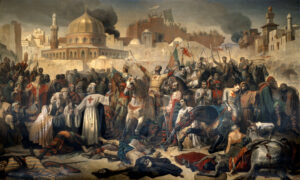
The most challenging type of diversity for democracy is religious diversity. This also helps explain why modern democracy first took root in Western Europe: Religiously homogenous populations went hand in hand with the early formation of parliaments.
July 2025, Volume 36, Issue 3
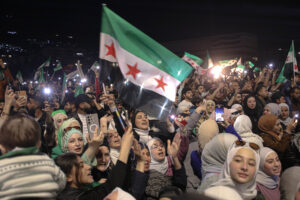
Syria is a rare case. A state being governed by a new elite that is committed to Islamic thought but open to a wide range of intellectual influences. While it is early, we may see the rise of a novel brand of Islamic presidentialism in the works.

January 2020, Volume 31, Issue 1
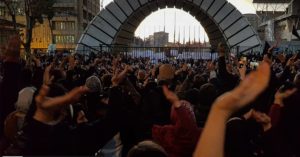
Iran is in the midst of an ideological crisis. Growing numbers of Iranians are rejecting the religious underpinnings of the Supreme Leader’s rule, and turning their backs on the Islamic Republic. The regime’s only response is harsher repression—a response that will deepen the anger that is bringing everyday Iranians out into the streets.
October 2018, Volume 29, Issue 4
A review of Tunisia: An Arab Anomaly by Safwan M. Masri.
July 2018, Volume 29, Issue 3
The president of Tunisia’s Ennahdha party, Rached Ghannouchi, argues that the solution to extremism is more (not less) freedom and democracy, along with more moderate religious teachings.
January 2017, Volume 28, Issue 1
Ennahda has long felt an especially strong kinship with Turkey’s AKP, which has seen as representing a combination of piety, prosperity, and democratic credibility. How might their relationship be affected by the AKP's more recent authoritarian turn?
April 2012, Volume 23, Issue 2
The upheavals that have been shaking the Arab-Muslim world are revolutions in discourse as well as in the streets. Arabs are using not only traditional and religious vocabularies, but also a new set of expressions that are modern and represent popular aspirations.
April 2012, Volume 23, Issue 2
Of all the “Arab Spring” countries, so far only Tunisia has managed to make a transition to democracy. Tunisians now have a chance to show the world a new example of how religion, society, and the state can relate to one another under democratic conditions.
January 2011, Volume 22, Issue 1
A powerful “salafist” public norm has taken root in the Arab world, becoming the main symbol of resistance to Westernization. At the same time, however, new cultural forces in the private domain are promoting a dynamic of secularization.
July 2010, Volume 21, Issue 3
The 2009 vote for the presidency and local councils was marred by fraud, provoking a political crisis and casting a deep shadow over upcoming parliamentary elections. The Afghan experience calls into question whether voting should occur before other essential reforms are in place.
July 2010, Volume 21, Issue 3
Although many Iraqi parties continue to be organized along religious or ethnic lines, both the tone and the results of the 2010 parliamentary election campaign show that most Iraqi voters prefer a broader national agenda over narrow sectarian appeals.
July 2010, Volume 21, Issue 3
A new look at the World Values Survey data reveals how the Muslim world’s religious context affects individual Muslims’ attitudes toward democracy.
April 2010, Volume 21, Issue 2
Indonesia is widely lauded as a democratic success story for rolling back the military, keeping radical Islam in check, and institutionalizing democratic freedoms. But this success has had costs in terms of democratic quality.
April 2010, Volume 21, Issue 2
Those who warn against efforts to promote free elections in Muslim-majority countries often point to the threat posed by Islamic parties that stand ready to use democracy against itself. But what does the record really show regarding the ability of Islamic parties to win over Muslim voters?
October 2009, Volume 20, Issue 4
Iran’s massive protest movement against June’s electoral coup is now moving into a new phase. What are its prospects?
October 2009, Volume 20, Issue 4
The Islamic Republic is struggling, with the Revolutionary Guard Corps more and more the only thing propping it up.
October 2009, Volume 20, Issue 4
When students and other rights activists decided to seize a tactical opening that the regime cynically offered them during the 2009 campaign, they were making a choice that was even more fateful than they knew.
July 2009, Volume 20, Issue 3
Legislative elections in the Middle East often become contests over patronage and wind up reinforcing authoritarian regimes.
April 2009, Volume 20, Issue 2
The secularization hypothesis has failed, and failed spectacularly. We must find a new paradigm to help us understand the complexities of the relationship between religion and democracy.
January 2009, Volume 20, Issue 1
A review of The West and Islam: Religion and Political Thought in World History by Antony Black
October 2008, Volume 19, Issue 4
Since its founding out of the partition of British India in 1947, Pakistan has labored in the shadow of critical choices made at that time.
July 2008, Volume 19, Issue 3
The rise of Islamist parties poses new challenges to efforts to understand the relationship between Islam and democracy. A diverse group of authors investigates this new phenomenon and its implications for the future of democracy in the Middle East.
July 2008, Volume 19, Issue 3
Read the full essay here. The debate on the compatibility of Islamism and democracy has tended to focus on two main scenarios. In the first, Islamist political parties become agents for democratization through their participation in freely held elections. In the second, Islamists use the democratic process to gain control and establish an antidemocratic regime—the…
July 2008, Volume 19, Issue 3
Read the full essay here. Political Islam is often cited as the key challenge to democratization in Muslim nations, but deep currents of authoritarianism may prove more of an obstacle. Traditions of monarchy, military rule, and weak civic institutions block the path of democratic transition throughout the Muslim world. Political Islam does of course present…
July 2008, Volume 19, Issue 3
Read the full essay here. This article makes a case of the basic distinction between Islam and Islamism and presents three central arguments: 1. through religious reforms and a rethinking of the Islamic doctrine, the cultural system of Islam can be put in harmony with democracy, 2. this (first) argument does not apply to Islamism…
July 2008, Volume 19, Issue 3
Read the full essay here. What role do mainstream Islamist movements play in Arab politics? With their popular messages and broad social base, would their incorporation as normal political actors be the best hope for democratization or democracy’s bane? For too long, we have tried to answer such questions solely by speculating about the true…
January 2008, Volume 19, Issue 1
The program of carefully controlled reform-from-above that King Mohamed VI began almost a decade ago may now have reached an impasse amid signs of growing disaffection.
January 2008, Volume 19, Issue 1
The most important aspects of Morocco's September 2007 parliamentary election may have been things that did not happen: The Islamists did not win, and many citizens either did not vote or spoiled their ballots.
January 2008, Volume 19, Issue 1
Events surrounding Turkey's 2007 elections reveal a country with a vibrantly democratic political sphere and a society badly split over the role of Islam in national life.
January 2008, Volume 19, Issue 1
Findings from the Arab Barometer say little about whether there are likely to be transitions to democracy in the Arab world in the years ahead, but they do offer evidence that citizens' attitudes and values are not the reason that authoritarianism has persisted.
April 2007, Volume 18, Issue 2
About two-thirds of the world's Muslims live under governments chosen through competitive elections. The remaining third lives mostly in the Arab world, a region that poses the hardest challenges for democratization.
April 2007, Volume 18, Issue 2
Much has been achieved both in the war against the Taliban and in the larger struggle to create a democratic Afghanistan, but dire problems remain.
July 2006, Volume 17, Issue 3
The desire for freedom and self-government is written in human hearts everywhere; in this there can be no "clash of civilizations." Claims that Islam is inherently hostile to democracy represent an unwarranted surrender to fundamentalist arguments; we should engage with a broad spectrum of Muslim groups, but without compromising our commitment to freedom and democracy.
July 2006, Volume 17, Issue 3
By giving Hamas a parliamentary majority, Palestinian voters were neither endorsing extremism nor rejecting the peace process. Other Palestinian institutions have the potential to restrain Hamas, but there is a risk that it will turn to Iran or Syria for help.
July 2006, Volume 17, Issue 3
January’s remarkably free and fair parliamentary elections broke the PLO’s longstanding monopoly over Palestinian politics. Given Fatah’s disarray and the difficulties facing Hamas, there is now a window of opportunity for a third and avowedly liberal-democratic option to emerge.
April 2006, Volume 17, Issue 2
Contemporary liberal democracies, especially in Western Europe, face a major challenge in integrating Muslim immigrants as citizens of pluralistic societies.
January 2006, Volume 17, Issue 1
Taking advantage of the withdrawal of Syrian troops, Lebanese voters capped the "Beirut Spring" by electing a new majority in parliament.
January 2006, Volume 17, Issue 1
There is a widespread desire for democracy among the Iraqi public, but when it comes to the roles of religion, ethnicity, and gender equality in Iraq's new democracy, attitudes are more varied.
January 2006, Volume 17, Issue 1
Whether ethnic, sectarian, or some combination of the two, communalsim is one of the massive realities of Middle Eastern life and politics. It is usually seen as an obstacle to democracy, but need that always be the case?
January 2006, Volume 17, Issue 1
Strategies based on transition pacts that reduce rulers' risks and cushion their retreat from total power may be the most promising route to democracy in the Arab world.
January 2006, Volume 17, Issue 1
A review of The Universal Hunger for Liberty: Why the Clash of Civilizations Is Not Inevitable. By Michael Novak.
October 2005, Volume 16, Issue 4
The May 2005 presidential election capped a process of conservative reentrenchment, but with a surprising populist twist.
October 2005, Volume 16, Issue 4
The June 2005 presidential ballot marks the culmination of the regime’s effort to dominate even the limited powers of the popularly elected offices.
October 2005, Volume 16, Issue 4
In the lines of suffering etched on the visage of this courageous dissident may be read the drama of Iran today.
October 2005, Volume 16, Issue 4
Given the unaccountable authority of the supreme leader, the Islamic Republic should be classified as a sultanistic regime. In such regimes, democratic change is more likely to come from nonviolent resistance than from internal reform.
October 2005, Volume 16, Issue 4
The election results reflect less what voters want than the ideological dynamics that shape the behavior of factions within the regime.
October 2005, Volume 16, Issue 4
The large number of nonvoters suggests that the movement for a free, internationally monitored referendum on the Islamic Republic’s constitution could gain widespread support. We must now work to make that so.
October 2005, Volume 16, Issue 4
Basic demographic and socioeconomic factors in Iran are favorable to democratization. The mullahs may hope to stave off democratic change by emulating the Chinese model, but this strategy is doomed to fail.
July 2005, Volume 16, Issue 3
Even after its successful elections, Iraq remains a divided society. Democracy did not create these divisions, but it could be the key to managing them.
July 2005, Volume 16, Issue 3
For the Shi'ite majority and its senior religious leader, the January elections played out against the background of a longing for justice that has deep spiritual sources as well as more recent sociopolitical roots.
July 2005, Volume 16, Issue 3
Is the Islamic-oriented party that has ruled since 2002 really the harbinger of 'Muslim democracy,' or is it something more familiar in Turkish politics: a hierarchical group none too closely in touch with society and overly focused on one man?
January 2005, Volume 16, Issue 1
Modest progress in the muslim-majority countries is complemented by mass mobilization for democracy and freedom in Ukraine. Meanwhile, Russia ranks as Not Free for the first time since the fall of communism.
October 2004, Volume 15, Issue 4
The lack of democracy in the Arab world is a problem that goes far beyond the absence of competitive elections. This lack must be traced not to religion or culture, but to adverse historical and geostrategic circumstances.
October 2004, Volume 15, Issue 4
The notion that the Muslim world as a whole does not suffer from a deficit in terms of competitive democracy is apealing, but rests on evidence and assumptions that cannot withstand critical scrutiny.
July 2004, Volume 15, Issue 3
As 2004 began, Afghanistan approved a new constitution that represents a key step forward in its political reconstruction. But it is not yet clear whether this new constitution will enable the country to surmount the many challenges that lie ahead.
January 2004, Volume 15, Issue 1
The stakes are enormous and the challenges are difficult, but a look at Iraq months after the toppling of Saddam Hussein reveals that, despite all the frustrating setbacks, grounds for cautious optimism remain.
January 2004, Volume 15, Issue 1
In the world’s most populous Muslim-majority country, a dense and pervasive network of moderate Muslim civil society organizations significantly reinforces political moderation and limiting the appeal of radical Islamism.
July 2003, Volume 14, Issue 3
Representatives of the Iraqi democratic opposition to Saddam Hussein assess what must be done to overcome the legacy of dictatorship and pave the way toward a free and democratic future for their country.
July 2003, Volume 14, Issue 3
Gauging electoral competitiveness relative to economic development reveals not only that Arab countries “underperform” but, strikingly, that non-Arab Muslim-majority countries tend to “overperform.”
April 2003, Volume 14, Issue 2
The Editors’ introduction to “What is Liberal Islam?”
April 2003, Volume 14, Issue 2
There is an emerging current of enlightened thought in the Muslim world today, but it is all too often wrongly labeled and poorly understood.
April 2003, Volume 14, Issue 2
An “Islamic Reformation” is not a necessary condition for the emergence of democracy in the Muslim world; what is most needed is a political reformation.
April 2003, Volume 14, Issue 2
Liberal Islam remains marginal because it is politically suppressed; in truth, it represents the predominant political hopes of Muslims around the world.
April 2003, Volume 14, Issue 2
If they are to understand Islam authentically and to embrace the modern world freely, Muslims must take a new attitude toward their traditions of interpretation.
April 2003, Volume 14, Issue 2
The recent parliamentary victory of the AKP represents a new political course that holds enormous potential for Turkish democracy.
January 2003, Volume 14, Issue 1
Despite today’s gridlock, there are grounds for hope in the widespread embrace of democratic ideals by young people.
January 2003, Volume 14, Issue 1
The vast obstacles to democratic reformism include basic provisions in the Constitution of the Islamic Republic itself.
January 2003, Volume 14, Issue 1
After a decade of partial liberalization begun by the late King Hussein, freedoms are now being rolled back by an anxious regime.
October 2002, Volume 13, Issue 4
The Editors’ introduction to “Democratization in the Arab World?”
October 2002, Volume 13, Issue 4
Saudi Arabia would seem to exemplify full-blown authoritarianism. Yet there are trends pushing the country toward more open politics.
October 2002, Volume 13, Issue 4
How well-founded are Western concerns that the nascent parliaments of Kuwait, Qatar and Bahrain will be captured by antidemocratic Islamists and lead to the ‘Talibanization’ of the Gulf?
October 2002, Volume 13, Issue 4
While President Ali ABdallah Salih continues to call Yemen an ’emerging democracy,’ it more closely resembles athe autocracy of the pre-unification North.
October 2002, Volume 13, Issue 4
Politics in the Arab Middle East is often a matter of powerholders first liberalizing — and then "deliberalizing" — public life in order to first maintain their rule. But this "survival strategy" is a dead end.
October 2002, Volume 13, Issue 4
What do Muslims think about democracy? Although reliable evidence is hard to come by, survey data from Central Asia open a window on this matter of vital concern in the Muslim world and beyond.
July 2002, Volume 13, Issue 3
The Editors’ introduction to “Middle East Studies After 9/11.”
July 2002, Volume 13, Issue 3
Talk about the Middle East and those who study it has become understandably heated. But we can learn more through a calm assessment of the achievements and weaknesses of this field.
July 2002, Volume 13, Issue 3
Is the field of Middle East studies as badly flawed as some critics charge? A fair-minded look at the last 10 or 15 years of research suggests otherwise.
July 2002, Volume 13, Issue 3
Middle Eastern autocracies rely ever more on repression of both their Islamist and secular critics, and therefore increasingly fear that any opening will be uncontrollable. Is there a way out?
July 2002, Volume 13, Issue 3
While many experts recommend postponing democratization pending the rise of a middle class, a directly political strategy may well be better.
July 2002, Volume 13, Issue 3
This region’s five republics have just lived through a remarkable first decade of independence that raises questions about “preconditions”-based theories of democratization.
April 2002, Volume 13, Issue 2
Although Islamist terror groups invoke a host of religious references, the real source of their ideas is not the Koran but rather Leninism, fascism, and other strains of twentieth-century thought that exalt totalitarian violence.
January 2002, Volume 13, Issue 1
A review of Afghanistan’s Endless War: State Failure, Regional Politics, and the Rise of the Taliban by Larry P. Goodson; and Taliban: Militant Islam, Oil, and Fundamentalism in Central Asia, by Ahmed Rashid.
July 2001, Volume 12, Issue 3
After a failed democratic experiment in 1993-96 and two military coups, Niger successfully held free and fair elections in 1999. The next couple of years will be crucial to the long-term survival of democracy.
January 2001, Volume 12, Issue 1
The military regime of General Musharraf has been less repressive than many had feared, but there is little sign that it is overcoming the deep-seated problems that led to the failure of Pakistani democracy.
October 2000, Volume 11, Issue 4
Are all, or only some, of the world’s religious systems politically compatible with democracy?
October 2000, Volume 11, Issue 4
The uneasy accommodation of competing visions of authority that has characterized Iran’s political system since 1979 is a familiar phenomenon in the Middle East and elsewhere.
October 2000, Volume 11, Issue 4
The “Fourth Generation” of Iranian intellectuals has a vital role to play in strengthening civil society and fostering democratization.
July 2000, Volume 11, Issue 3
Many observers regarded 1999 as a year of progress for democracy in the Arab world. There is reason to doubt, however, whether any meaningful change has really occurred.
October 1999, Volume 10, Issue 4
Read the full essay here.
October 1997, Volume 8, Issue 4
A review of Islam and Democracy, by John L. Esposito and John O. Voll.
January 1997, Volume 8, Issue 1
Read the full essay here.
April 1996, Volume 7, Issue 2
Read the full essay here.
April 1996, Volume 7, Issue 2
Read the full essay here.
April 1996, Volume 7, Issue 2
Read the full essay here.
April 1996, Volume 7, Issue 2
Read the full essay here.
April 1996, Volume 7, Issue 2
Read the full essay here.