

July 2002, Volume 13, Issue 3
Globalization and Self-Government
Until now, globalization and democratization have been mutually reinforcing, but in the future globalization may pose serious challenges for democracy.
July 2002, Volume 13, Issue 3
Until now, globalization and democratization have been mutually reinforcing, but in the future globalization may pose serious challenges for democracy.
April 2002, Volume 13, Issue 2
Although Islamist terror groups invoke a host of religious references, the real source of their ideas is not the Koran but rather Leninism, fascism, and other strains of twentieth-century thought that exalt totalitarian violence.

January 2002, Volume 13, Issue 1
Must countries where authoritarian regimes have fallen therefore be “in transition” to democracy? Many democracy promoters seem to think so. Yet trends on the ground in country after country are raising doubts about whether it is true or useful to think of democracy’s prospects in this way.
July 1999, Volume 10, Issue 3
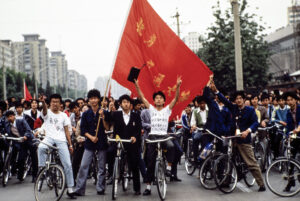
The recognition of democracy as a universally relevant system is a major revolution in thinking, and one of the main contributions of the twentieth century. While not yet universally practiced, democracy is now being taken as generally right.
October 1995, Volume 6, Issue 4
Review of Long Walk to Freedom: The Autobiography of Nelson Mandela (1994).
April 2026, Volume 37, Issue 2
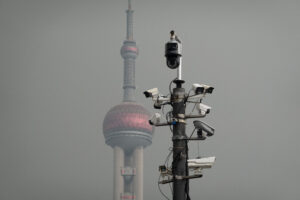
Artificial intelligence is often seen as a silver bullet for authoritarians, a breakthrough technology making repression cheaper, faster, and more precise. But it has inherent weaknesses, and dictators can’t escape these dilemmas.

April 2026, Volume 37, Issue 2
The world’s “middle powers” were once bastions of defense for a liberal rules-based international order. But no more. A new kind of authoritarian middle power has emerged, undermining democratic norms and safeguards.
April 2026, Volume 37, Issue 2
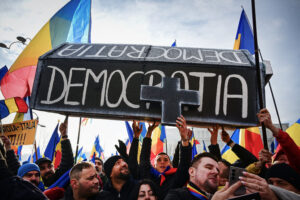
Democracy’s present difficulties were predictable. History and older theories of democratic stability should have prepared us for both democratic backsliding and the vulnerability of Western democracy we are experiencing today.
April 2026, Volume 37, Issue 2
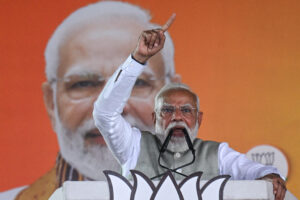
Today, the principal challenge to democracy is coming not from coups but from democratic erosion driven by elected leaders. What is behind this shift, and how can prodemocracy forces push back?

April 2026, Volume 37, Issue 2
The judiciary is widely assumed to defend democracy. Yet in reality, even when independent of elected governments, courts can endanger democracy—sometimes by enabling executives and sometimes by aggressively fighting them.
April 2026, Volume 37, Issue 2
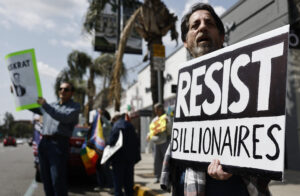
Populism is too often treated as if it is all one thing. But what if populist politics and democratic backsliding didn’t have to go together? A closer look reveals two kinds of populism, one of which is less threatening to liberal democracy.

April 2026, Volume 37, Issue 2
Venezuela has a path to democracy, but it requires dismantling the old regime. María Corina Machado, the country’s true democratic leader, must signal her credibility as a moderate through a framework of transitional justice. It won’t be perfect justice, but it is Venezuela’s best hope.
April 2026, Volume 37, Issue 2
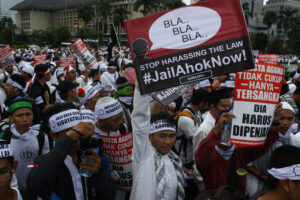
Decentralized governance allows communities to enact policies that reflect their values. But in the digital age, when news spreads far and fast, what’s happening in one place may inflame citizens’ attitudes thousands of miles away, magnifying political differences and division.

April 2026, Volume 37, Issue 2
Oppositions resisting autocrats or antidemocratic incumbents could once get help internationally. But the space for democracy promotion has narrowed, while oppositions face divisions within their own ranks over how to best fight back.
April 2026, Volume 37, Issue 2
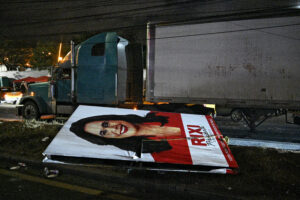
An opposition party that swept into power with a 2021 electoral win was swept out by voters four years later. It failed to deliver on its promises and was beset by the same authoritarian leanings of those it had replaced.
April 2026, Volume 37, Issue 2
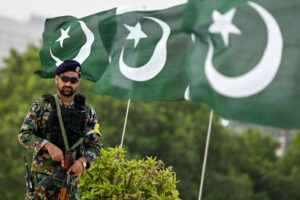
The military has long had the final say in Pakistani politics. In response to Imran Khan’s populist surge, the military adapted, making use of selective repression and writing its control more deeply into the country’s institutions.

April 2026, Volume 37, Issue 2
Over the last half-century, a surprising share of new democracies have put their former dictators, or the children of those dictators, back in power. What explains the electoral success of these “dictocrats” and “dictobrats”?
April 2026, Volume 37, Issue 2
A review of Fateful Hours: The Collapse of the Weimar Republic, by Volker Ullrich.

This is the darkest moment for freedom in half a century. Whether democracy regains its footing will depend on how democratic leaders and citizens respond to emboldened authoritarians and the fissures within their own societies.