
3273 Results
is méxico at the gates of authoritarianism pdf
January 2001, Volume 12, Issue 1
Monarchy and Political Reform in Morocco
Morocco’s new king, Mohamed VI, has two alternatives: He can invent a new “ruling bargain,” prolonging his father’s authoritarian rule in a new guise, or he can spearhead serious political reforms.
October 2003, Volume 14, Issue 4
Making Sense of the EU: Competing Goals, Conflicting Perspectives
Is the EU an international organization, an emerging federal state, something in between, or something altogether different? So far it has managed to survive and prosper depite all the disagreements about its true nature, but for how long can it continue to do so?
October 2005, Volume 16, Issue 4
Iran’s Peculiar Election: The Conservative Wave Rolls On
The May 2005 presidential election capped a process of conservative reentrenchment, but with a surprising populist twist.
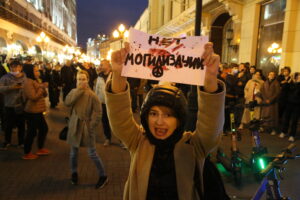
Putin’s Big Gamble
The Kremlin’s order to call up Russians to fight in Ukraine risks massive protests. It’s the riskiest decision of Putin’s rule, and it could lead to his undoing.
October 2014, Volume 25, Issue 4
Election Watch
Reports on elections in Afghanistan, Colombia, Indonesia, Libya, Mauritania, Slovenia, and Turkey.
Democracy after Communism
Is the challenge of building and consolidating democracy under postcommunist conditions unique, or can one apply lessons learned from other new democracies? The essays collected in this volume explore these questions, while tracing how the countries of Eastern Europe and the former Soviet Union have fared in the decade following the fall of communism.
April 2018, Volume 29, Issue 2
Brazil: The Costs of Multiparty Presidentialism
The massive corruption revealed by Brazil’s “Operation Car Wash” points to fundamental flaws in multiparty presidential systems, where presidents must find ways to build coalitions in fragmented legislatures.

July 2009, Volume 20, Issue 3
China Since Tiananmen: The Massacre’s Long Shadow
In the two decades since the Tiananmen massacre, China has enjoyed rapid economic growth and a measure of political stability. Recently, however, various forms of popular protest have been increasing. Do they represent a potentially serious threat to CCP rule?
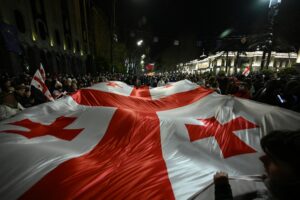
Why Georgians Won’t Give Up
Even as the ruling party has grown more repressive, the people have swarmed the streets in protest — every day. The protesters know the government’s true goal is to appease Russia, and Georgians will never accept it.
October 2013, Volume 24, Issue 4
The Third Wave: Inside the Numbers
Is democracy threatened by a “reverse wave”? Examining regional patterns and distinguishing between different types of democracy gives us a new basis for assessing this question. Listen to the podcast with authors Jørgen Møller and Svend-Erik Skaaning [mp3]
January 2011, Volume 22, Issue 1
Two Essays on China’s Quest for Democracy
Imprisoned Chinese dissident Liu Xiaobo, who was awarded the 2010 Nobel Peace Prize, is best known for his eloquent and incisive essays. Two of them are featured here: “Can It Be That the Chinese People Deserve Only ‘Party-Led Democracy’?” and “Changing the Regime by Changing Society.”
April 2000, Volume 11, Issue 2
Eastern Europe: The International Context
Nowhere else has the impact of international factors on democratization been as apparent as in Central and Eastern Europe. Integration into European and Euro-Atlantic structures is one particularly strong democratizing force.
October 2010, Volume 21, Issue 4
The Upsurge of Religion in China
Religion in various forms is burgeoning in the PRC today, and the ruling Chinese Communist Party cannot decide what to make of it—or do about it.
October 2014, Volume 25, Issue 4
Euroskepticism Arrives: The Missing Debate
Disagreements over how much power should reside in Brussels must be allowed to become a normal aspect of debates about European affairs.
April 2001, Volume 12, Issue 2
The Americanization of the European Left
In postindustrial societies, class is less important as a source of party cleavage. With the European left embracing a market-friendly “third way,” political divisions in Europe are increasingly resembling those in the United States.
October 2000, Volume 11, Issue 4
Is Iran Democratizing? Voices From Within: Excerpts from the Iranian Press
Four excerpts from the Iranian press-on elections and democracy and on religious intolerance and intellectual pluralism-suggest the extent to which democratic thinking has gained a foothold in Iran.
October 2009, Volume 20, Issue 4
Poverty, Inequality, and Democracy (II): Does Electoral Democracy Boost Economic Equality?
The recent global progress of democracy has been accompanied by increasing economic inequality. What are the implications for the quality of democracy and for its ability to endure?
July 2005, Volume 16, Issue 3
Promoting Transparency in Angola
Natural-resource wealth has been at the root of Angola's corruption and authoritarianism. By giving leverage to those pushing for reform, however, it has also become a key factor in teh struggle for accountability.
April 2005, Volume 16, Issue 2
Challenge and Change in East Asia: Constitutionalism on Trial in South Korea
During the early years of south korea's transition to democracy, expanding popular rule and deepening individual rights went hand-in-hand. But Roh Moo Hyun's presiency has exposed rifts between majority rule and constitutionalism that the country's judiciary is struggling to bridge.