
July 2007, Volume 18, Issue 3
Communism’s Many Legacies in East-Central Europe
Democracy is facing hard times in the region, but the shape of the problems varies according to the differing informal legacies of communism in individual countries.
2785 Results
July 2007, Volume 18, Issue 3
Democracy is facing hard times in the region, but the shape of the problems varies according to the differing informal legacies of communism in individual countries.
January 2007, Volume 18, Issue 1
The 1997 financial crisis undermined the argument for a putative “Asian-style democracy” that prioritized economic development over political liberalization. Yet recent electoral and other reforms have set the stage for the emergence of a genuine “Asian model” of democracy.
July 2006, Volume 17, Issue 3
Despite a significant expansion of citizenship over the last few decades, the Andean nations face a severe crisis of democratic representation. The root of the problem lies not in the mechanisms of representation but in poor state performance.
July 2006, Volume 17, Issue 3
Much like other institutions in post-Soviet Russia, the intelligence and security services have yet to make a transition to real democratic control, and remain infused with the authoritarian tendencies of their Soviet predecessors.
July 2006, Volume 17, Issue 3
By giving Hamas a parliamentary majority, Palestinian voters were neither endorsing extremism nor rejecting the peace process. Other Palestinian institutions have the potential to restrain Hamas, but there is a risk that it will turn to Iran or Syria for help.
July 2005, Volume 16, Issue 3
The regime type known as semipresidentialism became a popular choice during the "third wave" of democratization. But some variations of this constitutional arrangement are more conducive to democracy than others
July 2005, Volume 16, Issue 3
At the end of the Cold War, semipresidentialism became the modal constitution of the postcommunist world. In Russia and other post-Soviet states, however, this system of government has impeded consolidation.
April 2004, Volume 15, Issue 2
Orthodoxy’s difficult historical experiences have made it ambivalent toward democatic pluralism, but that may be changing, with believers in established democacies leading the way.
April 2004, Volume 15, Issue 2
In an exchange of letters, leading Cuban dissident Oswaldo Paya discusses with Vaclav Havel the lessons that the Czechoslovak experience offers to Cubans seeking a democratic transition in thier own country.
January 2004, Volume 15, Issue 1
For this huge, sprawling nation in the throes of an ambiguous transition, 2004 will be a year replete with unprecedented electoral tests. In the end, leadership and results will probably count for more than rules and institutions, however carefully designed.
July 2003, Volume 14, Issue 3
Almost a half-century after being forced from their homeland, Tibetans abroad, led by the Dalai Lama, have democratized their institutions in hopes that they may one day form the basis for a free and self-governing Tibet.
April 2003, Volume 14, Issue 2
There is an emerging current of enlightened thought in the Muslim world today, but it is all too often wrongly labeled and poorly understood.
April 2003, Volume 14, Issue 2
Invited to join the European Union next year, the Czech Republic has a weak governing coalition that faces deep challenges at home.
April 2003, Volume 14, Issue 2
What can public-opinion research tell us about the staying power of democracy in the region? Has it passed the point of any possible return to authoritarianism?
January 2003, Volume 14, Issue 1
The Chinese state has become more efficient, constrained, and responsive—improvements that could lay a base for a successful transition.
April 2000, Volume 11, Issue 2
A country's political regime, regardless of its level of development, affects its social performance. Fewer children die in democracies than in dictatorships.

July 2020, Volume 31, Issue 3
Although South Korea is praised for its success at fighting covid-19, the triumph came at a cost to rights and privacy, and is drawing attention away from a larger drift toward illiberalism and bitterly factionalized politics.
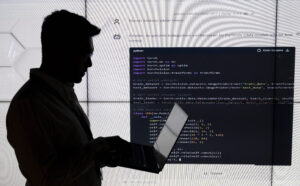
October 2025, Volume 36, Issue 4
Artificial intelligence and its effects on democracy are a matter of choice, not fate. The concerns are longer term than the recent spate of worry about “generative” AI would suggest. The democratic conversation about AI has hardly begun.
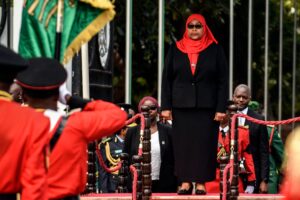
July 2025, Volume 36, Issue 3
President Samia Suluhu Hassan came into office promising democratic reforms. Four years later, it is clear she is more of a performer than a reformer. Far from delivering on her promises to unwind Tanzania’s authoritarian machinery, she is relying on the repressive tools we know so well.
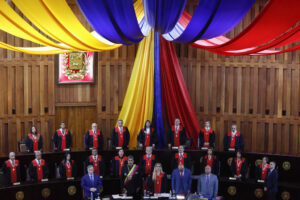
April 2015, Volume 26, Issue 2
Why do some hybrid regimes remain stable over time, while others become more authoritarian? Venezuela’s autocratic turn has been driven by the ruling party’s declining electoral fortunes and by a foreign policy that has shielded it from international scrutiny.