
January 2009, Volume 20, Issue 1
Debating the Color Revolutions: A Reply to My Critics
The color revolutions illustrate both the prevalence of diffusion and the potential limits of its impact on political change.
2195 Results
January 2009, Volume 20, Issue 1
The color revolutions illustrate both the prevalence of diffusion and the potential limits of its impact on political change.
October 2008, Volume 19, Issue 4
Once hailed as liberators, Zimbabwe’s ruling party now clings to power through violent repression. How did the country’s founding father become its dictator, and what patterns in his party’s past foretold such an outcome?
October 2007, Volume 18, Issue 4
The real danger in East-Central Europe comes not from populist ideology or attempts to subvert democracy, but rather from the manipulation of democratic procedures by those in power.
January 2007, Volume 18, Issue 1
Voters casting ballots are an indispensable element of free government, but who decides which names go on those ballots? Although methods of candidate selection have received surprisingly little study by political scientists, they merit the attention of students of democracy everywhere.
April 2005, Volume 16, Issue 2
Juan Linz’s 1990 critique of presidentialism in these pages was based largely on the Latin American experience. In the last few years, however, four new Asian democracies have encountered presidential crises. Does Linz’s work hold the secret to what has been ailing these regimes?
July 2004, Volume 15, Issue 3
Hopes for democratization now rest on the shoulders of the young. Who are they, what do they believe, and what are their political leanings? Survey data offer some clues.
October 2003, Volume 14, Issue 4
The rules that govern voting will always be of vital importance in any democracy. The beginning of wisdom is to turn from the usual focus on electoral systems in order to reflect on larger goals and the trade-offs among them that may be necessary.
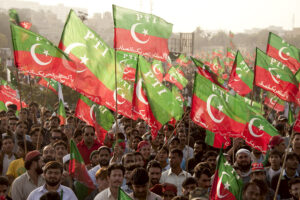
July 2024, Volume 35, Issue 3
Pakistani voters sent the military a message in the February elections: They no longer trust the “guardian of the country.” Worse for the generals, they can no longer escape accountability for their corruption and incompetence because everyone knows the military is in charge.
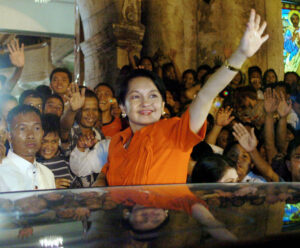
October 2004, Volume 15, Issue 4
Gloria Macapagal-Arroyo’s election as president in her own right capped a campaign that spoke well of Philippine democracy, but yawning gaps in the rule of law obstruct the road to consolidation.
July 2001, Volume 12, Issue 3
After a failed democratic experiment in 1993-96 and two military coups, Niger successfully held free and fair elections in 1999. The next couple of years will be crucial to the long-term survival of democracy.
April 2005, Volume 16, Issue 2
During the early years of south korea's transition to democracy, expanding popular rule and deepening individual rights went hand-in-hand. But Roh Moo Hyun's presiency has exposed rifts between majority rule and constitutionalism that the country's judiciary is struggling to bridge.
July 2003, Volume 14, Issue 3
Representatives of the Iraqi democratic opposition to Saddam Hussein assess what must be done to overcome the legacy of dictatorship and pave the way toward a free and democratic future for their country.
January 2002, Volume 13, Issue 1
A decade after the end of apartheid, South African democracy may be headed for trouble because the country has yet to fulfill the three requirements of democratic consolidation: inequality-reducing economic growth, stable institutions, and a supportive political culture.
January 2002, Volume 13, Issue 1
India defies the widely held view that poor societies are unlikely to remain democratic. What explains the resilience of India’s democracy in the face of long odds? The answer lies in the ways the country has responded to the varied challenges of the past decade.
October 2001, Volume 12, Issue 4
Except for the Baltic states, the countries of the former Soviet Union may be less democratic today than in the last years of the USSR.
July 2001, Volume 12, Issue 3
There has been surprisingly little celebration of the tenth anniversary of the revolutions that brought down communism. The exaggerated hopes of the time have given way to disillusionment, but the real achievements of many of the postcommunist countries should not be discounted.
April 2001, Volume 12, Issue 2
The sudden and surprising downfall of President Alberto Fujimori has opened the way for a return to democracy in Peru, but the country’s new leaders will face major challenges in the coming years.
January 2001, Volume 12, Issue 1
Citizens of postcommunist countries not only want to be free to say what they think and to vote their conscience; they also want a government that obeys the rules it lays down and is not steeped in corruption.

October 2009, Volume 20, Issue 4
Iran’s massive protest movement against June’s electoral coup is now moving into a new phase. What are its prospects?
January 2016, Volume 27, Issue 1
Although the leading authoritarian regimes are today integrated in many ways into the global system, they have not become more like the democracies; instead, they have been devising policies and practices aimed at blocking democracy’s advance.