
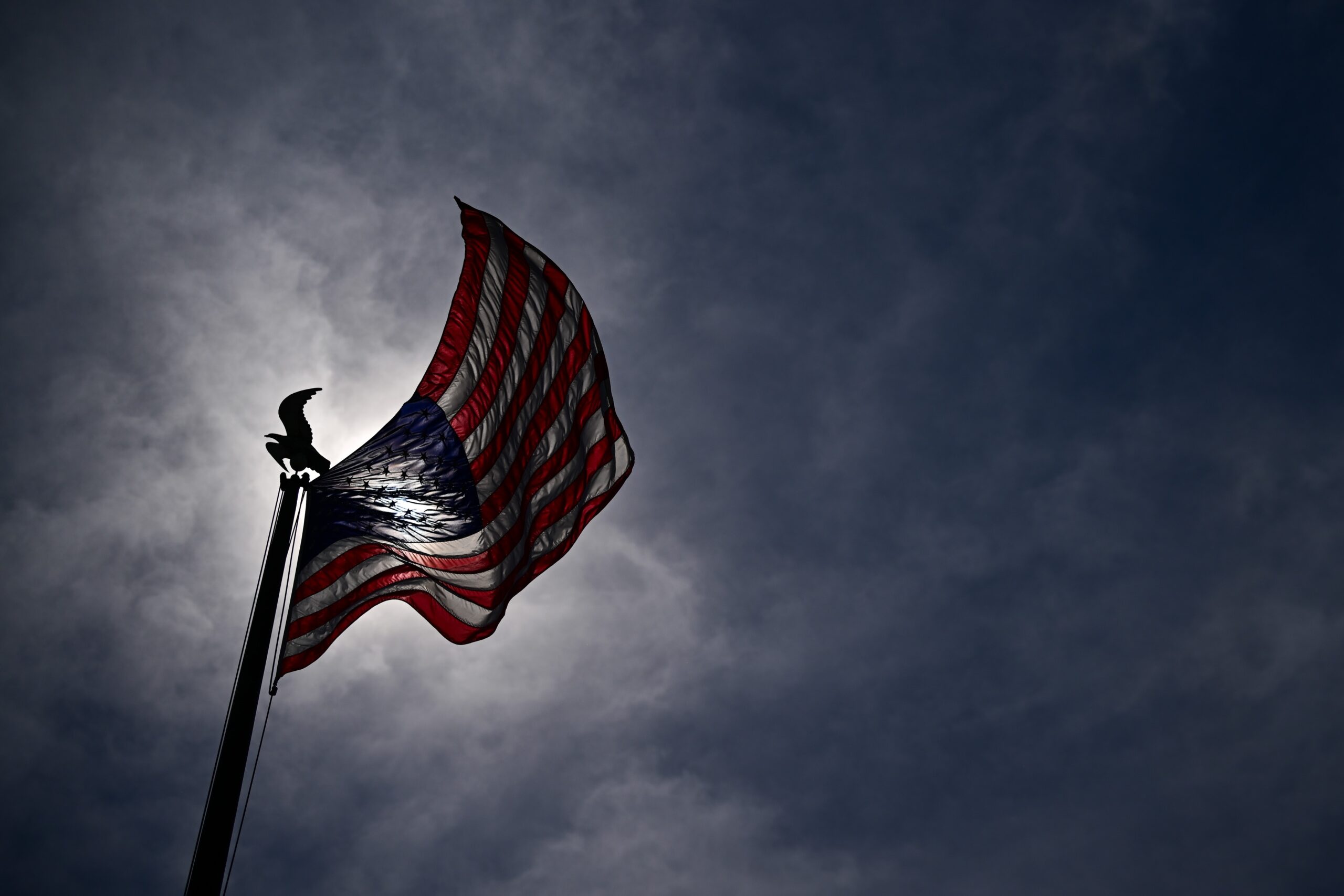
On the anniversary of America’s independence, it is a good moment to consider the state of this unprecedented experiment.
July 2026
American celebrations of the 250th anniversary of the country’s founding often have been less than edifying. Nonetheless, the attention being paid to this milestone may well be a sign of political health. It suggests that Americans still have a deep attachment to their country’s founding principles, even if that attachment has been under increasing strain over the past decade.
In political matters, 250 years is an impressively long span. Americans tend to think of themselves as belonging to a young country, one that is part of the “new world.” Yet their political institutions are very old, especially compared with those of other countries that can claim a heritage of freedom. As an East European friend once said to me, Americans may think they live in a society marked by innovation and rapid change, but they have enjoyed an extraordinary record of continuity in their political institutions. With the arguable exception of Britain, no contemporary country has a regime that has endured longer than that of the United States.
So, it is not surprising that analyses of democracy often focus in substantial part on America. While it is virtually impossible to write a book about America without writing about democracy, it is also very difficult to write a book about democracy without writing about America. As the first modern democracy, the United States provided a model and often an inspiration for the democracies that emerged later. It is true that one can find people who, despite being supporters of democracy, are hostile to America. Conversely, one can even find people who are hostile to democracy but like America. But this kind of disjunction between people’s views of democracy and their attitudes toward the United States is unusual. Most people who like democracy also like America–and vice versa.
For most of human history self-government was rare, and the predominant regime type was monarchy or empire. Machiavelli holds that all states “that have . . . power over men were and still are either republics or principalities” (the latter being a term for the various forms of one-man rule). As late as 1900 there were about 50 monarchies and only 20 republics in the world. Most of the latter were Latin American countries that had modeled their political structures on those of the United States. The only republics in Europe at that time were Switzerland, France, and San Marino. Of course, that was to change dramatically after the First World War, with the disappearance of grand empires like those of China, Czarist Russia, and the Austria-Hungary of the Hapsburgs. By 1950 the vast majority of regimes in the world were at least nominally republics, and most of the surviving monarchs had been reduced to largely ceremonial roles.
The durability of the American regime is especially noteworthy among republics. In Federalist 9, Alexander Hamilton wrote: “It is impossible to read the history of the petty republics of Greece and Italy without feeling sensations of horror and disgust” at the perpetual disorders and revolutions that afflicted them, notwithstanding their brilliant moments of glory. As Madison put it in Federalist 10, democratic republics have “in general been as short in their lives as they have been violent in their deaths.”
The scheme of the large and diverse republic introduced in the Federalist papers is meant to correct this defect by supplying “a republican remedy for the diseases most incident to republican government.” On the final day of the Constitutional Convention in 1787, when Benjamin Franklin was asked whether its deliberations had produced a monarchy or a republic, he famously replied “A republic, if you can keep it.” Despite some close calls, including a bloody civil war, the United States so far has succeeded in “keeping” the republican institutions that its Founders created 250 years ago.
Abraham Lincoln’s Gettysburg Address, delivered at the height of the Civil War in 1863, begins with the words, “Four score and seven years ago.” Lincoln thereby indicates that the new American nation was born with the Declaration of Independence in 1776, more than a decade before the Constitution was ratified in 1788. The question of the relationship between these two founding documents has been at the core of American history and thought, and it remains a subject of debate among scholars. But Lincoln makes clear his own view that the Declaration is the more fundamental. Here is how he put it in an 1861 speech at Independence Hall, the building in Philadelphia in which both the Declaration and the Constitution had been debated and adopted: “I have often inquired of myself what great principle or idea it was that kept this [Union] . . . so long together. It was not the mere matter of the separation of the Colonies from the motherland; but that sentiment in the Declaration of Independence which gave liberty, not alone to the people of this country, but, I hope, to the world, for all future time.” The key phrases in the Declaration, despite their familiarity, bear repeating. “We hold these truths to be self-evident, that all men are created equal, that they are endowed by their Creator with certain unalienable Rights, that among these are life, liberty and the pursuit of happiness–That to secure these rights, Governments are instituted among Men, deriving their just powers from the consent of the governed. . .”
An Unprecedented Experiment
In the nineteenth century, the democratic republic indeed came to be widely viewed as the political order destined to spread around the world in the centuries to come. The most famous statement of this view is in the concluding sentence of Tocqueville’s Democracy in America: “The nations of our time,” writes Tocqueville, “cannot prevent the conditions of men from becoming equal; but it depends upon themselves whether the principle of equality is to lead them to servitude or freedom, to knowledge or barbarism, to prosperity or to wretchedness.” In Tocqueville’s view, a great social revolution has been transforming the world by bringing about an unprecedented level of equality. It has been undermining aristocracy everywhere, a change that is irreversible. Yet Tocqueville cautions that the march of equality by itself does not necessarily entail a corresponding improvement in human freedom. For that, the right kind of political order is also required. Still, by the very title and structure of his book, Tocqueville points to the success of the Americans in building free political institutions.
Tocqueville produced the most brilliant analysis ever written of American democracy, but his was not the only ambitious attempt to explain to European readers the rise and the features of democracy in the New World. A half-century later Sir James Bryce published the first edition of The American Commonwealth, a book that rivals Tocqueville’s in the comprehensiveness and sweep of its account of America.
James Bryce was born in Belfast and studied at the University of Glasgow and Trinity College, Oxford. Later in life he was raised to the peerage as Viscount Bryce of Dechmont. Bryce was an eminent lawyer and academic who held the position of Regius Professor of Civil Law at Oxford from 1870 to 1893. He was elected to the House of Commons as a member of the Liberal Party in 1880 and remained in Parliament until 1907, when he was appointed Britain’s Ambassador to the United States, a post he held until 1913. Much of Bryce’s research for The American Commonwealth was carried out during three short but intense visits he made to the United States in the 1870s and 1880s. The first edition of his multivolume work appeared in 1888, roughly half a century after the publication of Tocqueville’s Democracy in America.
In the introduction to his own book, Bryce too points to America as the land of the future. He states that America’s institutions “represent an experiment in the rule of the multitude, tried on a scale unprecedentedly vast, and the results of which everyone is concerned to watch. And yet they are something more than an experiment, for they are believed to disclose and display the types of institutions towards which, as by a law of fate, the rest of civilized mankind are forced to move, some with swifter, others with slower, but all with unresting feet.” Bryce disclaims any attempt to match the philosophical depth of his French predecessor, but he knew that his book would be seen as following a path blazed by Tocqueville. He asserts, however, that his own book sought to accomplish something different than Tocqueville’s and was conceived along “quite other lines.”
Bryce characterizes his French predecessor’s project as being “not so much a description of the country and people [of America], as a treatise upon democracy.” In Bryce’s view, Tocqueville’s conclusions are founded less on empirical observations than on “general views of democracy” partly derived from his experience in France. In short, Bryce implies that Tocqueville’s book presents a more accurate picture of democracy than of America. Bryce suggests that other factors, including history, tradition, geography, and the natural environment, may be more important for understanding America than the feature continually emphasized by Tocqueville–the “sovereignty of the masses.”
Bryce also published an essay in 1887 that contained a more extensive analysis of Tocqueville’s record of prediction. After calling Democracy in America “one of the few treatises on the philosophy of politics which has risen to the rank of a classic,” Bryce offers a critique that resembles what he had said about it in The American Commonwealth. He quotes the Frenchman’s admission that in America “he sought the image of democracy itself, with its inclinations, its character, its prejudices, and its passions in order to learn what we have to fear or to hope from its progress.” Bryce’s main complaint is once again that Tocqueville is too reliant on deductive reasoning and tries to grasp the specific features of America on the basis of the principle of equality. According to Bryce, Tocqueville is too focused on the lessons that American democracy offers for France, and not sufficiently knowledgeable about the continuing impact in America of English laws and institutions.
Bryce also highlights a number of factors that had changed in America since Tocqueville wrote. Some of these were due to the country’s vast geographical expansion, along with demographic changes, including Irish and German immigration. Others were the result of technological advances such as railways, steamships, and the telegraph. Bryce also examines how American politics was transformed by the rise of big-city political machines and professional politicians, a subject to which he devotes a significant number of chapters. Yet the differences between Bryce and Tocqueville can easily be exaggerated. After all, they both agree that America has succeeded in making democracy work and in building a large and prospering nation, just as both concur regarding some of its flaws.
When The American Commonwealth was published it was widely praised, especially in the United States and Great Britain. Among those who wrote generally laudatory reviews of the book were such distinguished figures as Woodrow Wilson and Lord Acton. But the emphasis Bryce put on relating the facts about America rendered his book susceptible to becoming outdated as those facts changed. Despite the many revisions he made in subsequent editions of the book, this disability could not be entirely overcome. So, ironically, Bryce came to be read and appreciated in the manner that Tocqueville is—that is, for the value of his broader speculations about democracy rather than for his account of specific political developments in America.
Though Bryce’s book has not received much attention in our time, it inspired at least one significant scholarly effort around the time of America’s Bicentennial. In the autumn of 1975, The Public Interest, the quarterly journal edited by Irving Kristol and Nathan Glazer, published a special issue entitled “The American Commonwealth–1976.” This volume contained a set of 10 essays on various aspects of American politics written by some of America’s leading social scientists. Their topics included public opinion, the bureaucracy, and the presidency, as well as the Declaration and the Constitution. Each of the contributors had been asked to approach his subject with an eye to what Bryce’s book had to say about it.
The articles in The Public Interest’s special issue opened with an introduction by Daniel Patrick Moynihan, who was completing an appointment as U.S. Ambassador to India; he would soon go on to become the U.S. Ambassador to the United Nations and later was elected as a Senator from New York. After quoting Bryce’s remark that “the rest of civilized mankind” are thought to be moving toward American-style institutions, Moynihan asserts that this no longer is the case. “To the contrary,” he argues, “liberal democracy on the American model increasingly tends to the condition of monarchy in the 19th century: a holdover form of government . . . which has simply no relevance to the future. It is where the world was, not where it is going.”
This remark of Moynihan, which I often used to quote critically, was the despairing lament of a staunch advocate of liberal democracy who had just witnessed first-hand Indira Ghandi’s suspension of democracy in India. None of the other Public Interest authors so boldly claimed that liberal democracy was becoming a relic of the past, but as Kristol and Glazer noted in a brief preface, few of them seemed optimistic about its future prospects.
The Public Interest volume concludes with an essay by Daniel Bell on “The End of American Exceptionalism.” Bell traces the origins and development of the notion that America has a special destiny that calls upon it to lead mankind into the future. He cites numerous nineteenth-century writers, including Ralph Waldo Emerson, Walt Whitman, and historian Brooks Adams, who foretold an American-dominated future. And it was not just American authors who expressed this view. Bell quotes the following lines from Hegel’s Philosophy of History: “America is therefore the land of the future, where in the ages that lie before us, the burden of the World’s history shall reveal itself. . . .It is a land of desire for all those who are weary of the historical lumber room of old Europe.”
As Daniel Bell’s historical analysis moves forward toward his own times, he strikes a much more somber note. Bell writes ironically of Henry Luce’s famous February 1941 editorial in Life magazine on “The American Century,” before concluding: “The American century lasted scarcely 30 years. It foundered on the shoals of Vietnam.” Even more sweepingly, Bell adds, “There is no longer a Manifest Destiny or mission. We have not been immune to the corruption of power. We have not been the exception.”
In considering the pessimism expressed by both Moynihan and Bell, one must keep in mind that they were writing during the 1970s, a period when America was experiencing an onslaught of political difficulties. The Watergate scandal, which led to the impeachment and then the resignation of President Nixon in August of 1974, delivered a powerful blow to the confidence of Americans in their government. Moreover, American politics continued to be riven by the divisions sown by the Vietnam War and the large-scale domestic protests to which they had given rise. This was a politically and emotionally fraught decade for Americans.
Yet somehow a resilient America recovered. By the 1980s, following Ronald Reagan’s election to the presidency, there began several decades of seeming American renewal. This was partly owing, of course, to the demise of its principal rival, the Soviet Union. America’s triumph in the Cold War understandably boosted not only the country’s national pride but also its attachment to the political institutions that were seen as having underpinned its victory. For the Soviet geopolitical defeat was accompanied by a Soviet surrender in the realm of ideas that appeared to validate the “tried and true” principles advocated by the United States since its founding.
In the twentieth century, Marxism had emerged as liberal democracy’s great competitor, offering its own very different vision for the future. Communism portrayed itself as more forward-looking than democracy, which Marxists claimed was a transitory system that would wind up on the ash heap of history. During the postwar era, many of the nations gaining their independence as a result of decolonization moved into the Communist camp, while Soviet strength seemed to be growing. For a time, it indeed looked as if Marxists might be winning the future.
But 1989 changed all that. It offered the spectacle of Communist leaders effectively disowning the principles that they had long espoused and adopting those of their enemies. The Charter of Paris, a remarkable document signed on November 21, 1990, by European leaders from both sides of the former Iron Curtain, not only called for an end to the division of Europe but endorsed the most important elements of liberal democracy, including “a steadfast commitment to democracy based on Human rights and fundamental freedoms.” What is more, the document gave its stamp of approval to such un-Marxist concepts as “free and fair elections,” freedom of expression and religion, and even the right “to own property . . . and to exercise individual enterprise.”
Once the Soviet Politburo endorsed democratic and capitalist principles and repudiated the key tenets of Marxism, why would anyone continue to believe in it? In any case, the Soviet capitulation was followed by the endorsement of liberal democratic ideas by international organizations around the world. Thanks to its new ascendancy, liberal democracy became more appealing to intellectuals and to political leaders who previously had exhibited pro-Soviet or Third World tendencies. A new democracy-assistance industry grew up, and it found many customers seeking aid in strengthening their institutions and integrating themselves into the global economy. From the 1980s through the early years of the new century, democracy became fashionable again. And it accordingly spread to an ever-larger number of countries, from around 80 in 1988 to more than 120 in 2006. But since then we have been witnessing the opposite trajectory.
Faltering Faith or Reinvigorated Future?
The decline began gradually and almost imperceptibly, but then it advanced more suddenly. It is not easy to consolidate and to maintain free political institutions, and it should have been anticipated that newer and poorer democracies would not always succeed at this task. The real surprise was that signs of decline also emerged among the oldest and most prosperous democracies. Even NATO and EU member-states experienced the rise of populist candidates and parties whose commitment to democratic habits and principles is questionable. This threat has even reached the United States itself, which for so long has been acknowledged as the leader of the Free World.
Why has this happened—and happened so quickly? I wish I had a ready answer. I have pondered and brooded over this question for more than a decade, but I am afraid that it still remains an enigma to me. Since I cannot yet solve the mystery, I will just say a few words here about some proposed answers that I consider inadequate.
One possible explanation for poor democratic performance might lie in the structure of a country’s political institutions. Over the years, the Journal of Democracy has published numerous articles by political scientists analyzing how varying institutional configurations and electoral systems influence the fortunes of democracy. Yet none of these factors appears to correlate with democratic decline, which has occurred in presidential, parliamentary, and semi-presidential systems alike, as well as in countries with proportional representation and first-past-the-post electoral arrangements.
Scholars and thinkers searching for the causes of democratic decline point to a number of other factors. These include such hardy perennials as economic inequality, the weakening of political parties, poor governance, and the shrinking of high-paying factory jobs, as well as newer developments like heightened immigration flows and the rise of social media. Many of these no doubt have been contributing to democratic erosion, but it is hard to discern places where any one such cause has been decisive. Besides, some of the problems facing democracies are also afflicting nondemocratic countries. So, it may be not democracy but broader trends in society, technology, and the economy that are responsible for the current malaise of the West.
Even before the democratic breakdowns of the past two decades, there was a growing sense that democracy was in trouble. This suggests that democratic decline had its origins in the cultural and intellectual realms, and only later spilled over into the arena of politics and institutions. Two early developments had convinced me that democracy was heading into dangerous waters. The first was the July 2014 speech by Hungarian prime minister Viktor Orbán praising illiberalism and claiming that the liberal state could no longer compete successfully against its nondemocratic rivals. This shocking denigration of liberal democracy did not provoke the kind of outrage one might have expected among other EU members.
Variations on Orbán’s theme soon began to appear in the writings of the American right. Especially striking was the reception of Why Liberalism Failed, a book by Notre Dame political theorist Patrick Deneen that was recommended by former President Obama. Deneen’s book targeted not just the excesses of U.S. twenty-first-century liberalism but the whole liberal tradition going back to the thought of John Locke. This tradition, however, is also the American tradition. Since its founding, America has been characterized by a broad and deep consensus in favor of the Lockean principles set forth in the Declaration of Independence and the Constitution. This way of thinking has long pervaded American society, even if in the last few years it has been more openly challenged than before.
Some of the right-wing critics of liberal democracy have adopted the label of post-liberalism. But their principles would lead to post-democracy as well. One view they share with left-wing critics is that liberal democracy and its institutions can no longer be regarded as the wave of the future. Strikingly, however, they offer few specifics about what kind of regime they expect would succeed liberal democracy. It is especially hard to imagine what a non-democratic America would look like.
Democracy is so woven into the fabric of American life, into the country’s history and traditions, that its abandonment is almost unimaginable. America’s greatest heroes, especially Washington and Lincoln, are heroes of democracy. Though I share the view that the American political order is facing its greatest challenge since the Civil War, it is hard for me to believe that it would ever abandon its democratic principles—its deep faith that all men are created equal and endowed with unalienable rights. If it did renounce its commitment to human equality and individual rights, it would cease to be America, and it probably could no longer sustain itself as a unified and independent nation.
To be sure, liberal democracy has some weaknesses— an unabashed materialism, a sometimes extreme individualism, and a curious combination of moralism and moral laxity–that have always rendered it vulnerable to criticism and have sparked opposition. Yet it is not clear that these inherent limitations have recently grown more consequential. For almost 250 years now, Americans have lived with these flaws but nonetheless managed to preserve their republic.
Moreover, there have been indications elsewhere that liberal democracy may be regaining some of its lost vitality and appeal. One is the remarkable steadfastness of Ukraine in the face of Russian aggression. Despite the suffering of its people and the odds against it on the battlefield, Ukraine continues to make Herculean efforts to defend its sovereignty and its nascent democracy. Another example is the crushing electoral defeat of the ruling party Fidesz in Hungary, after 16 years under the increasingly authoritarian rule of Viktor Orbán. These events in Hungary and Ukraine demonstrate that liberal democracy still has the capacity to inspire its citizens to defend their freedom.
It is true that some authoritarian regimes also have grown stronger, and that they are cooperating with one another more directly than they did in the past. Yet the ability of the authoritarians to compete with the democracies is limited by their conflicting ideologies and by the fact that they do not share a common vision of the future. Moreover, as the Hungarian case shows, there is nothing so effective as a spell spent under an unfree government to convince people of the virtues of liberal democracy.
As for Americans, there is still time for us to reinvigorate our commitment to liberal democratic principles and the faith in the future that has made our country so distinctive among the world’s regimes.
Marc F. Plattner is a member of the National Endowment for Democracy Board of Directors, and the founding coeditor (with Larry Diamond) of the Journal of Democracy. This essay is based on an address he delivered on 1 June 2026 at the Estoril Political Forum, an annual international conference organized by the Institute for Political Studies at the Catholic University of Portugal, whose International Advisory Board he cochairs with Joao Carlos Espada.
Copyright © 2026 JoD Productions
Image credit: Sebastian Gollnow/picture alliance via Getty Images
|
FURTHER READING |
||

A New American Grand Strategy for the 21st Century |
Democracy Without Liberalism?We have long assumed democracy and liberalism went hand in hand. But in truth there have always been tensions between them, and the rise of illiberal democracy cannot be ignored. |

Getting Over the Third WaveMarc F. Plattner |