

Why Germans Are Rallying Against the Far Right
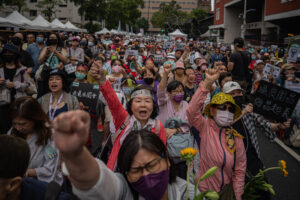
Hundreds of thousands of Germans are taking to the streets in protest against the country’s far-right parties. Will it shift the tide or leave Germany further divided?
2580 Results
Hundreds of thousands of Germans are taking to the streets in protest against the country’s far-right parties. Will it shift the tide or leave Germany further divided?

Egypt’s upcoming presidential elections are a sham. But the opposition can still take advantage of this moment to push for genuine reforms that the country desperately needs.

Thailand’s voters—especially its young people—have sent the country’s junta a message: They want change now. But will the military listen?

Across the globe, the people who run our elections are being undermined, targeted, and attacked. Here is how to shore them up—and protect democratic institutions, too.

For years, the Venezuelan opposition has fought hard against a corrupt regime — and come up short. But this time, with four key ingredients in place, we are on the cusp of a historic victory.

Burma’s democratic resistance has made impressive gains against the country’s corrupt junta. But they need help from the world’s democracies if they are to succeed and create an enduring peace.

Romania’s democracy just survived a near-death experience, but it may be more vulnerable going forward. How far can leaders go in defending democracy without compromising their claim to represent the people?

The country has a long history of power-sharing deals that are sealed with a handshake. The truth is that this type of political bargaining typically does more harm than good.

While widespread violence or civil war was averted, the consequences for Russia—and Putin—could be grave.
The Reagan-Fascell Democracy Fellows Program at the NED invites applications for fellowships in 2014–15.
October 8, 2013
China’s efforts to sway the Taiwanese people with conspiracy theories and lies are starting to resonate, undermining their faith in democracy and deepening polarization. In a new Journal of Democracy online exclusive, Tim Niven argues that defending against China’s information war will require tireless resistance from the whole of society.
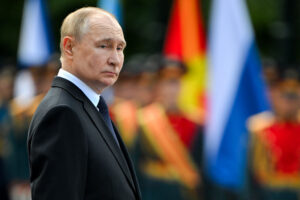
Monday, February 24, marks the third anniversary of Russia’s full-scale invasion of Ukraine. Hundreds of thousands have been wounded or killed, Ukrainian arsenals are drained, and Western allies are divided. Even so, Putin’s effort to stir support for his war has fallen flat. New evidence shows that the Russian people don’t support the fight.

The world’s liberal democracies are deeply polarized. Here’s how we could help rebuild the political center.

The Gulf kingdom has been a rare democratic experiment. But gridlock and the Emir’s mounting impatience with Kuwaiti politics may be on the cusp of bringing it to an end.

El Salvador’s Nayib Bukele may be overwhelmingly popular, but he wasn’t going to let his electoral ambitions hinge on being well-liked. Instead, he rigged the playing field before the first vote was cast.

Many feared Ferdinand Marcos Jr.’s election would spell the end of Philippine democracy. But the dictator’s son has surprised nearly everyone, playing the role of a reformer while moving fast to sideline his populist rivals.

They are organized, nonviolent, and they have come out in great numbers. Guatemalans may also be writing the script on how to defeat democracy’s enemies.

The small Latin American country was a brief democratic bright spot. But it appears to have fallen victim to a clash between populists and anti-populists, without a democrat in sight.

The Turkish president came to power as an antiestablishment everyman. Twenty years later he is an authoritarian leader clinging to power. Will the forces that catapulted him to power be his demise?