

Why Bolivia’s Election Is a Turning Point
In Bolivia’s presidential runoff on Sunday, center-right senator Rodrigo Paz Pereira defeated right-wing former interim president Jorge “Tuto” Quiroga.
2036 Results
In Bolivia’s presidential runoff on Sunday, center-right senator Rodrigo Paz Pereira defeated right-wing former interim president Jorge “Tuto” Quiroga.

The people have taken to the streets to demonstrate against corruption and Prime Minister Robert Fico’s pro-Moscow policies. Once again, Slovaks see their future in Europe, not Russia.
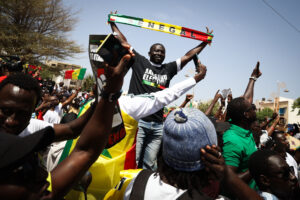
In February, the West African country appeared to be on the cusp of chaos as its president tried to seize power for himself. How Senegal became one of 2024’s biggest democratic success stories.
Steven Radelet will discuss his essay "The Rise of the World's Poorest Countries" at NED on Oct. 26 at noon.
October 19, 2015
ABOUT THE EVENT A populist and illiberal tide is gaining strength across the globe, posing a serious threat to liberal democracy. Prominent political scientists and commentators William A. Galston and Yascha Mounk discussed the factors fueling populism’s rise and how democracies can effectively respond. Both Galston and Mounk have written articles addressing these questions that appear in the April…
April 3, 2018
Ten of the former ambassador’s best JoD essays spanning the last thirty years.
Vladimir Putin’s full-scale invasion of Ukraine began one year ago. The war has inflicted a heavy toll on Russia in addition to the mass carnage in Ukraine. But Ukrainians are fighting valiantly and finding creative means of resistance.
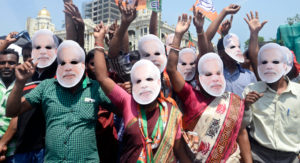
With India’s next general election just a year away, here are five of his Journal of Democracy essays that offer critical analysis of the world’s largest democracy at a crucial time.
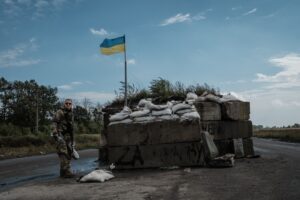
Two years ago, Vladimir Putin launched an unprovoked full-scale invasion of Ukraine. Hundreds of thousands have been wounded or killed in this war of attrition. The following Journal of Democracy essays reveal the impulses that led Putin to launch this brutal campaign and the resilience of those fighting to stop him.
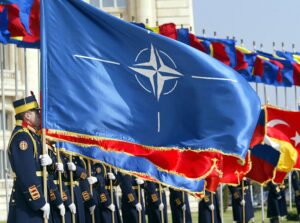
For 75 years, NATO has played a crucial role in defending democracy across the West. The following Journal of Democracy essays track NATO’s role in supporting democracy’s fight against autocracy.
Reports on elections in Rwanda, Syria, and Venezuela.

Thousands of supporters of the Pakistan Movement for Justice (PTI) took to Islamabad’s streets this week to demand the release of former prime minister Imran Khan. A crisis of governability is coming and might finally be here.

Beijing is bent on curbing democratic freedoms and imposing totalitarianism at home and abroad. The following Journal of Democracy essays dissect China’s influence operations and offer ways for even fragile democracies to combat autocratic influence.

On November 19, a Hong Kong court sentenced 45 prominent prodemocracy activists to years in prison in the biggest crackdown yet under the city’s draconian, Beijing-imposed National Security Law. The Journal of Democracy essays below, free for a limited time, detail Hong Kong’s decades-long fight for freedom, and the CCP’s unrelenting repression.

DeepSeek’s new frontier AI model is the CCP’s most powerful tool yet for surveillance and control. The following Journal of Democracy essays show how authoritarian governments leverage emerging tech to enhance repression. Read free for a limited time.

Determined to project their influence abroad, authoritarian regimes are subverting international rules and norms while disguising their misdeeds. The easiest way to do this? Convince the world they are benign, upstanding members of the international community.

Authoritarians can manipulate the law to rationalize their rule, but the law can equally serve to check authoritarian power. The Journal of Democracy essays below explore the dynamics between leaders and the law. Read for free now.

With democracy in trouble across the globe, it’s easy to forget how and why a steady succession of dictatorships fell in the last half of the twentieth century. Democracy’s strengths, and its record, should give cause for hope at a moment when autocracy appears ascendent.

On 8 December 2024, a coalition of Islamic militants toppled the brutal Syrian dictator Bashar al-Assad, whose family had ruled the country for more than half a century.

Gulf monarchies are exerting influence all over the world — in sports, media, entertainment, and politics. Where their human-rights records once drew censure, these oil-rich kingdoms are now being courted and their leaders welcomed in Western halls of power. How have these countries remained bastions of repression while white-washing their reputations? The following Journal of Democracy essays…