
October 2005, Volume 16, Issue 4
Nepal: Between Dictatorship and Anarchy
Nepal’s people find themselves caught in an ugly struggle between two antidemocratic ideologies—royal absolutism and Maoism. What happened?
2036 Results
October 2005, Volume 16, Issue 4
Nepal’s people find themselves caught in an ugly struggle between two antidemocratic ideologies—royal absolutism and Maoism. What happened?
January 2005, Volume 16, Issue 1
Why has the European Union, which has been so successful in transforming its candidate countries, failed in its efforts to promote democracy and development in Bosnia and Kosovo?
October 2004, Volume 15, Issue 4
Slobodan Milošević fell in the fall of 2000 after he tried to pervert national election results. He had tampered with elections before and survived. What made 2000 different, and what are the lessons to be learned from it?
July 2004, Volume 15, Issue 3
The first flush of democratic hopes has faded, as the recent elections have emphasized. But the democratic idea has a foothold, and the presidential machine that swept those elections will not have an easy time retaining its sway.
July 2004, Volume 15, Issue 3
Vladimir Putin aspires to be a classic authoritarian modernizer, but in today's globalized world Russia faces challenges that bureaucratic centralization and a traditional strong hand cannot meet.
April 2004, Volume 15, Issue 2
Historical and other evidence from around the world suggests that Protestantism has helped to create a web of mediating factors—from higher literacy to lower corruption to active civic groups—that encourage self-government.
January 2004, Volume 15, Issue 1
As it prepares to go from 15 to 25 member states, the EU has improved the prospects for democracy in the East, but nothing about enlargement promises to resolve the vexing issue of democracy within the EU structure itself.
October 2003, Volume 14, Issue 4
Is the EU an international organization, an emerging federal state, something in between, or something altogether different? So far it has managed to survive and prosper depite all the disagreements about its true nature, but for how long can it continue to do so?
July 2003, Volume 14, Issue 3
This troubled corner of Europe has become a test of the ability of outside experts and carefully designed institutions to overcome a legacy of intense ethnocommunal conflict. How are they faring?

January 2017, Volume 28, Issue 1
When parts of the Turkish military attempted a coup in July 2016, the competitive authoritarian AKP regime was able to bring both its competitive and its authoritarian features to bear, stopping the coup and launching a crackdown.
October 2024, Volume 35, Issue 4
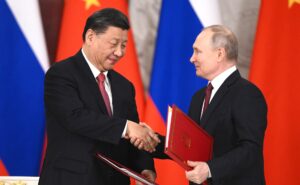
Alongside democratic backsliding is another, more pernicious phenomenon: dictatorial drift, where “soft” authoritarian regimes are opting to become highly repressive dictatorships. The West must develop new strategies to defend democracy across the globe.

October 2024, Volume 35, Issue 4
Majoritarian nationalism is a defining feature of our time. If we are to resist ethnonationalist leaders trying to recast our societies into imagined majorities, we must revise our conception of democracy and the exclusion inherent in majority rule.
July 2024, Volume 35, Issue 3
There is a troubling tension around “people power” in Africa today: African social movements are among the most successful at ousting autocrats. But the continent’s entrenched antidemocratic institutions leave these victories highly vulnerable to reversal.

January 2025, Volume 36, Issue 1
Regime type is important, but it is the power of the fossil-fuel industry in both autocracies and democracies that is blocking the green transition globally.

January 2025, Volume 36, Issue 1
Covid-19 swept across Latin America with devastating effects. But it had unexpected positive consequences too, as citizens ousted inept politicians and pushed back against the inequities laid bare by the pandemic.
October 2019, Volume 30, Issue 4
In 2011–13, the undemocratic political outlook of both secular and Islamist actors helped to ensure the failure of democracy in Egypt. Today, the populace appears to have backed away from democratic demands, yet pockets of resilient activism offer a basis for hope.
January 2018, Volume 29, Issue 1
Central African autocrats are using their stolen money to outmaneuver opponents and deflect international criticism.

July 2025, Volume 36, Issue 3
Authoritarian regimes are not lawless. Rather, autocrats take to the courtroom not only to enforce their will but to justify their rule. So how do they appeal to reason? How do they rationalize their undemocratic turn?
October 2025, Volume 36, Issue 4
A tribute in remembrance of Leonardo Morlino (1947–2025).

October 2025, Volume 36, Issue 4
Although an island of stability and democracy in a region often short of both, Costa Ricans’ faith in government is declining as the challenge of financing its costly welfare state grows. This democratic stalwart is no longer immune to the appeal of populism.