

January 2012, Volume 23, Issue 1
China and East Asian Democracy: The Taiwan Factor
If the PRC moves toward democracy, it is likely to be in some part due to the influence of Taiwan.
3266 Results
January 2012, Volume 23, Issue 1
If the PRC moves toward democracy, it is likely to be in some part due to the influence of Taiwan.
January 2006, Volume 17, Issue 1
Excerpts from: the Damascus Declaration for Democratic National Change; the preamble of the Declaration of Principles for International Election Observation; the Taipei Declaration on Democracy in Asia.
January 2010, Volume 21, Issue 1
Another coauthor of Transitions from Authoritarian Rule questions whether his former collaborator is underrating the current dangers to democracy.
January 2003, Volume 14, Issue 1
Excerpts from: “A Republican Manifesto: A Model for Overcoming Iran’s Political Deadlock” by Iranian investigative journalist Akbar Ganji; opening remarks and acceptance speeches from the fifteenth annual W. Averell Harriman Democracy Awards; “Community of Democracies statement on Terrorism.”
January 2015, Volume 26, Issue 1
As the Journal of Democracy celebrates its twenty-fifth anniversary, there are serious reasons to worry about the state of democracy.
Can democratic institutions be turned to exclusionary ends? ~ Why has the ongoing refugee crisis transformed the politics of Central and Eastern European states—despite the fact that these countries host virtually no migrants? ~ And what do demographic and generational changes mean for the liberal consensus that emerged in the wake of communism’s fall? In this thought-provoking…
October 2017, Volume 28, Issue 4
Read the full essay here. The Russian system of personalized power is growing ever more dependent on the same strategies that proved useless in sustaining the USSR. While the system still has the potential to limp along, its survival tactics render the it progressively more dysfunctional. Among the circumstances weighing against the system’s survival are…

The military has spent decades trying to impose order on Pakistani politics. It has led to chaos. | By Ahsan I. Butt
July 2017, Volume 28, Issue 3
Turkmenistan’s authoritarian president Gurbanguly Berdimuhammedov attempted to use sham democratic elections in February 2017 to bolster his legitimacy both at home and abroad.
July 2007, Volume 18, Issue 3
Since the early 1990s, many African countries have undergone political liberalization, and so far this trend has been accompanied by a significant drop in the incidence of military coups.
January 2005, Volume 16, Issue 1
Excerpts from: a declaration issued by the International Committee for Democracy in Cuba; an open letter issued by leading democrats decrying Russian president Vladimir Putin’s series of “reforms”; a statement issued by forty leading civil society groups from the Middle East and North Africa; an open letter issued in response to the initiation of criminal…
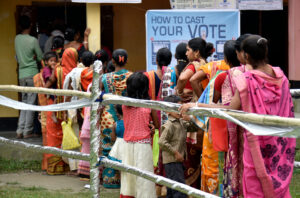
National politics is increasingly overshadowing everything else, even as local government does more and more. Here’s how to right the balance. | By Eguiar Lizundia and Utpal Misra
October 2024, Volume 35, Issue 4
An interview with Vladimir Kara-Murza; María Corina Machado on the Venezuelan opposition movement; a speech from Bangladesh’s new interim chief advisor; an open letter from Tunisian opposition candidates; a professor on the youth anticorruption protests in Uganda; and NATO’s seventy-fifth anniversary.
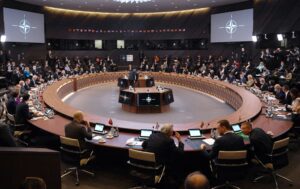
The Russian invasion of Ukraine has given the world’s democrats a renewed sense of unity and purpose. Putin’s reckless gamble may unexpectedly strengthen democracy in Europe and beyond. 21 March 2022 By Lucan Way As Russian rockets bombarded Kyiv on the night of Thursday, February 24, the world appeared to be on the cusp of…
April 1993, Volume 4, Issue 2
Excerpts from: speeches from El Salvador’s National Reconciliation Day ceremonies; the Mozambique’s General Peace Accord; South Korean president Kim Young Sam’s inaugural address; Chakufwa Chihana’s speech accepting the 1992 Robert F. Kennedy Human Rights Award.
July 2022, Volume 33, Issue 3
The first two months of the war alone turned the Russian clock back decades, undoing thirty years of post-Soviet economic gains and reducing the country to an international pariah state.
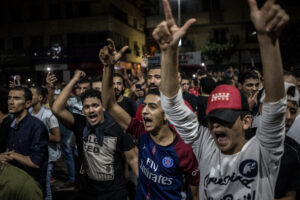
The economy is spiraling, public frustration is mounting, and the regime is becoming more repressive. The next time Egyptians come to the streets, they will be looking for more than promises and free elections.
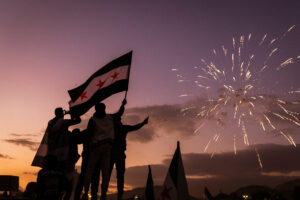
April 2025, Volume 36, Issue 2
Syrians rejoiced when Bashar al-Assad’s regime fell. After decades of dictatorship and civil war, Syrians must now rebuild their country while seeking justice for the victims of authoritarian rule.

October 2025, Volume 36, Issue 4
Today, governments can see who buys what, who pays whom, and who donates to which cause. But they cannot easily trace or confiscate Bitcoin. The digital currency offers a lifeline to democratic movements operating in the most repressive places.