
Is TikTok a Threat to Democracy?
The popular social media app, owned by the Chinese company ByteDance and used by 170 million Americans, is raising national security questions about data privacy and malign foreign influence.
2492 Results
The popular social media app, owned by the Chinese company ByteDance and used by 170 million Americans, is raising national security questions about data privacy and malign foreign influence.

Across Europe — from Spain to Germany and Sweden to Italy — right-wing parties are gaining ground. The following Journal of Democracy essays, free for a limited time, cover the European far right’s recent successes, and what they mean for the region’s democratic future.

The last Soviet leader brought down his regime and ended the Cold War. The free world owes him a debt of gratitude.
Why we must tackle the threat posed by Putin and his authoritarianism head on.

The latest issue of the Journal of Democracy covers important and alarming global trends, including authoritarian aggression, political violence, rising nationalism, and the far right’s resurgence. Don’t miss your chance to read it for free!
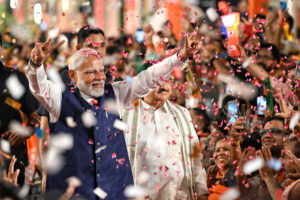
The “year of elections” is entering its final stretch, and the contests of 2024 have run the gamut. We saw landslides, charades, and — in democratic and authoritarian settings alike — a fair number of surprises. What were the most significant elections of the year so far?
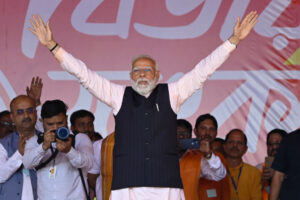
Voters are choosing more than the parties and politicians who will represent them. It is something more basic: The future of India’s secular democracy is on the ballot.

Nicolás Maduro’s regime has long relied on support from China, Cuba, Russia, and other authoritarians to stay afloat. But now that the United States is stepping up the pressure, will his fellow autocrats leave him high and dry?
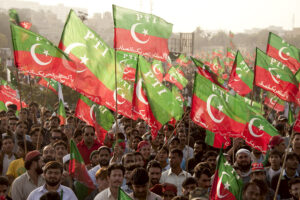
Thousands of supporters of the Pakistan Movement for Justice (PTI) took to Islamabad’s streets this week to demand the release of former prime minister Imran Khan. A crisis of governability is coming and might finally be here.
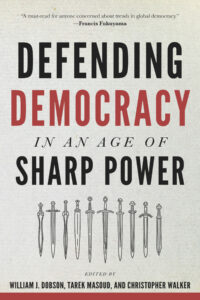
Explores how authoritarian regimes are deploying “sharp power” to undermine democracies from within by weaponizing universities, institutions, media, technology, and entertainment industries.
Stephan Haggard reviews the JoD's latest book, Authoritarianism Goes Global.
September 14, 2016
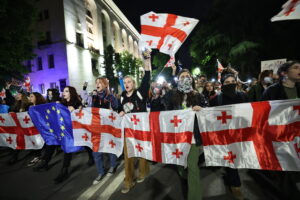
Georgia’s opposition is facing a pivotal election. But it isn’t enough to win: They need to be prepared to move quickly, mobilize the public, and force the regime to concede.

The Russian invasion of Ukraine has given the world’s democrats a renewed sense of unity and purpose. Putin’s reckless gamble may unexpectedly strengthen democracy in Europe and beyond.
For almost a decade, Freedom House’s annual survey has highlighted a decline in democracy in most regions of the globe. Some analysts say this shows that the world has entered a "democratic recession." Others dispute that interpretation, emphasizing democracy’s success in maintaining the huge gains it made during the last quarter of the twentieth century.
Herbert Kickl and his far-right allies have never hidden their contempt for democratic norms, and they are rising in the polls. But those who want to preserve Austria’s democracy may have one last chance.
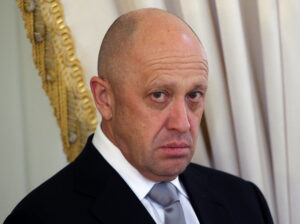
In the days ahead, the West must remain calm—and redouble its support for Ukraine.

President Hassan promised Tanzanians freedom, transparency, and reform. Instead, she has delivered repression, violence, and arrests as she bars anyone who dares challenge her.

The danger is greater than the rise of far-right parties. In fact, there is a risk that in their eagerness to contain the far right, European leaders may do greater damage to democracy itself.

So, why don’t they want to fix it?