
July 2015, Volume 26, Issue 3
Weighing the Asian Model
A review of The Nature of Asian Politics by Bruce Gilley.
240 Results
July 2015, Volume 26, Issue 3
A review of The Nature of Asian Politics by Bruce Gilley.

The country’s 2024 presidential contest was a big surprise, as voters elected a new party for the first time. Despite decades of dominant-party rule, a strong democratic culture has long been ingrained in Botswana.
January 2023, Volume 34, Issue 1
McKinsey’s work is bankrolled by major corporations and governments around the world. How should the famous consulting firm choose the clients it represents and the projects it takes on?

The case for liberal democracy remains powerful. It may get its biggest boost in the near term from success on the battlefields of Ukraine. | Marc F. Plattner
January 1996, Volume 7, Issue 1
Read the full essay here.
October 1995, Volume 6, Issue 4
A review of Conditions of Liberty: Civil Society and Its Rivals, by Ernest Gellner.
January 2018, Volume 29, Issue 1
Central African autocrats are using their stolen money to outmaneuver opponents and deflect international criticism.
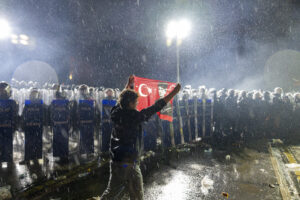
On March 19, Turkish authorities arrested opposition leader and Istanbul mayor Ekrem İmamoğlu on charges of corruption. Really, it was a drive by President Erdoğan to eliminate his main political rival. The following Journal of Democracy essays chronicle Erdoğan’s increasing efforts to undermine Turkish democracy, and the opposition’s efforts to fight back.
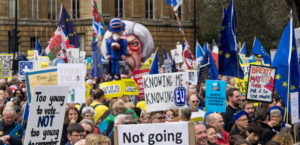

January 2020, Volume 31, Issue 1
Democracies are grappling with an era of transformation: Identity is increasingly replacing economics as the major axis of world politics. Technological change has deepened social fragmentation, and trust in institutions is falling. As our most basic assumptions come under question, can liberal democracy rebuild itself?
October 2015, Volume 26, Issue 4
A review of Political Order and Political Decay: From the Industrial Revolution to the Globalization of Democracy by Francis Fukuyama.
The case for liberal democracy remains powerful. It may get its biggest boost in the near term from success on the battlefields of Ukraine.
July 2013, Volume 24, Issue 3
The Arab world’s old autocracies survived by manipulating the sharp identity conflicts in their societies. The division and distrust that this style of rule generated is now making it especially difficult to carry out the kind of pact-making often crucial to successful democratic transitions.
October 2011, Volume 22, Issue 4
Though justly vaunted as the world’s largest democracy, India will in all likelihood remain reluctant to take on the mantle of “democracy promoter” for a mix of historical, ideological, and strategic reasons.
January 2014, Volume 25, Issue 1
A year after the election that ended the rule of president Mikheil Saakashvili’s National Movement, Georgia has seen further remarkable developments that raise key questions for struggling postcommunist democracies and, indeed, democracies everywhere.
April 2012, Volume 23, Issue 2
Despite a rocky first term, Peronist President Cristina Fernández de Kirchner saw her popularity rebound, leading to a huge reelection victory in 2011. Why is Peronism still the dominant “brand” in Argentine politics, and how has she come to own it so thoroughly?
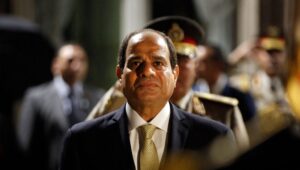
January 2024, Volume 35, Issue 1
Egypt’s general-turned-president has spent lavishly, cemented the military’s political and economic control, and, afraid of suffering Mubarak’s fate, become increasingly repressive. But with crushing inflation and everyday people suffering, is Sisi losing his grip?
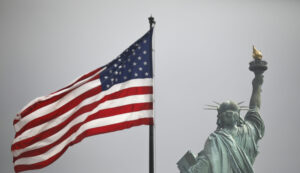
April 2024, Volume 35, Issue 2
Liberal societies are those which offer refuge from the very people they empower—through individual choice, mobility, and the possibility of exit. This is the form of liberty that most clearly elevates the liberal project.
October 2009, Volume 20, Issue 4
Iran’s massive protest movement against June’s electoral coup is now moving into a new phase. What are its prospects?
January 2019, Volume 30, Issue 1
With its recent electoral turnover of power, Pakistan seemingly passed a milestone of democratic consolidation. But beneath the surface, power remains where it long has been—with the military.
October 2018, Volume 29, Issue 4
In Malaysia’s May 2018 general election, a grand bargain between ex–prime minister Mahathir Mohamad and reform leader Anwar Ibrahim produced a political earthquake that ended 61 years of rule by the United Malays National Organization (UMNO).