
October 2011, Volume 22, Issue 4
Election Watch
Reports on elections in Cape Verde, Macedonia, São Tomé and Príncipe, Singapore, Thailand, and Turkey.
3266 Results
October 2011, Volume 22, Issue 4
Reports on elections in Cape Verde, Macedonia, São Tomé and Príncipe, Singapore, Thailand, and Turkey.


January 2024, Volume 35, Issue 1
Autocrats have found a new way to turn citizens against liberal democracy: convincing them that LGBTIQ rights, granted and protected in much of the West, pose a threat to their nation and its values.

January 2025, Volume 36, Issue 1
Regime type is important, but it is the power of the fossil-fuel industry in both autocracies and democracies that is blocking the green transition globally.
July 2025, Volume 36, Issue 3
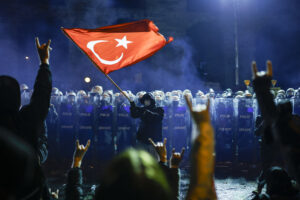
As President Erdoğan’s grip on power is slipping, his regime is turning more repressive. But Turkey may still avoid becoming a full-blown autocracy. The opposition is increasingly popular, and there remains a way to tilt the playing field to their advantage.
July 2025, Volume 36, Issue 3
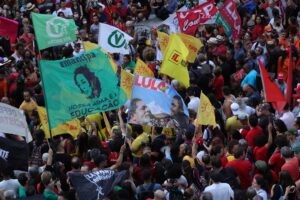
We must face an uncomfortable truth: Democracies often fail to reverse the damage after an authoritarian lapse, if they manage to recover at all. If we are to make our political systems more resilient, we must steel democracy against authoritarianism before it is too late.

January 2025, Volume 36, Issue 1
Nicolás Maduro brazenly stole Venezuela’s 2024 presidential election, despite a free, fair, and transparent ballot count that showed a clear opposition victory. Why would an autocrat want to maintain one of the world’s best voting systems?
April 2011, Volume 22, Issue 2
Are laws guaranteeing citizens freedom of access to public information (FOI laws) among the most important democratic innovations of the last century?
October 2002, Volume 13, Issue 4
Reports on elections in Bolivia, Cameroon, Congo-Brazzaville, the Czech Republic, Guinea, Papua New Guinea.
October 2025, Volume 36, Issue 4
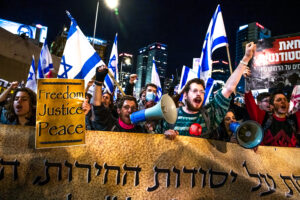
When Israel’s democratic safeguards came under attack, Israeli political scientists felt they had a duty to spread a shared, nonpartisan understanding of the dangers of democratic backsliding. Here is how they organized, built channels of communication, and reached the public.

Online Exclusive by Casey Cagley | Across Latin America, former leaders are keeping a chokehold on their countries’ politics. It’s time their successors break free.
April 2012, Volume 23, Issue 2
The upheavals that have been shaking the Arab-Muslim world are revolutions in discourse as well as in the streets. Arabs are using not only traditional and religious vocabularies, but also a new set of expressions that are modern and represent popular aspirations.
January 2006, Volume 17, Issue 1
Taking advantage of the withdrawal of Syrian troops, Lebanese voters capped the "Beirut Spring" by electing a new majority in parliament.
July 2014, Volume 25, Issue 3
Russia has witnessed a growing rapprochement between some of its nationalists and some of its democrats, but this trend is threatened by divisions over the annexation of Crimea.
October 2001, Volume 12, Issue 4
Reports on elections in Albania, Belarus, Bulgaria, East Timor, Fiji, São Tomé and Principe, Seychelles, and Uganda.
July 2019, Volume 30, Issue 3
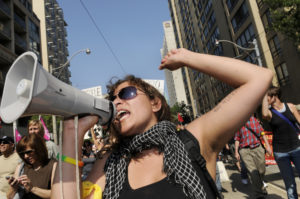
Why do ordinary people vote to return to office undemocratic incumbents? New survey experiments in several countries suggest that many voters are willing to put their partisan interests above democratic principles—a finding that may be key to understanding democratic backsliding.
January 2020, Volume 31, Issue 1
A review of This Is Not Propaganda: Adventures in the War Against Reality by Peter Pomerantsev.
July 2021, Volume 32, Issue 3
Excerpts from: Maria Ressa’s comments on social media at the 2021 Copenhagen Democracy Summit; NGO statement on the arrest of Algerian human-rights defenders; statement denouncing the dismissal of Constitutional Court judges and the attorney general; letter on the sentencing of a Saudi man for allegedly running a satirical Twitter account.