2494 Results

QUE LE PASO A Z GAS

Documents on Democracy

Excerpts from the inaugural address of newly elected Argentine president Mauricio Macri. Excerpts from comments to the media made by the DPP's Tsai Ing-wen upon learning she had won Taiwan's presidential election. Excerpts from a communiqué produced at a February conference of governance experts and former Latin American heads of state, organized by Forum 2000 and the Arias Foundation.  

July 2003, Volume 14, Issue 3

Documents on Democracy

Excerpts from: Kenyan president-elect Emilio Mwai Kibaki’s inaugural speech; statement by the International Movement of Parliamentarians for Democracy condemning the crackdown on Cuban dissidents; Organization of American States (OAS) secretary-general César Gaviria’s speech at a conference entitled “Financing Democracy: Political Parties, Campaigns and Elections.” 

January 2001, Volume 12, Issue 1

Documents on Democracy

Excerpts from: a statement by Yugoslav presidential candidate Vojislav Kostunica; Mexican president Vicente Fox’s inaugural address; the declaration of Syrian president Bashar Al-Assad.

January 1997, Volume 8, Issue 1

Documents on Democracy

Excerpts from: Romanian presidential candidate Emil Constantinescu’s remarks; victory statement by Nicaraguan presidential candidate Arnoldo Alemán.

Free

July 2006, Volume 17, Issue 3

Corruption: Diagnosis and Treatment

Successfully fighting corruption in developing and postcommunist countries requires far more than instituting best practices from advanced democracies. Corruption first must be properly diagnosed; in some cases it can be effectively treated only by attacking the distribution of power itself.

October 2014, Volume 25, Issue 4

Flirting with Disaster

A review of The Confidence Trap: A History of Democracy in Crisis from World War I to the Present by David Runciman.

Free

July 2007, Volume 18, Issue 3

How Will China Democratize?

No one should underrate the will and skill that the ruling Chinese Communist Party will put into keeping its grip on power.

July 2023, Volume 34, Issue 3

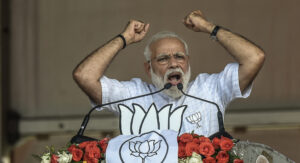
Modi’s Undeclared Emergency

Since the beginning of the second Modi government, an emboldened BJP has launched a steady, comprehensive, and unprecedented attack on civil liberties, personal rights, and free speech across India.

April 2014, Volume 25, Issue 2

The Freedom House Survey for 2013: The Democratic Leadership Gap

Civil-liberties scores have notably declined over the past several years, while political-rights scores have slightly improved—perhaps because modern authoritarians have begun to adopt subtler means of repression. Overall, however, freedom experienced a global decline for the eighth straight year in 2013.

July 2010, Volume 21, Issue 3

Election Observers and Their Biases

Why do election monitors sometimes issue contradictory statements or endorse flawed elections? The answers are not always straightforward; in some cases, the monitors’ good intentions may undermine their credibility.

April 2005, Volume 16, Issue 2

Challenge and Change in East Asia: Taiwan’s Year of Stress

Thanks to a disputed presidential election and a narrowly divided parliament, Taiwan's politics remains tense. Yet the worst of the conflicts that gripped the island seem to have eased, and the difficult political events of the last few years may have some beneficial effects after all.

January 2005, Volume 16, Issue 1

The Referendum in Venezuela: Elections versus Democracy

While charges of electronic fraud in the actual voting or vote-counting are unproven, the dubious and even illegal tactics that the Chavez regime used throughout the larger process point to rampant "institutional fraud" that is undermining Venezuelan democracy.

January 2002, Volume 13, Issue 1

South Africa: Democracy Without the People?

A decade after the end of apartheid, South African democracy may be headed for trouble because the country has yet to fulfill the three requirements of democratic consolidation: inequality-reducing economic growth, stable institutions, and a supportive political culture.

January 2002, Volume 13, Issue 1

Mozambique: A Fading UN Success Story

The United Nations did superb work in helping Mozambique to end its long-festering civil war and start down the path to recovery, but those gains could slip away amid ominous conditions of partisan polarization, excessive political centralization, and a winner-takes-everything electoral system.

July 2001, Volume 12, Issue 3

Serbia’s Prudent Revolution

A bloodless revolution toppled the corruption-ridden 13-year-old regime of Slobodan Milosevic and brought to power a team led by committed democrats. Although strains exist within the new 18-party ruling coalition, there are strong reasons for it to hold together during the current period of transition.

April 2001, Volume 12, Issue 2

The Americanization of the European Left

In postindustrial societies, class is less important as a source of party cleavage. With the European left embracing a market-friendly “third way,” political divisions in Europe are increasingly resembling those in the United States.

January 2001, Volume 12, Issue 1

How People View Democracy: A Diverging Europe

Citizens of postcommunist countries not only want to be free to say what they think and to vote their conscience; they also want a government that obeys the rules it lays down and is not steeped in corruption.

July 2000, Volume 11, Issue 3

Russia Under Putin: One Step Forward, Two Steps Back

Does the election of Vladimir Putin as Russia’s president represent a fundamental turn away from democracy or merely a temporary setback? Although Putin’s apparent indifference to democracy is worrisome, it would be premature to conclude that democracy is lost in Russia.