
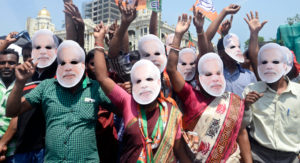
Ashutosh Varshney’s Greatest Hits
With India’s next general election just a year away, here are five of his Journal of Democracy essays that offer critical analysis of the world’s largest democracy at a crucial time.
2494 Results
With India’s next general election just a year away, here are five of his Journal of Democracy essays that offer critical analysis of the world’s largest democracy at a crucial time.

Two years ago, Vladimir Putin launched an unprovoked full-scale invasion of Ukraine. Hundreds of thousands have been wounded or killed in this war of attrition. The following Journal of Democracy essays reveal the impulses that led Putin to launch this brutal campaign and the resilience of those fighting to stop him.

Iranians are once again flooding the streets in protest. How is this wave of demonstrations different?
Billions in much-needed American military aid are now headed for Ukraine. The following Journal of Democracy essays demonstrate what it will take to reverse the course of this war of attrition, and why this struggle is a “contest between democracy and dictatorship.”

Of course not. But the region’s democratic hopes are fighting an uphill battle against corruption, crime, and a violent past.

The United States, like other polarized democracies, is in turmoil. Increasing radicalism, intolerance, and violence continue to rock the country in the run-up to the November election. These essays reflect on this polarization and how to protect ourselves from the damage it is inflicting.

Thousands of supporters of the Pakistan Movement for Justice (PTI) took to Islamabad’s streets this week to demand the release of former prime minister Imran Khan. A crisis of governability is coming and might finally be here.
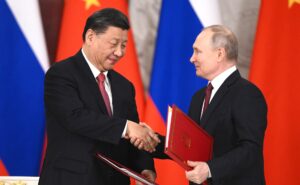
Authoritarians are evolving — becoming more unconstrained and repressive at home, and more destructive on the global stage. The following essays unpack the authoritarians’ toolkit, revealing their strategies for taking power and upending the liberal world order.
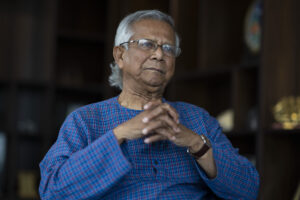
The famed economist and Nobel laureate is charged with repairing what remains of Bangladesh’s democracy. But is someone even as accomplished as Yunus up to the task?

Minxin Pei, a leading expert on Chinese authoritarianism, has been writing for the Journal of Democracy since 1992. Over three decades, the Claremont McKenna political scientist has chronicled China’s transformation into a global superpower and descent into neo-Stalinism. The following ten essays comprise some of Pei’s best.

What might the sudden collapse of Syria’s dictatorship mean for Egypt? As Shady ElGhazaly Harb explains in a new Journal of Democracy online exclusive, the military — long Sisi’s strongest backer — may now be more tempted to turn against the autocrat.

The Russo-Ukrainian War represents an existential clash between democracy and autocracy. A Ukrainian loss, Serhii Plokhy argues in the new issue of the Journal of Democracy, could endanger democracy across the globe.

Determined to project their influence abroad, authoritarian regimes are subverting international rules and norms while disguising their misdeeds. The easiest way to do this? Convince the world they are benign, upstanding members of the international community.

Voters across the world see democracy as unresponsive, out of touch, inept, and even corrupt. Something needs to change, but no one can agree on what. What democracy needs, Joel Day argues in a new Journal of Democracy online exclusive, is a single bold and effective reform plan.

A free market can foster pluralism and insulate civilians from authoritarian coercion. But money used the wrong way has enormous potential for destruction. The Journal of Democracy essays below, free for a limited time, explore the complex relationship between capitalism and democracy.

In the July issue of the Journal of Democracy, Stanley Bill and Ben Stanley unpack the trilemma that post-illiberal leaders face and explain why illiberals stand to benefit.
There’s a fine line between genuine cybersecurity and digital authoritarianism. Many autocrats use the pretext of digital order to surveil, silence, and suppress their citizens. State cyber repression creates a climate of fear around social media and the internet, shrinking one of the last remaining spaces for free speech.

Steadfast, nonviolent movements are often the most effective way to counter an authoritarian. These essays explain how to start, sharpen, and sustain a movement.
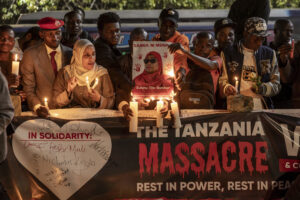
Tanzania’s Independence Day was Tuesday, barely a month since the shocking and brutal crackdown on thousands of protesters decrying the country’s sham election.

Gulf monarchies are exerting influence all over the world — in sports, media, entertainment, and politics. Where their human-rights records once drew censure, these oil-rich kingdoms are now being courted and their leaders welcomed in Western halls of power. How have these countries remained bastions of repression while white-washing their reputations? The following Journal of Democracy essays…