
The Return of History?
August 8, 2016
2116 Results
August 8, 2016
Fall 1991, Volume 2, Issue 4
Excerpts from: speeches and declarations issued in the course of the failed USSR coup; speeches presented at the First Ibero-American Summit; Charter 91, signed by more than 100 Iraqi expatriates.
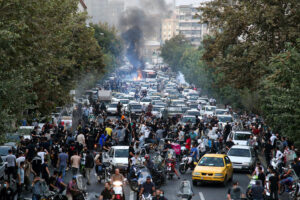
Iranians are protesting their regime. Why it will only get worse for the mullahs. | By Peyman Asadzade
January 2013, Volume 24, Issue 1
China is heading toward a tipping point, with two likely scenarios for how a political opening will come about. Most Chinese intellectuals think that only gradualism—“slow and steady,” step-by-step reform—can offer China a safe and feasible path toward liberal democracy. But they are wrong. Instead of “taking it slow,” China should shun gradualism and opt…
October 2012, Volume 23, Issue 4
The EU is experiencing a somewhat paradoxical phenomenon: On the one hand, it has been a tremendously successful club, promoting democracy and open societies within its borders and in its neighborhoods. On the other hand, the language of national rivalry and of class struggle is re-entering public discourse, especially within the eurozone.

Marine Le Pen has remade her image to obscure her far-right populism. There is a real risk French voters won’t see through it. April 2022 By Agneska Bloch On April 24, French voters will go to the polls in a rematch of the 2017 presidential election: now President Emmanuel Macron versus far-right populist Marine Le…
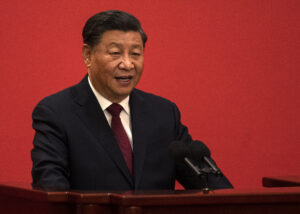
Nationwide protests against Xi Jinping’s zero-covid policy caught the Chinese Communist Party off-guard. Expect the Party’s security apparatus to strike back with quiet precision. | Sheena Chestnut Geitens
January 2024, Volume 35, Issue 1
Advanced AI faces twin perils: the collapse of democratic control over key state functions or the concentration of political and economic power in the hands of the few. Avoiding these risks will require new ways of governing.
October 2015, Volume 26, Issue 4
A review of Political Order and Political Decay: From the Industrial Revolution to the Globalization of Democracy by Francis Fukuyama.
October 2003, Volume 14, Issue 4
Reports on elections in Cambodia, Jordan, Kuwait, Mexico, and Rwanda.
July 2004, Volume 15, Issue 3
Creative Hindu responses to modern challenges are a crucial part of the democratic story in India, yet Hindus must guard against those who would politicize Hindu identity.
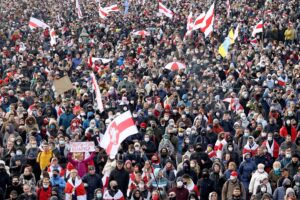
January 2023, Volume 34, Issue 1
The record shows that movements using “dilemma actions”—creative protests that make a regime look foolish—are often more effective at undermining authoritarians. Activists should add such tactics to their toolkit.
April 2010, Volume 21, Issue 2
A review of The Handbook of National Legislatures: A Global Survey by M. Steven Fish and Matthew Kroenig, and Legislative Power in Emerging African Democracies edited by Joel D. Barkan.
April 2008, Volume 19, Issue 2
Excerpts from: Kosovo’s Declaration of Independence from Serbia; U.K. foreign secretary David Miliband’s speech, “The Democratic Imperative”; the power-sharing agreement between the Kenyan president and opposition leader; “Pakistan’s Tipping Point” by Bilawal Bhutto Zardari, chairman of the Pakistan Peoples Party.
October 2016, Volume 27, Issue 4
A review of The Quest for Good Governance: How Societies Develop Control of Corruption by Alina Mungiu-Pippidi.
July 2022, Volume 33, Issue 3
Does the author of the nineteenth-century classic, Democracy in America, still matter?
April 2013, Volume 24, Issue 2
Excerpts from: The Declaration of Free Citizens by Vietnamese bloggers; Somali president Hassan Sheikh Mohamud’s speech at the Center for Strategic and International Studies; a letter issued by the Anglican bishop of the Diocese of Colombo; the inaugural address of South Korean president Park Geun-hye; a speech given by Shin Dong-hyuk who fled North Korea.

July 2002, Volume 13, Issue 3
Until now, globalization and democratization have been mutually reinforcing, but in the future globalization may pose serious challenges for democracy.
July 2007, Volume 18, Issue 3
Unlike pessimistic scholars and recalcitrant autocrats, most ordinary citizens are inclined to take the risks of choosing democracy when they can.