
April 2013, Volume 24, Issue 2
The Freedom House Survey for 2012: Breakthroughs in the Balance
Although declines in freedom outnumbered gains yet again in 2012, the year was not without some significant progress, most notably in the case of Libya.
2785 Results
April 2013, Volume 24, Issue 2
Although declines in freedom outnumbered gains yet again in 2012, the year was not without some significant progress, most notably in the case of Libya.
April 2013, Volume 24, Issue 2
Should Brussels intervene to protect democracy within EU member states? Does Europe have the tools it would need to do so effectively? Recent developments in Hungary and Romania show the importance of addressing these questions sooner rather than later.
October 2012, Volume 23, Issue 4
The EU is experiencing a somewhat paradoxical phenomenon: On the one hand, it has been a tremendously successful club, promoting democracy and open societies within its borders and in its neighborhoods. On the other hand, the language of national rivalry and of class struggle is re-entering public discourse, especially within the eurozone.
July 2008, Volume 19, Issue 3
Conventional scholarly wisdom holds that ethnic diversity within a given society generally dims democracy’s prospects. Careful reflection on the experience of many post-Soviet states, however, suggests that this need not be so.
January 2008, Volume 19, Issue 1
While the people of South Asia, especially those with higher levels of education and exposure to the media, prefer democracy to authoritarianism, they are willing to relax some of the requirements of liberal democracy.
October 2005, Volume 16, Issue 4
In May, Ethiopia held its first genuinely competitive elections. The strong showing of opposition parties gives hope for a more democratic future.
January 2005, Volume 16, Issue 1
Why has the European Union, which has been so successful in transforming its candidate countries, failed in its efforts to promote democracy and development in Bosnia and Kosovo?
January 2004, Volume 15, Issue 1
By expanding itself eastward, the EU has not so much settled the questions surrounding the “borders” of Europe as it has displaced them, changing their focus to take in new areas and new issues.
April 2003, Volume 14, Issue 2
The strains of economic reform have not increased support for antidemocratic populism in Latin America, but they have led to acute dissatisfaction with democratic governments.
October 2019, Volume 30, Issue 4
In 2011–13, the undemocratic political outlook of both secular and Islamist actors helped to ensure the failure of democracy in Egypt. Today, the populace appears to have backed away from democratic demands, yet pockets of resilient activism offer a basis for hope.
January 2019, Volume 30, Issue 1
Democracies must grapple not only with the proliferation of AI to authoritarian and illiberal regimes, but also with the temptation that AI poses for democratic governments themselves.
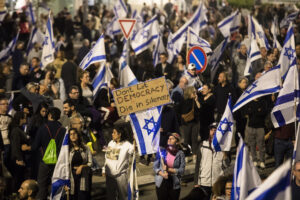
July 2023, Volume 34, Issue 3
When Israel’s new government introduced proposals that threatened the judiciary’s independence, the country erupted in protest. These tensions will not soon end. Likud, once a center-right party, is now as populist as the European far right.
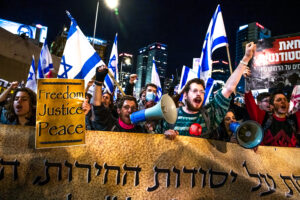
October 2025, Volume 36, Issue 4
When Israel’s democratic safeguards came under attack, Israeli political scientists felt they had a duty to spread a shared, nonpartisan understanding of the dangers of democratic backsliding. Here is how they organized, built channels of communication, and reached the public.
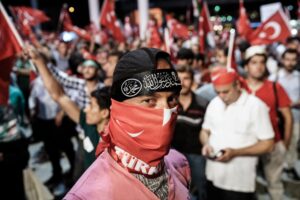

January 2017, Volume 28, Issue 1
When parts of the Turkish military attempted a coup in July 2016, the competitive authoritarian AKP regime was able to bring both its competitive and its authoritarian features to bear, stopping the coup and launching a crackdown.
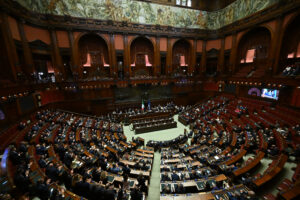
July 2012, Volume 23, Issue 3
Until recently, political scientists argued that democracy had poor chances of survival in a multiparty presidential regime. Latin America’s recent experience tells a different story.
July 2007, Volume 18, Issue 3
Reports on elections in Algeria, Armenia, Bahamas, Benin, Burkina Faso, Estonia, Mali, Mauritania, Nigeria, and Timor-Leste.
April 2004, Volume 15, Issue 2
Reports on elections in Georgia, Guatemala, Guinea, Iran, Russia, and Serbia.
January 2012, Volume 23, Issue 1
Morocco was not immune to the 2011 upheavals in the Arab world, but the country’s monarchy deftly managed the crisis through cosmetic constitutional reform.
July 2015, Volume 26, Issue 3
Favored by global conditions that lean their way, authoritarians have been busy over the last decade coming up with new and inventive ways to thwart the global advance of democracy and human rights.
January 2013, Volume 24, Issue 1
Political competition by itself does not curb corruption. Societies must also have a combination of values, social capital, civil society, and civic culture in order to impose effective normative constraints on corruption.