
Our Favorite Books of 2023
New works on China, Russia, political philosophy, English history, and much more graced our shelves this year. Here are the JoD staff’s favorite books of the year.
3291 Results
New works on China, Russia, political philosophy, English history, and much more graced our shelves this year. Here are the JoD staff’s favorite books of the year.
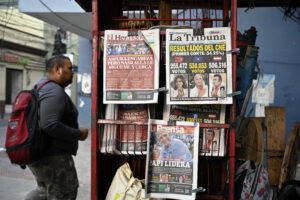
Days after the election and no one knows who the next president will be. Even worse, none of the likely winners offer much hope for the country’s democracy.
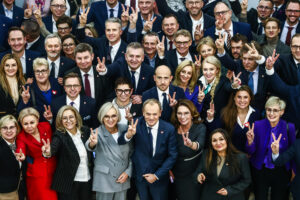
There is no clear roadmap. But Poland may be setting out on its first steps in stamping out populism and holding accountable those responsible for the worst violations of the rule of law.
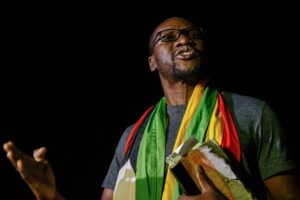
Evan Mawarire never thought of himself as a revolutionary. In a gripping new memoir, he tells the story of how he went from a humble clergyman to the leader of a movement that helped the Zimbabwean people find their voice.
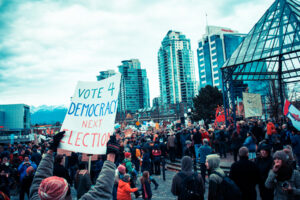
This year of elections, just over halfway through, has been nothing short of dramatic, with shocks, upsets, protests, and political violence — most notably, the attempted assassination of Donald Trump last weekend. Democracy is being tested as increasingly polarized voters head to the polls. Will it succumb to division and distrust, or will it withstand its present trials?

The country’s military brass has a larger role governing Mexico than at any time in the past eighty years. It’s creating a dangerous dependency that won’t be easy to break. Can the generals be reined in?
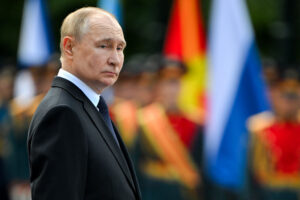
Vladimir Putin wants to stir patriotic fervor for his war in Ukraine. But most Russians don’t think the war is worth the cost, and it’s putting the Kremlin in a bind.

The suffragists imagined that a greater role for women in democratic politics would lead to a more peaceful world. Few realize how right they were.
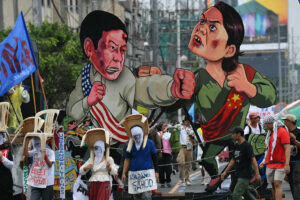
Police in Manila arrested former Philippine president Rodrigo Duterte on an ICC warrant for crimes against humanity. His daughter, Vice-President Sara Duterte, was impeached a month ago. The following Journal of Democracy essays chart the twists and turns of Philippine politics and the long-running feud between the Duterte and Marcos political clans.
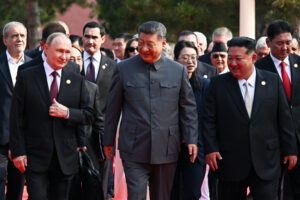
America’s promotion of democracy has always been highly imperfect. But the superiority of democracy—and the ideas that animate it—make it essential to securing America’s future.
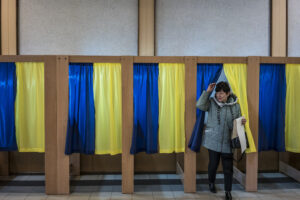
Russia’s brutal ongoing invasion is preventing Ukrainians from holding a presidential election and the campaigning that comes with it. What does that mean for Ukraine’s democracy?

The country’s 2024 presidential contest was a big surprise, as voters elected a new party for the first time. Despite decades of dominant-party rule, a strong democratic culture has long been ingrained in Botswana.
Figure Axis Descriptions
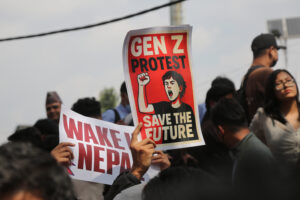
The government of Nepal has become the third South Asian government to collapse amid mass protests in three years. It will take more than elections to restore stability. Young protesters want to see real change.