
Calling for accountability against corrupt officials is a powerful message for building a movement. But it can make it harder to encourage defections from your opponent’s camp. Here’s how to handle the dilemma.
August 2026
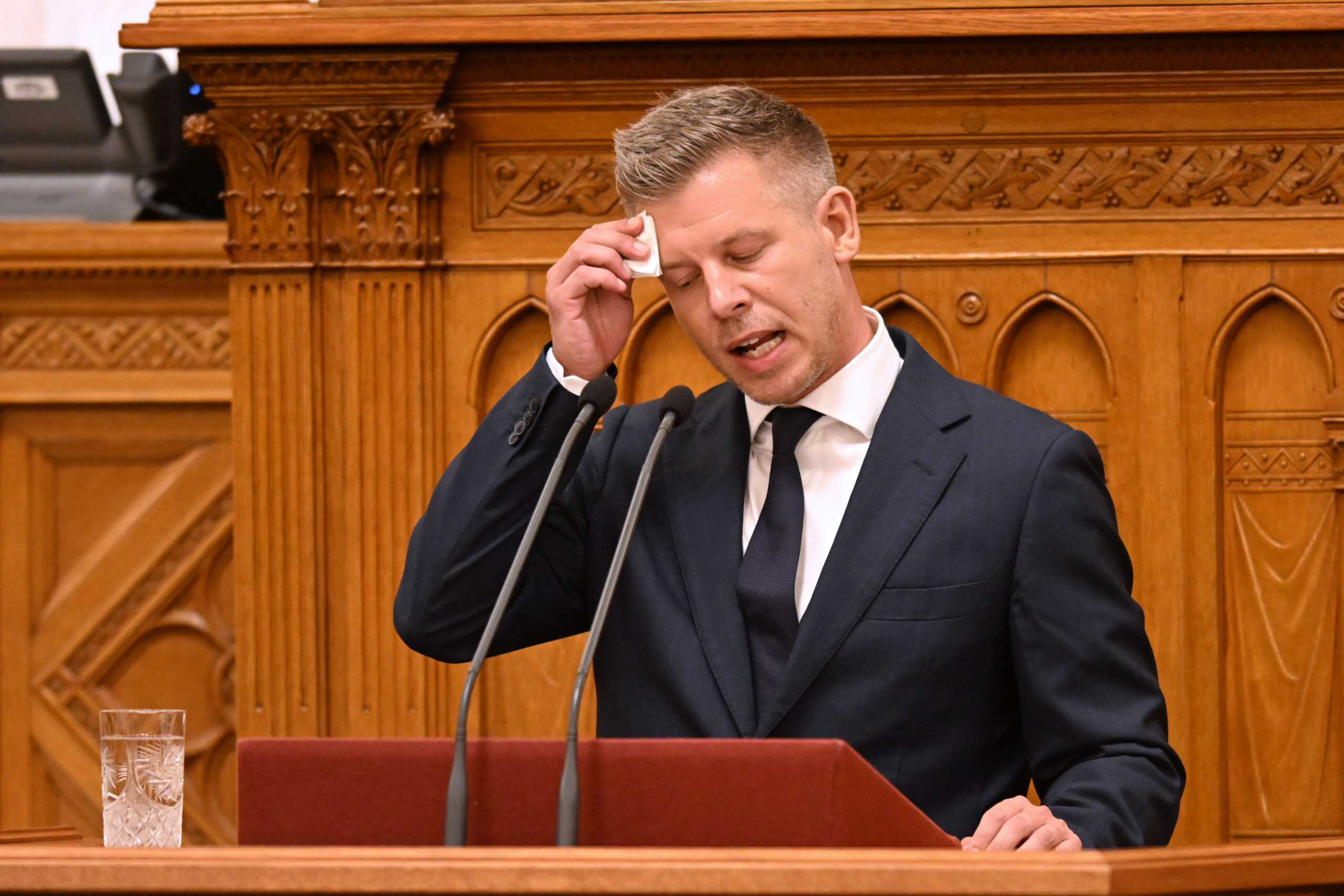
In April 2026, Péter Magyar and his Tisza party ended Hungarian president Viktor Orbán’s sixteen-year illiberal reign, as his vigorous anticorruption campaign steamrolled to a parliamentary supermajority.
Magyar’s victory is remarkable. It also parallels a broader global pattern of anticorruption movements. In 2025 alone, protesters outraged by corruption ousted governments in Bulgaria, Nepal, and Peru, while roiling many other countries. In June, Albania was consumed by mass protests against oligarchic corruption that were triggered by a resort development project linked to U.S. president Donald Trump’s family.
This trend reveals something important about democratic erosion and its remedies. That corrupt elites should be held accountable is a widespread belief that transcends countries and continents, and as Hungary proves, calls for accountability can anchor successful prodemocracy movements. Hoping to emulate Magyar’s example, many U.S. experts are now calling for the Democratic Party to embrace anticorruption as a cornerstone of its campaign agenda.
At first glance, the lesson seems clear: to save democracy, mobilize for accountability. Yet anticorruption is more fraught than it appears, as calls for accountability can complicate efforts to recruit allies among regime supporters. Navigating this dilemma is one of the most difficult and pressing questions confronting modern democracy movements.
The Accountability-Defections Dilemma
A key goal of democracy movements is to convince leading authoritarian pillars of support — particularly security forces, but also civic groups, business elites, and religious organizations — to “defect” and join democracy’s cause. These regime defections are often pivotal to successful nonviolent democracy movements.
However, a strident commitment to accountability politics may undermine activists’ efforts to encourage regime defections. The reason is simple: Regime allies will not defect if they fear that a restored democratic government will wield power to punish them for past crimes or abuses. The threat of accountability can be one of the strongest ties binding an illiberal regime together.
This dilemma is not new. It has long been understood that authoritarian elites agree to democratize only when they expect favorable outcomes for doing so. This insight guides scholarship on “pacted transitions,” the so-called elite bargains that facilitated democratic transitions in Latin America by providing elites amnesty and assurances against expropriation or prosecution. A common takeaway is that foregoing accountability is sometimes necessary to get authoritarian elites on board with democracy — as in Brazil, where the sweeping 1979 Amnesty Law facilitated an end to military rule.
Yet democracy movements cannot simply sacrifice accountability on the altar of defections. For one thing, justice is a powerful motivator, and movement supporters may view blanket calls to “forgive and forget” as intolerable concessions. Moreover, impunity for antidemocratic behavior today invites further abuses tomorrow. Fragile democracies often struggle to re-entrench democratic norms after bouts of democratic backsliding. Avoiding illiberal recidivism requires, in part, that elites are deterred from future transgressions — a primary function of criminal accountability.
In short, accountability discourages the regime defections that democracy movements need to succeed, but democracy itself cannot be sustained without accountability and the rule of law. Figuring out how to solve this dilemma is one of the most difficult and important questions that modern democracy movements face.
Navigating the Trade-Offs
The accountability-defections trade-off is a true dilemma, with no perfect solution. Still, there are lessons to be learned from how real-world democracy movements have approached it.
To start, democracy movements can broaden their base of popular support. “Big tent” democracy coalitions are a good idea for many reasons, including defections. Widespread participation shapes elite expectations for regime stability. Crises of regime legitimacy can help moderate elites to marginalize hardliners and push for liberalizing reforms. And if leaders are unwilling to reform, huge protests may lead elites to sense that the regime’s days are numbered, and that they should walk away while they still can.
Hungary exemplifies this pattern. Magyar’s anticorruption campaign was intentionally inclusive, allowing him to build broad support across Hungary’s political divides. His coalition pulled in left-wing support under a center-right banner (Magyar was formerly a member of Orbán’s own party before breaking away in 2024), while also wooing Orbán’s rural conservative base. And as Magyar’s momentum grew, elite defections became more frequent, as disillusioned Fidesz members grew more vocally critical of Orbán’s oligarchic corruption.
Sometimes, however, building popular support is not enough. In more entrenched authoritarian systems, elections may not offer a viable path to power, and accountability may seriously threaten elites. In both respects, Venezuela offers a painful lesson. In 2024, the Venezuelan opposition, led by María Corina Machado, successfully united into a powerful democracy movement. Yet Machado’s uncompromising demands for accountability imperiled the top military brass, who remained loyal to President Nicolás Maduro — the regime committed blatant electoral fraud and repressed the democratic opposition, forcing Machado into hiding until the United States captured Maduro earlier this year.
In such circumstances, democratic forces have little choice but to engage with key regime pillars of support and reassure them that democracy will not prove ruinous. This regime engagement can take various forms. Activists often fraternize with security forces, as in the 2011 Egyptian Revolution, where protesters told soldiers that “the army and the people are one hand,” or in the 2000 Serbian Revolution, where activists held private conversations with military officers to discourage repression. Movements may also seek to wean economic elites away from the regime, as in South Africa, where the African National Congress reassured white business owners that a post-apartheid government would not expropriate them.
The key lesson is that regimes are not monoliths, and not all regime associates are devoted loyalists. Movement overtures that offer a safe way out for wavering regime supporters may be necessary to restore democracy, which is itself the only path that offers any real chance of future accountability for the worst offenders.
A final question regards what democratic movements should do if they do manage to regain power. In recent years, some restored democratic governments have acted decisively to marginalize the architects of illiberal democratic decline. For instance, Brazil and South Korea both condemned former illiberal rulers to lengthy prison sentences, and Hungary’s new parliament passed a constitutional amendment that effectively bars Orbán from becoming prime minister again.
It is not always possible to move this quickly or aggressively, and efforts to hold corrupt elites accountable must be balanced against the need for transitional stability. Nevertheless, these cases all demonstrate an important principle: When they have the power to do so, liberal democracies can and should defend themselves by intentionally disempowering those who would destroy them. The contrast between these cases and the United States — where the extraordinary absence of elite accountability after President Trump’s first term opened the door to his second and far more destructive term — is especially stark.
In short, while liberal-democratic forces may need to extend a reassuring hand to former regime members, they should not shy away from lawfully disempowering antidemocratic offenders (even if this falls short of true criminal accountability). This is a delicate tightrope to walk, but an urgent one. Democracy is not immutable; it must be actively preserved, and liberal forces cannot afford to squander their power to do so. Ultimately, the best solution to the accountability-defections dilemma is to ensure that you never face it at all — and certainly not twice.
Matthew Cebul is a research fellow at the Harvard Kennedy School’s Ash Center for Democratic Governance and Innovation, where he studies nonviolent activism in eroding democracies. He is the author of “Nonviolent Action Against Democratic Erosion: The United States in Comparative Perspective” (2025).
Copyright © 2026 JoD Productions
Image Credit: Balint Szentgallay/NurPhoto via Getty Images
| FURTHER READING | ||

How to Defeat the Authoritarian Message
|

How to Bring Authoritarians to Justice
|

Can Péter Magyar Restore Hungary’s Democracy?
|