
The youth-led Cockroach Janta Party has scored important wins against Modi. But they need to keep learning if they are going to turn public outrage into real change.
By Resuf Ahmed
October 2026
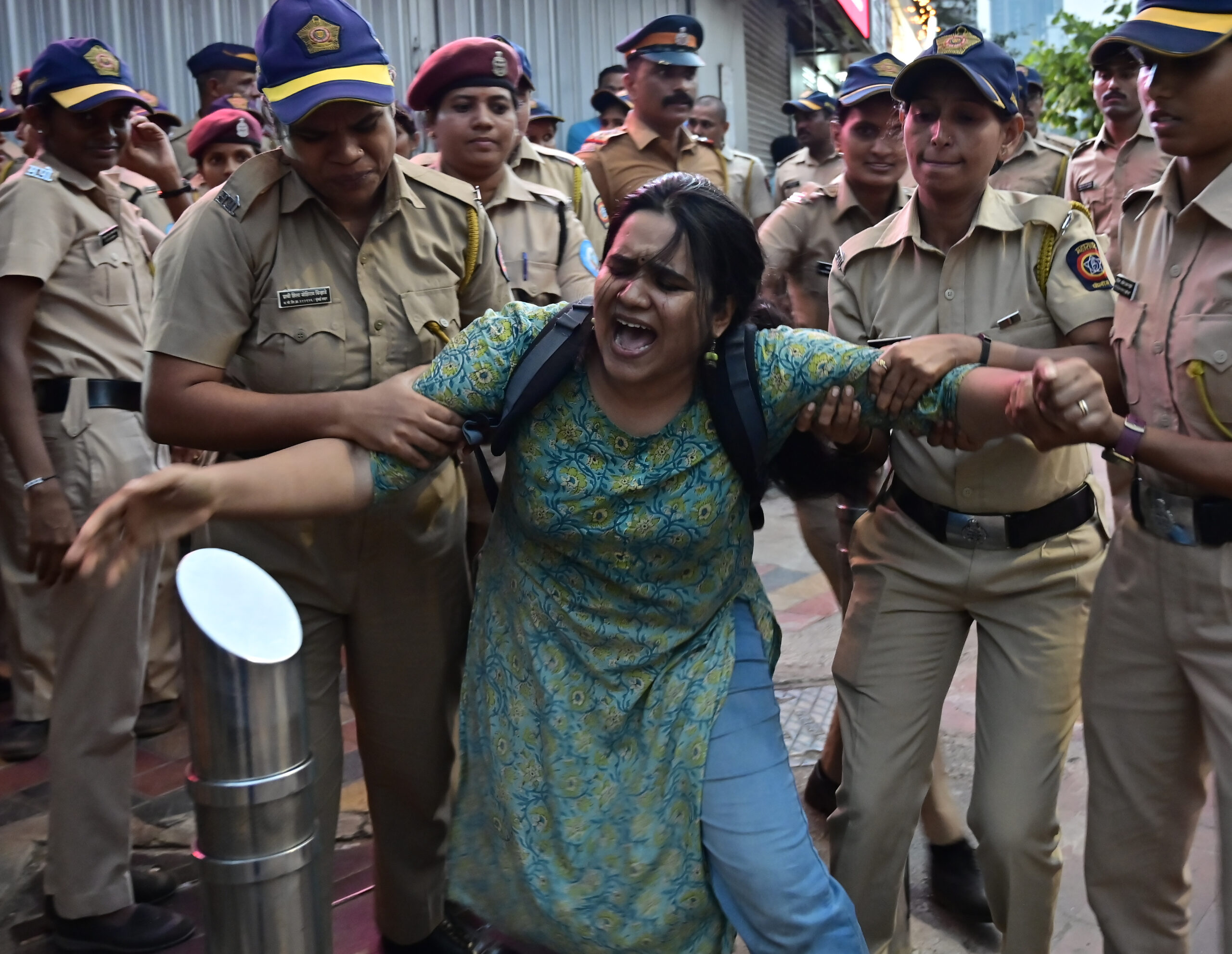
On 10 October 2026 at the Indira Gandhi International Airport in New Delhi, police detained three leaders of the newly formed, youth-led Cockroach Janta Party (CJP) who were headed to the Jantar Mantar astronomical observatory, the site of a planned protest. Authorities also restricted public transport and mobile internet services, barricaded roads, and preemptively detained thousands. The protest never happened.
Just three months earlier, the same movement had occupied Jantar Mantar for weeks, protesting the leak of the medical entrance examination (NEET-UG) paper and eventually forcing Education Minister Dharmendra Pradhan to resign — a rare concession from Prime Minister Narendra Modi’s government.
Why was a movement that had sustained weeks of protest in July unable even to assemble in October?
The trajectory of the CJP from July to October reveals a dual challenge for protest under democratic backsliding. An early victory can embolden protesters, but it can also teach governments how to avoid the next protest. In a recent Journal of Democracy essay, Erica Chenoweth and Matthew Cebul highlight the difficulty that youth-led movements face in converting protest energy into durable political change. The CJP experience adds another dynamic: Governments may be prepared to make concessions in response to policy failures but still resist attempts to challenge the institutions that set the rules for political competition.
From Satire to Protest
The Cockroach Janta Party began as a satire after Chief Justice Surya Kant, on 15 May 2026, controversially referred to activists and unemployed youth as “cockroaches.” Student activists turned this insult into a political identity, forming the CJP movement online and quickly rallying young Indians frustrated by poor job prospects and repeated entrance-exam-paper leaks.
By June, protesters had maintained a sustained sit-in at Jantar Mantar, demanding accountability for the NEET-UG paper leak, the cancellation of examination results, alleged irregularities in the system, and broader reforms in the administration of public examination. The movement intensified after the police removed hunger-striker Sonam Wangchuk from Jantar Mantar to a hospital on July 18. When the CJP held the Walk to Parliament (Sansad Chalo) two days later, police responded with batons, tear gas, and pellet guns, and shut down mobile internet services around the protest area. On July 25, Pradhan stepped down, and the CJP ended the protest. The education minister’s resignation took place amid continued mobilization and growing political pressure. Police brutality may have contributed to that pressure, but it did not compromise the overall authority of the Modi government. It could replace an official and offer administrative reforms without calling into question the legitimacy of its electoral mandate.
A Minister Is Not a Referee
The CJP’s October mobilization was targeting Chief Election Commissioner Gyanesh Kumar over the Special Intensive Revision (SIR) of India’s electoral rolls. The exercise resulted in roughly 130 million names being deleted from the draft rolls. The Election Commission claims the exercise was cleaning up the rolls by removing deceased, duplicate, and ineligible voters. But critics argue that eligible citizens, especially the poor and marginalized, have been excluded.
Deletions from the draft roll alone do not imply permanent disenfranchisement or manipulation by the incumbent. But the controversy goes beyond the allegations leveled by the CJP and major opposition parties. Two of the three election commissioners objected on at least fourteen separate occasions over the decisions or procedures involved in the revision. The commission has officially acknowledged the disagreement among the commissioners while maintaining that its decision was unanimous and ordered an effort to re-enroll eligible voters omitted from the rolls. Most important now is to determine how many genuine voters were removed, how difficult it will be to re-enroll them, and whether different communities and constituencies face these difficulties in an uneven way.
What makes the October demands different from those of July? The distinction is not merely between individuals and institutions. In July, protesters were demanding administrative justice. In October, they have demanded that a particular person step down from office. But it is the political significance of the rules being contested that matters. Irregularities in examinations threaten students’ educational opportunities, while voter-roll irregularities could affect who gets to participate in electing the government. The government’s admission of policy failure can be read as a sign of responsiveness. Its acknowledgement of irregularity in the electoral process, however, would lead to an assessment of the fairness of political competition and, consequently, the legitimacy of the electoral process.
This series of protests speaks directly to the recent scholarship about Indian democracy in which Ashutosh Varshney makes a distinction between the endurance of electoral competition and the breakdown of liberal rights; Maya Tudor identifies the decline of democratic norms within formally functioning institutions; and Madhav Khosla and Milan Vaishnav highlight the increasingly opaque nature of state power. The voter-roll controversy synthesizes and illustrates these three observations around a fundamental point about the fairness of administrative processes involved in conducting political competition.
Unlike a cabinet minister, the chief election commissioner can only be removed on grounds similar to those used in the removal of a Supreme Court justice—that is, an impeachment. A minister’s resignation may satisfy a clear and immediate demand by protesters; repairing the electoral process, however, requires procedures that have greater legitimacy than the movement itself. Ongoing public scrutiny, legal action, and transparency may be necessary as opposed to a mere resignation.
Learning on Both Sides
In July, authorities were confronted with an already established movement at Jantar Mantar. Police used force and adopted preventive actions such as cutting off internet access; yet the protesters continued with their campaign. By October, authorities had changed their strategy to prevent protesters from gathering by detaining organizers, closing Jantar Mantar, and restricting transportation and mobile internet services.
Crucially, in a court filing on October 15, Delhi police cited the “past experience” of the July protests as the basis for their actions in October. The police said that the earlier march had breached the restrictions and posed risks to public order. This is not new. As Rajkamal Singh, Rahul Hemrajani, and Amit Ahuja have shown, Delhi police regulate public demonstrations by rejecting permits for protests that it believes will disrupt public order. The state already had preventive measures at the ready; what changed was when and the degree to which those measures would be used. As Breza Race Maksimovic and Jamila Raqib recently wrote in the Journal of Democracy, states have become increasingly adept at stifling street protests, on whose visibility nonviolent movements rely.
The CJP’s digital reach helped for quick mobilization, but airport arrests and the closing of Jantar Mantar revealed the weaknesses linked to identifiable leaders and a fixed protest site to assemble. As Zeynep Tufekci points out in the book Twitter and Tear Gas, digital technologies help movements grow quickly but do not guarantee that movements will learn the necessary skills to sustain collective action. It is not clear whether the Cockroach movement has the local networks needed to maintain decentralized action over time. An Instagram following indicates popularity but not organizational capability.
Protesters did, however, adapt their plans in the wake of the CJP leaders’ airport arrest. After police made arrests and barricaded Jantar Mantar, various student groups and activists held flash marches at Dilli Haat, Connaught Place, and elsewhere. They were dispersed, but the closure of one site did not end the movement. It is a case of reciprocal learning, where each side alters its approach. Both sides are unsure if their next move will give them leverage or make them vulnerable.
From Mobilization to Political Power
Past protest cycles in India illustrate the way in which organization and political stakes interact. The India Against Corruption campaign played an important role in the formation of the Aam Aadmi Party, turning a section of the street movement into an electoral organization. The farmers’ movement made use of existing unions and maintained pressure for more than a year until the government repealed three agricultural laws. This outcome reflected organizational endurance as well as political calculation.
The protests sparked by the Anti-Citizenship Amendment Act mobilized large numbers of people in 2019–20 but failed to yield any meaningful changes in legislation. The government finally implemented the law in 2024. While organization is important, it cannot on its own overcome a ruling party’s commitment to defending certain policies. However, even if such movements fail to achieve their immediate goals, they often succeed in establishing lasting networks, organizations, or constitutional citizenship claims.
Saskia Brechenmacher identifies three pathways through which protests can resist backsliding: empowering institutional actors, mobilizing voters, and fracturing the coalition of incumbents. For the Cockroach movement, this means more than reproducing the success of the July protest; the movement must exert consistent pressure on institutions or on the ballot. As Feyaad Allie and I have shown in our work on Rahul Gandhi’s 2022–23 Bharat Jodo Yatra (Unite India March), even massive voter mobilization produced geographically and temporally limited electoral gains: The Congress party leader’s 150-day march did help his party at the polls — but measurable gains were concentrated in elections that followed soon after and were held in areas close to the route, in states where Congress has a significant presence.
The challenge now facing the Cockroach movement is to maintain its endurance without sacrificing the independence that first attracted its supporters. Opposition parties, led by Congress, supported the July protest, but their role in October has been more assertive. They held independent demonstrations on the voter-roll issue and attempted to draw the CJP into a broader campaign, although CJP leaders have so far maintained organizational distance. While the movement’s association with preexisting student organizations and opposition political parties provides it credibility and the opportunity to seek legal and organizational assistance, it also enables the BJP to paint it as a tool of a certain political party. The dilemma is not only whether to cooperate with the opposition but also to decide who leads the movement.
On October 12, the police stopped an opposition-led march, but Rahul Gandhi and other opposition leaders subsequently filed a petition in the Supreme Court over the electoral-roll revision. Their ability to take the matter to court is an example of institutional leverage that a new movement may not readily possess. Both the CJP and opposition parties faced restrictions; but their access to institutional channels for resolution was not equal.
The challenge is not unique to movements in India. Gen Z protests in Kenya, for example, forced President William Ruto to withdraw a finance bill in 2024. Yet, according to Amnesty International, Kenyan authorities continued to surveil and intimidate activists who mobilized via digital platforms. Kenyan activists Kinuthia Ndung’u and Wanjira Wanjiru argue that while decentralization allowed rapid gains, the protest movement faces limitations in long-run structural organization and reforms.
Can the Street Reach the Referee?
Street mobilization can still force accountability. On October 11, the Supreme Court told authorities to refrain from arbitrary detention and restricting transportation, communication, and movement. On October 15, the Court sought comments on electoral-roll matters and the removal of Jantar Mantar from the list of officially designated protest sites. Neither intervention resolved the underlying issue.
The courts are not simply a substitute for the street. Andrew O’Donohue’s comparative research shows that judicial opposition to executive overreach depends both on legislative and civic support. The CJP case study suggests another possibility: Protests might facilitate accountability through mobilizing the institutions that can perform independent review of contested state acts.
Accountability cannot be measured only by Kumar’s resignation. Voters must be able to challenge exclusion; the electoral process has to be transparent; and the referee must have the public’s and the candidates’ trust. A symbolic victory can bring an end to the campaign, but creating lasting protections will require continuous scrutiny.
For the CJP, the harder task is to transform public outrage into real and enforceable guarantees of fair elections, and not merely another resignation. India’s young protesters have proven that they have the power to provoke a reaction from the government. But in the case of an institution that serves as a referee of political competition, victory requires more than filling the streets. It requires institutions that are capable of holding even the referee accountable.
The slogan of the CJP is that cockroaches never die. The more pertinent question is whether democratic accountability can survive when the very rules of political competition are in dispute.
Resuf Ahmed is a postdoctoral fellow at Stanford University’s King Center on Global Development. His research examines development and political economy in India, with particular emphasis on political representation, identity, conflict, and political mobilization.
Copyright © 2026 JoD Productions Inc
Image Credit: Anshuman Poyrekar/Hindustan Times via Getty Images
|
FURTHER READING |
||
Inside Modi’s Assault on Academic Freedom |
Why Gen-Z Is Rising
|
Why Elected Leaders Subvert Democracy
|