
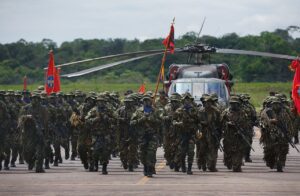
Latin America’s Crime Crisis
Organized criminal groups in Latin America have money, firepower, and a stranglehold on political life — making them incredibly difficult to defeat. How can countries in the region curb the violence and revive democracy?
3273 Results
Organized criminal groups in Latin America have money, firepower, and a stranglehold on political life — making them incredibly difficult to defeat. How can countries in the region curb the violence and revive democracy?
October 2007, Volume 18, Issue 4
A review of Inside Iraq's Confessional Politics by Junning Liu.
April 2005, Volume 16, Issue 2
A review of The Democratic Advantage: How Democracies Promote Prosperity and Peace by Morton H. Halperin, Joseph T. Siegle, and Michael M. Weinstein.
July 2003, Volume 14, Issue 3
Democratic and ecnomic development will become sustainable in sub-Saharan Africa only with the emergence of coherent, legitimate and effective states.
April 2002, Volume 13, Issue 2
Last year, Bulgarians elected their newly returned former king as prime minister and then, in a shocking upset, ousted their incumbent president. What do these results portend for the future of Bulgarian democracy?
April 2002, Volume 13, Issue 2
Political scientists have long theorized that the use of “preferential” election systems can help promote successful conflict management in divided societies. As it turns out, evidence from five real-world cases supports this conclusion.
October 2001, Volume 12, Issue 4
Israel began directly electing its prime minister in 1992, only to abandon this change less than ten years later. What came between was a series of hard lessons in the unintended consequences or reform.
July 2001, Volume 12, Issue 3
The 1990s began with an unprecedented democratic opening in Francophone Africa. While a number of countries have suffered setbacks and even reversals, others continue to make progress, and popular aspirations for democracy remain strong.
July 2001, Volume 12, Issue 3
In 2000, Senegal experienced its first-ever electoral victory by an opposition candidate. Yet the social foundations that have supported one of Africa’s most liberal regimes are shifting, with unpredictable consequences.
April 2001, Volume 12, Issue 2
With longtime ruler Jerry Rawlings obeying constitutional term limits, the opposition won a narrow electoral victory, bringing Ghana its first peaceful transfer of power since independence.
January 2001, Volume 12, Issue 1
A review of Democracy and Development: Political Institutions and Well-being in the World 1950-1990, by Adam Przeworski, Michael E. Alvarez, Jose Antonio Cheibub, and Fernando Limongi.
Fall 1990, Volume 1, Issue 4
A review of Unruly Corporatism: The Associational Life in Twentieth-Century Egypt, by Robert Bianchi.
January 2001, Volume 12, Issue 1
Across Latin America, public support for democracy has been remarkably stable and consistently higher than satisfaction with the way that democracy works. Low institutional trust reflects even lower levels of interpersonal trust.
July 2000, Volume 11, Issue 3
In recent years several Westminster-style parliamentary democracies have considered cutting their ties with the British monarchy and becoming republics. The difficulties involved in trying to make such a shift were on full display in Australia.
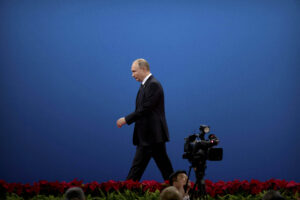
Everyone knows that Russia’s election is a fraud. The problem is no dictator ever feels safe enough, and Putin thinks even a fake election will signal to his cronies that he’s still in charge.
October 2016, Volume 27, Issue 4
Duterte promised voters that he would swiftly reduce crime and poverty and enact constitutional change. But will he violate democratic norms and rule of law in the process?
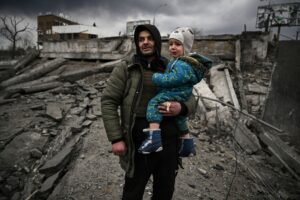
Most are Russian speakers from the east, and once harbored sympathies for Moscow. If the country embraces them, they could form the bedrock of a free and open Ukrainian society.
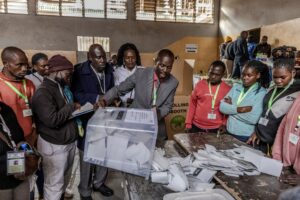
Across the globe, the people who run our elections are being undermined, targeted, and attacked. Here is how to shore them up—and protect democratic institutions, too.