

January 2018, Volume 29, Issue 1
Burma: Suu Kyi’s Missteps
Despite high hopes for progress toward democracy, the military’s power remains stubbornly entrenched, while Aung San Suu Kyi seems to lack the skills to run the government effectively.
3272 Results
January 2018, Volume 29, Issue 1
Despite high hopes for progress toward democracy, the military’s power remains stubbornly entrenched, while Aung San Suu Kyi seems to lack the skills to run the government effectively.
July 2020, Volume 31, Issue 3
Remarks on China from Deputy U.S. National Security Advisor Matt Pottinger; joint statement by David Kaye, Harlem Désir, and Edison Lanza on protecting the free flow of information during the covid-19 pandemic; open letter by Indian academic and Dalit-rights activist Anand Teltumbde; reflections from Joshua Wong on the future of Hong Kong’s prodemocracy movement
October 2002, Volume 13, Issue 4
The Gambia provides a lesson in how authoritarians can hold votes yet rob their people of the power that the ballot box is supposed to give them.
July 2002, Volume 13, Issue 3
The notion of countries being on the “path to democracy” remains valid unless and until they come up with a systemic alternative to democracy.
October 2001, Volume 12, Issue 4
Although the OAS helped, sudden public revelations of corruption in Peru were more important.
October 1997, Volume 8, Issue 4
Read the full essay here.
October 1997, Volume 8, Issue 4
Read the full essay here.
Spring 1990, Volume 1, Issue 2
A review of Democracy in the Americas: Stopping the Pendulum, edited by Robert A. Pastor.
Winter 1990, Volume 1, Issue 1
A review of Rethinking Military Politics: Brazil and the Southern Cone, by Alfred Stepan.
July 2017, Volume 28, Issue 3
Read the full essay here. India’s Supreme Court has played the role of a countermajoritarian check but has also flirted with populism. This essay examines three aspects of India’s higher judiciary: the struggle between the judiciary and the other branches over “custody” of the Constitution; the question of judicial independence and who has the right…
October 1995, Volume 6, Issue 4
A review of Conditions of Liberty: Civil Society and Its Rivals, by Ernest Gellner.

July 2024, Volume 35, Issue 3
The “crisis” of democracy is a crisis of representation. New parties, some of which are populist in troublingly illiberal ways, are arising from this moment. The danger that they pose is not that they are antidemocratic, but that they are antiliberal.
January 2021, Volume 32, Issue 1
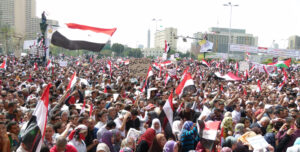
A decade ago, Arab peoples stood up and sought to replace their rulers with a more democratic political project. But Arab autocrats have a project of their own. Can the people gain ground in the struggle for self-government, or will their rulers bear it away?
July 2016, Volume 27, Issue 3
Delegative presidencies have not been a problem in post-Pinochet Chile, but the rise of mass protest movements suggests that the country’s new democracy has gone too far in the direction of demobilizing society.
April 2002, Volume 13, Issue 2
The effects of electoral systems and of federalism are usually examined separately, but a review of the leading federations shows that it is essential to consider the interaction between the two in designing democratic institutions.
October 2001, Volume 12, Issue 4
The 15 states of the former Soviet fall into three broad categories, largely defined by fault lines of history and culture.
Fall 1990, Volume 1, Issue 4
The complete text of the “Freedom Charter,” the basic statement of principles of the anti-apartheid African National Congress party of South Africa.
Winter 1991, Volume 2, Issue 1
Excerpts from: the Madrid Declaration; Popular Movement of Ukraine (Rukh) party president Ivan Drach’s speech to the Congress; the Charter of Paris.
April 2011, Volume 22, Issue 2
The past decade began at a high point for freedom but ended with freedom in peril. Yet the setbacks of the last five years do not outweigh the democratic gains of the last forty.
January 2024, Volume 35, Issue 1
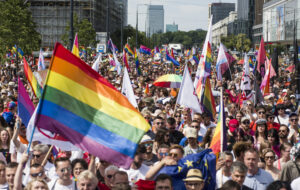
Autocrats have found a new way to turn citizens against liberal democracy: convincing them that LGBTIQ rights, granted and protected in much of the West, pose a threat to their nation and its values.