
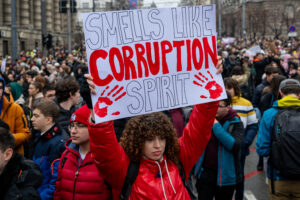
How Serbian Students Created the Largest Protest Movement in Decades
They have been smart, creative, leaderless, and transparent. And they aren’t targeting any one politician or party. They aim to change the entire system.
3272 Results
They have been smart, creative, leaderless, and transparent. And they aren’t targeting any one politician or party. They aim to change the entire system.
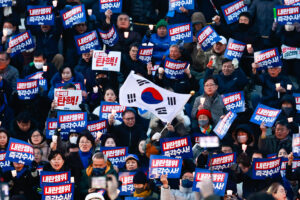
The quick reversal of President Yoon’s martial-law order is being celebrated as a democratic victory. But the problems run deeper than one man. What comes next?
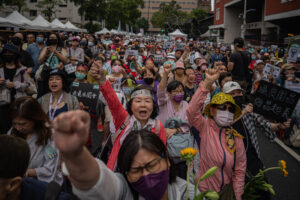
Beijing assaults Taiwan with a nonstop barrage of conspiracy theories and lies to undermine people’s faith in democracy — and China’s efforts are getting more sophisticated. Taiwan must do even more to fight back.

It has long been a stalwart defender of democracy. But in this election season, the Czech Republic’s growing polarization is bringing illiberal political parties to the fore.

The danger is greater than the rise of far-right parties. In fact, there is a risk that in their eagerness to contain the far right, European leaders may do greater damage to democracy itself.
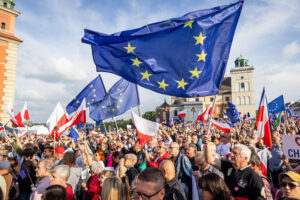
If mainstream parties don’t listen to voters, extremists will be rewarded at the ballot box.
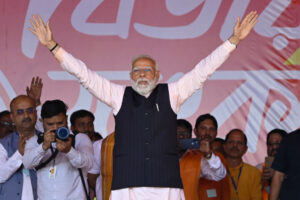
Voters are choosing more than the parties and politicians who will represent them. It is something more basic: The future of India’s secular democracy is on the ballot.
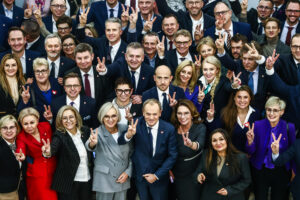
There is no clear roadmap. But Poland may be setting out on its first steps in stamping out populism and holding accountable those responsible for the worst violations of the rule of law.
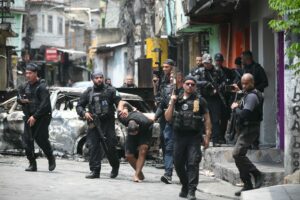
Last month Rio’s police conducted the deadliest police operation in Brazil’s history, killing 117 people. It is one episode in a long history of state violence. Not only are such iron-fisted methods ineffective, they pose a danger for democracy itself.
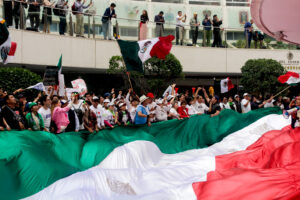
Mexico’s president recently signed into law a series of reforms that bulldoze the country’s judicial system and eviscerate democratic checks on executive power. Amrit Singh and Gianmarco Coronado Graci explain why this is even worse than it seems.
The Cuban opposition recently lost one of its towering figures. Click here to read an exchange between Payá and Václav Havel that appeared in the April 2004 Journal of Democracy.
August 1, 2012
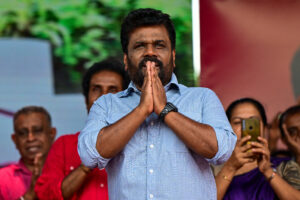
A few years ago Anura Kumara Dissanayake led a struggling political party with bleak prospects. Now he is Sri Lanka’s newly elected president. The hardest work may still lie ahead.
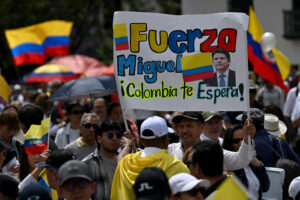
Colombia’s drug war has ravaged the country — leaving tens of thousands dead, disappeared, or displaced and entire communities broken. Democracy is among the casualties.
For background on Ghana, read “Oil, Politics, and Ghana’s Democracy” in the July issue of the Journal.
July 25, 2012
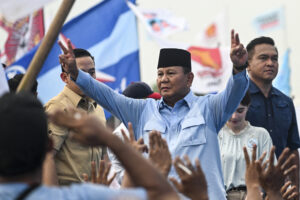
Indonesian voters have made Prabowo Subianto, a special-forces commander with a dark past, their next president. Even as voters flocked to the polls, his election is a harbinger of democracy’s decline.
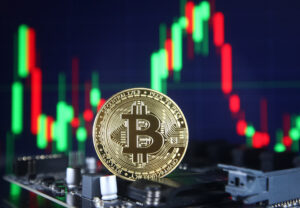
Bitcoin is an indispensable tool for political dissidents in the most repressive environments, argue Alex Gladstein and Félix Maradiaga in two recent Journal of Democracy online exclusives. When dictators weaponize the financial system and obstruct all avenues of dissent, digital currency helps activists keep their operations running.
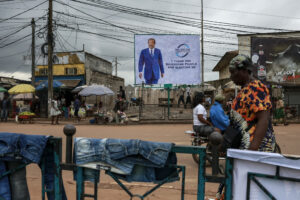
Cameroonians just reelected the 92-year-old Paul Biya in an election that voters rightly view with suspicion. The tensions under the surface don’t bode well for the country or its people.
At the Chinese Communist Party’s Twentieth National Congress last week, Xi Jinping secured a third term as Party secretary. But the most important development wasn’t Xi extending his rule or the Party’s elevation of new leaders. Rather, Xi made clear that the era of Chinese economic growth above all else was over. Now the Party’s…
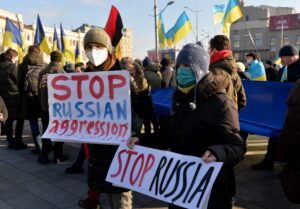
If the West forces Kyiv to accept Putin’s diplomatic terms, he will have succeeded without firing a shot.