
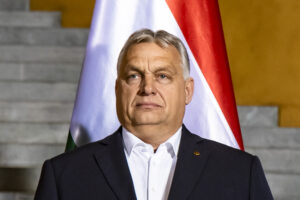
Inside Orbán’s Plan to Occupy Europe
The Hungarian prime minister is on a mission to overrun Brussels, disrupt the EU, and consolidate his power at home. It just might work.
3266 Results
The Hungarian prime minister is on a mission to overrun Brussels, disrupt the EU, and consolidate his power at home. It just might work.
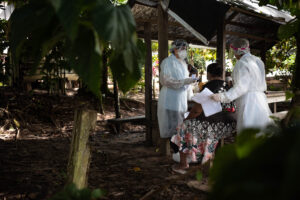
January 2025, Volume 36, Issue 1
Covid-19 swept across Latin America with devastating effects. But it had unexpected positive consequences too, as citizens ousted inept politicians and pushed back against the inequities laid bare by the pandemic.
October 2021, Volume 32, Issue 4
Excerpts from: Sergei Adamovich’s remarks on the death of Andrei Sakharov; Marjan Farsad’s “Moonlight”; joint letter for a global moratorium on surveillance-technology sales; Zambian president Haikande Hichilema’s inaugural address.
October 2003, Volume 14, Issue 4
Europe faces a potentially dangerous “double bind”: The legitimacy of domestic democracy in the member states is waning, and citizens are increasingly unhappy with the EU’s lack of accountability—but the new draft Constitution fails to address the problem.
July 2001, Volume 12, Issue 3
There has been surprisingly little celebration of the tenth anniversary of the revolutions that brought down communism. The exaggerated hopes of the time have given way to disillusionment, but the real achievements of many of the postcommunist countries should not be discounted.
October 2007, Volume 18, Issue 4
Reports on elections in Cameroon, Congo-Brazzaville, Jamaica, Kazakhstan, Mali, Morocco, Papua New Guinea, Philippines, Senegal, Seychelles, Sierra Leone, Timor-Leste, and Turkey.
July 2010, Volume 21, Issue 3
Excerpts from remarks presented by newly elected Chilean president Sebastián Piñera upon signing a set of proposed laws for the strengthening of democracy to be submitted to the Congress.
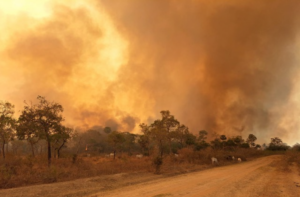
July 2025, Volume 36, Issue 3
Bolivia’s Amazon forests are becoming scorched earth, with millions of acres lost each year to raging fires. Worse, this disaster is being caused by a government more interested in corrupt profits than protecting its people and wildlife.
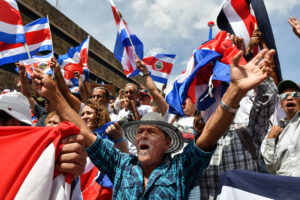
October 2025, Volume 36, Issue 4
Although an island of stability and democracy in a region often short of both, Costa Ricans’ faith in government is declining as the challenge of financing its costly welfare state grows. This democratic stalwart is no longer immune to the appeal of populism.

April 2021, Volume 32, Issue 2
The swelling pessimism about democracy’s future is unwarranted. Values focused on human freedom are spreading throughout the world, and suggest that the future of self-government is actually quite bright.
January 1997, Volume 8, Issue 1
Reports on elections in Armenia, Bosnia-Herzegovina, Bulgaria, Czech Republic, Gambia, Kuwait, Lebanon, Lithuania, Madagascar, Mauritania, Moldova, Romania, Slovenia, Thailand, Yugoslavia, Zambia.

The Chinese Communist Party’s newest AI advance is making repression smarter, cheaper, and more deadly. Even worse, they aim to export it to the world.
July 2013, Volume 24, Issue 3
The Putin regime, having faced its first real challenge in the form of mass protests after the 2011 Duma elections, is responding with a series of laws intended to intimidate its civil society opposition, if not stamp it out altogether.
April 2025, Volume 36, Issue 2
Democracy across the world is being undermined by the very forces that once made it possible: the liberal economic order and political competition. The global concentration of wealth has made democratic governance less effective and stripped the people of their power.
July 2025, Volume 36, Issue 3
Authoritarian regimes are not lawless. Rather, autocrats take to the courtroom not only to enforce their will but to justify their rule. So how do they appeal to reason? How do they rationalize their undemocratic turn?
April 2001, Volume 12, Issue 2
Read the full essay here.

The election of Rodrigo Paz Pereira as Bolivia’s new president signals the end of the MAS era. But it is more than an end to Evo Morales’s leftist party. It showcases how Indigenous political power has transformed the country’s political landscape.
April 2002, Volume 13, Issue 2
Argentina made headlines around the world last December as its presidency changed hands no fewer than four times in less than two weeks. Lost amid the chaos, however, were hopeful signs that the country has now turned the corner of democratic consolidation.
October 2008, Volume 19, Issue 4
The military regime opened up the media sector to more competition and private broadcasters in 2002, and the ramifications turned out to be vast.

April 2025, Volume 36, Issue 2
Everything we know about getting and keeping democracy suggests we should be, at best, cautious about the prospects for Syria’s democratic future. But, as this collection of essays suggests, there are reasons for hope.