
July 2010, Volume 21, Issue 3
Political Attitudes in the Muslim World
A new look at the World Values Survey data reveals how the Muslim world’s religious context affects individual Muslims’ attitudes toward democracy.
2785 Results
July 2010, Volume 21, Issue 3
A new look at the World Values Survey data reveals how the Muslim world’s religious context affects individual Muslims’ attitudes toward democracy.
July 2002, Volume 13, Issue 3
The Editors’ introduction to “Middle East Studies After 9/11.”
January 2015, Volume 26, Issue 1
In the aftermath of the Arab Spring, democracy in the Arab world seems farther away today than at any point in the last 25 years. If it is to ever arrive, it will likely be through a more evolutionary and elite-driven process.
January 2004, Volume 15, Issue 1
It has been claimed in the pages of this journal that a homogeneous society is an advantage when it comes to democratization. How might this suggestion be empirically tested, and with what (perhaps preliminary) results?
July 2013, Volume 24, Issue 3
President Rafael Correa, now entering his third term, has built a curious form of populist-authoritarian regime. He champions redistributionism and a kind of technocratic leftism while assaulting the traditional left along with such mainstays of a liberal society as the freedom of the press.
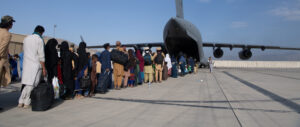

January 2022, Volume 33, Issue 1
The Afghan republic’s destruction was sewn into its founding. The international community’s missteps are more responsible for its failure than the country’s supposedly endemic corruption.
January 2020, Volume 31, Issue 1
Robert Michels’s classic work on the “iron law of oligarchy” can help us to understand why there is so much dissatisfaction with representative democracy.
July 2016, Volume 27, Issue 3
There is strong empirical evidence to support the correlation between effective term limits and the quality of democracy.

July 2025, Volume 36, Issue 3
Authoritarian regimes are not lawless. Rather, autocrats take to the courtroom not only to enforce their will but to justify their rule. So how do they appeal to reason? How do they rationalize their undemocratic turn?
January 2010, Volume 21, Issue 1
In recent years, scholars have begun to focus on the sources of "authoritarian resilience." But democracy has also shown surprising resilience, in part because the disorders to which it is prone tend to counteract each other.
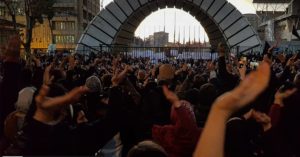
January 2020, Volume 31, Issue 1
Iran is in the midst of an ideological crisis. Growing numbers of Iranians are rejecting the religious underpinnings of the Supreme Leader’s rule, and turning their backs on the Islamic Republic. The regime’s only response is harsher repression—a response that will deepen the anger that is bringing everyday Iranians out into the streets.
October 2020, Volume 31, Issue 4
When asked by presidents to intervene domestically for crime-fighting or civil-order purposes, Latin American militaries face a number of risks and have a degree of freedom to tailor their responses accordingly.
October 2019, Volume 30, Issue 4
To a degree that is still not widely appreciated, the BJP has replaced Congress as India’s party of welfarism. The carefully crafted political persona of Prime Minister Narendra Modi as the “leader of the poor” has been crucial to this shift.
July 2014, Volume 25, Issue 3
Tiny countries have come in for praise as miniature models of democracy, but closer examination tells a mainly more somber tale.
January 2014, Volume 25, Issue 1
After a half-century of brutal communist rule and two decades of troubled postcommunist life, this small Balkan state surprised many by achieving a successful turnover of power by means of the ballot.
January 2009, Volume 20, Issue 1
Authoritarian weakness alone cannot explain why the mobilization process during the color revolutions assumed similar forms across varied contexts.
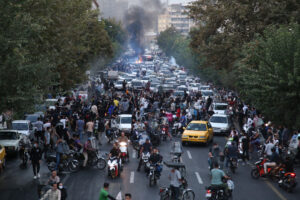
April 2023, Volume 34, Issue 2
There have been numerous waves of protest against the country’s corrupt theocracy. This time is different. It is a movement to reclaim life. Whatever happens, there is no going back.
January 2015, Volume 26, Issue 1
As the Journal of Democracy celebrates its twenty-fifth anniversary, there are serious reasons to worry about the state of democracy.
October 2015, Volume 26, Issue 4
Islamic political parties were not especially popular with voters in Muslim-majority countries before the Arab Spring. Has that changed?