
July 2009, Volume 20, Issue 3
Democratization by Elections? Opposition Weakness in Africa
Due to weak opposition parties and presidential dominance, many African countries have not reaped the full benefits of regularly held elections.
2195 Results
July 2009, Volume 20, Issue 3
Due to weak opposition parties and presidential dominance, many African countries have not reaped the full benefits of regularly held elections.
October 2008, Volume 19, Issue 4
Elections set the stage for the General’s exit after nearly a decade in power, yet Pakistan still faces deep-seated structural problems that cannot be remedied merely by a return to competitive electoral politics.
January 2005, Volume 16, Issue 1
To everyone's surprise, the Congress party defeated the incumbent BJP in the April-May 2004 parliamentary elections. What caused this political turnaround, and what will be its effects?
October 2011, Volume 22, Issue 4
Nigeria’s 2011 presidential election offered its citizens the most competitive and transparent contest in decades, but also the bloodiest.
July 2008, Volume 19, Issue 3
Despite South Korea’s messy democratic trajectory, it has miraculously achieved consolidation. Though far from perfect, South Korea’s democracy has turned obstacles into opportunities for reform and development.
July 2008, Volume 19, Issue 3
Emerging from one of the world’s most notorious failed states, Somaliland has become an oasis of relative democratic stability in the troubled Horn of Africa. What does its story teach us about democratic state-building?

The last Soviet leader brought down his regime and ended the Cold War. The free world owes him a debt of gratitude. | By Lucan Ahmad Way
January 2017, Volume 28, Issue 1
Once Europe’s most painful “problem” area, the Balkans have managed to make strides toward stability, democracy, and integration into the West over the last fifteen or so years. But Moscow is becoming increasingly active in the region, and the durability of these gains should not be taken for granted.
October 2020, Volume 31, Issue 4
India’s covid-19 response has accelerated the country’s slide toward competitive authoritarian rule by centralizing decision making, undermining federalism, and providing new pretexts for stifling dissent.
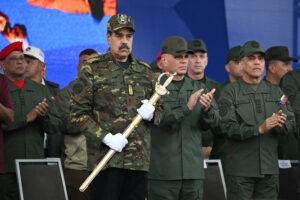
The South American country may be on the verge of real change. But it isn’t going to descend into civil-war chaos like Libya. It will be difficult, imperfect, and far better than what Venezuelans have had to endure.
January 2012, Volume 23, Issue 1
Read the full essay here. Turkish state policy toward the Kurds, the Republic of Turkey’s largest ethnic minority, has evolved from denial and mandatory assimilation to cultural recognition to acknowledgment of the Kurds’ contested status as a political problem demanding political solutions. The election of 36 Kurdish-nationalist lawmakers, most of whom now sit in parliament…
January 2005, Volume 16, Issue 1
In the conditions of today's world, countries that are in a bad way as regards some aspects of their governance may benefit from agreeing to share portions of their sovereignty with external actors.
Reports on elections in Botswana, Bulgaria, Georgia, Ghana, Lithuania, Mauritius, Moldova, Mozambique, Namibia, Palau, Romania, Senegal, Sri Lanka, Uruguay, and Uzbekistan.
October 2023, Volume 34, Issue 4
Theocratic democracy, the de facto grand bargain between religious groups and political leaders, offers key insights into the relationship between faith, freedom, and the global democratic recession.
April 2006, Volume 17, Issue 2
The country’s recent political travails are due not to collusion between the two major parties but to the increasing difficulty of reaching interparty agreements.
July 2003, Volume 14, Issue 3
A review of "Ending Civil Wars: The Implementation of Peace Agreements" Edited by Stephen John Stedman, Donald Rothchild, and Elizabeth M. Cousens.