
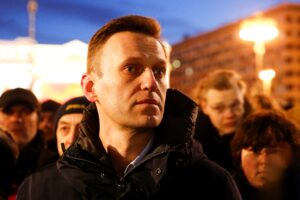
Why Alexei Navalny Mattered in Life and Still Matters in Death
Vladimir Putin may have imprisoned, tortured, and killed the brilliant opposition leader, but even now Navalny is a threat to the corrupt autocracy he has built.
3264 Results
Vladimir Putin may have imprisoned, tortured, and killed the brilliant opposition leader, but even now Navalny is a threat to the corrupt autocracy he has built.

Vladimir Putin has become a one-stop shop for authoritarians around the world, providing them whatever they need to advance their cause. Democracy’s defenders don’t get the same support — but it’s time for that to change.
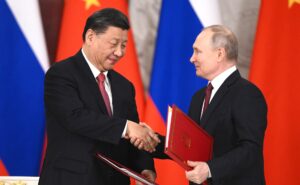
Authoritarians are evolving — becoming more unconstrained and repressive at home, and more destructive on the global stage. The following essays unpack the authoritarians’ toolkit, revealing their strategies for taking power and upending the liberal world order.

The ANC lost its majority for the first time, but populist forces were held at bay.

Voters across the world see democracy as unresponsive, out of touch, inept, and even corrupt. Something needs to change, but no one can agree on what. What democracy needs, Joel Day argues in a new Journal of Democracy online exclusive, is a single bold and effective reform plan.

A free market can foster pluralism and insulate civilians from authoritarian coercion. But money used the wrong way has enormous potential for destruction. The Journal of Democracy essays below, free for a limited time, explore the complex relationship between capitalism and democracy.
Don’t miss your chance to read the Journal of Democracy’s July issue for free through the 31.
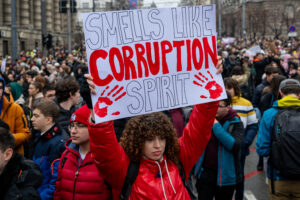
Steadfast, nonviolent movements are often the most effective way to counter an authoritarian. These essays explain how to start, sharpen, and sustain a movement.

“Every opportunity must be used to speak out . . . I love Russia. My intellect tells me that it is better to live in a free and prosperous country than in a corrupt and impoverished one.”
Our most-read essays of 2023 covered the state of India’s democracy, Russia’s war on Ukraine, the protests in Iran, and more.

The latest issue of the Journal of Democracy answers some of today’s most pressing questions about democracy, and features essays on Iran, Turkey, Tanzania, the Philippines, and more. But it all goes behind a paywall after July 31. Don’t miss your chance to read the entire issue for free!

When democracies are clearly outperforming autocracies in so many ways, why the widespread disenchantment with democratic government? Why are democracy and human-rights activists across the globe turning to Bitcoin?

The popular Chinese-owned app is enabling Beijing to collect data on people nearly everywhere. Not only can such platforms track people’s preferences and whereabouts, but they give the Chinese government control over a powerful tool for shaping people’s worldview.
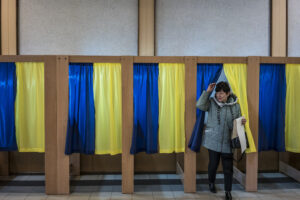
Russia’s brutal ongoing invasion is preventing Ukrainians from holding a presidential election and the campaigning that comes with it. What does that mean for Ukraine’s democracy?

On Tuesday, Georgia’s Parliament passed a controversial new law that would brand NGOs and media organizations receiving foreign funding as “foreign agents.” Countries across the globe are following the Russian model and painting liberal-democratic values as malign foreign interference. Read about the strategies autocrats are devising to repress civil society and stifle dissent.

Democracy is in decline, growing weaker from within. But why? And can we reverse the damage before it’s too late?
China’s Twentieth Party Congress opened this week in Beijing. President Xi Jinping is widely expected to cement his position as Chinese Communist Party leader for an unprecedented third term.

The following Journal of Democracy essays chronicle the rise, fall, and resurgence of illiberal populism in Poland, and what it means for the country’s democratic future.
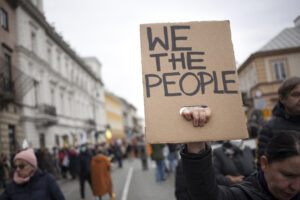
In a new online exclusive, Journal of Democracy cofounder Marc Plattner examines both what unites and distinguishes liberalism and democracy — and what liberal democracies must do to remain free.

In the July issue of the Journal of Democracy, Stanley Bill and Ben Stanley unpack the trilemma that post-illiberal leaders face and explain why illiberals stand to benefit.