
April 2024, Volume 35, Issue 2
Why Malawi’s Democracy Endures
Malawi is a “hard place” for democracy—its economy struggles and state capacity is weak. So how has it avoided the pitfalls that have doomed so many others?
3264 Results
April 2024, Volume 35, Issue 2
Malawi is a “hard place” for democracy—its economy struggles and state capacity is weak. So how has it avoided the pitfalls that have doomed so many others?
January 2024, Volume 35, Issue 1
The UAE, Saudi Arabia, and Qatar are spreading their influence across borders. A new dangerous chapter between the Gulf monarchies and the West has begun.

October 2024, Volume 35, Issue 4
Immigration threatens to erode liberalism, as far-right parties and migrant communities with illiberal views gain power. Mass publics have shouldered the blame. But should political elites be held responsible?
April 1993, Volume 4, Issue 2
A review of Working-Class Organization and the Return to Democracy in Spain, by Robert M. Fishman.
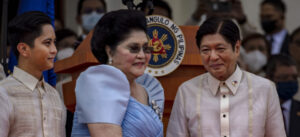
July 2022, Volume 33, Issue 3
A half-century after his father declared martial law and made himself a dictator, Ferdinand Marcos Jr. has been elected president of the Philippines by a stunning majority. There is little stopping him from dismantling what remains of the country’s democracy.
October 2002, Volume 13, Issue 4
Why did Belarusians return dictator Alyaksandr Lukashenka to power in September 2001? Could a better-managed opposition campaign have made a difference?
Spring 1990, Volume 1, Issue 2
Read the full essay here.
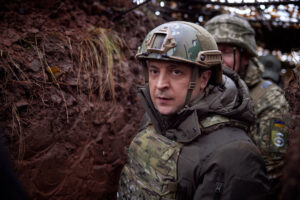

January 2025, Volume 36, Issue 1
Many pundits cry for a negotiated settlement to end the war between Russia and Ukraine. But they misunderstand Vladimir Putin’s motives. The only just end to the war will be in the trenches, not at the bargaining table.
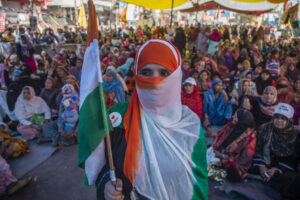
April 2025, Volume 36, Issue 2
The ruling BJP has long sought to sideline Indian Muslims. But even the opposition is opting to exclude them politically. Muslims’ chances at greater representation remain dim.
January 2025, Volume 36, Issue 1
A review of The Troublemaker: How Jimmy Lai Became a Billionaire, Hong Kong’s Greatest Dissident, and China’s Most Feared Critic, by Mark L. Clifford.
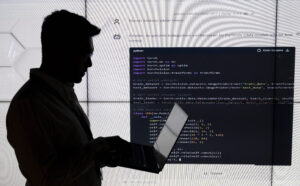
October 2025, Volume 36, Issue 4
Artificial intelligence and its effects on democracy are a matter of choice, not fate. The concerns are longer term than the recent spate of worry about “generative” AI would suggest. The democratic conversation about AI has hardly begun.
October 2021, Volume 32, Issue 4
Indonesia’s president claims he is curbing democracy today to save it later. If he is wrong about his long-term wager, democratic institutions may not survive.
July 2024, Volume 35, Issue 3
Georgian Luka Gviniashvili on protesting the foreign-agent bill; a speech by Evgenia Kara-Murza to the Parliamentary Assembly of the Council of Europe; an Iranian rapper denounces Toomaj Salehi’s death sentence; Carl Gershman on Mário Soares and the fiftieth anniversary of Portugal’s Carnation Revolution; a Ugandan political prisoner’s court-martial hearing; María Corina Machado wins the Global…
October 2024, Volume 35, Issue 4
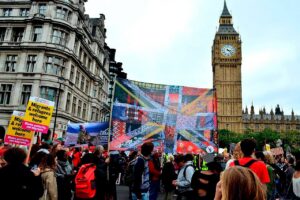
Some liberals attribute the origins of our polarized political era to “identity politics.” But multiculturalism need not provoke majoritarian anxieties — not if national identities can open ways for all citizens to be recognized and heard.
October 2022, Volume 33, Issue 4
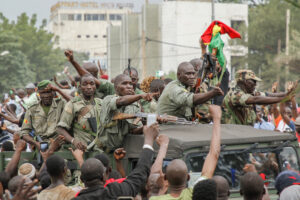
Many fear that coups are making a comeback. While this is not true, one thing is alarming: Anti-coup norms are starting to erode.
January 2021, Volume 32, Issue 1
The return to power, via elections, of the Rajapaksa family signals the consolidation of a Sinhalese Buddhist ethnocracy. But there are reasons to hope it will not take a turn toward full despotism.
April 2009, Volume 20, Issue 2
Read the full essay here. In contrast to authoritarian power structures, which rest on a form of bureaucratic corporatism that makes the leader its hostage, the regime in Moscow rests on personalized power, something that signals a return to the traditional Russian political matrix. The regime has fused power and property in a manner that…
April 2025, Volume 36, Issue 2
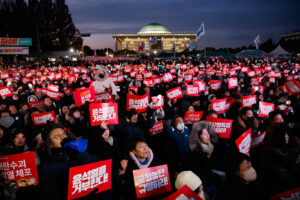
When South Korea’s president declared martial law last December, he shocked the country and sparked a political crisis that laid bare deep-seated divisions. Can Korean democracy overcome the nationalist polarization that has always defined it?