
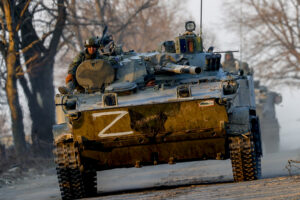
Putin’s War of Recolonization
Russia’s invasion of Ukraine isn’t just another land grab. It’s an attempt to recolonize lost empire, and threatens to return us to the age of conquest.
3081 Results
Russia’s invasion of Ukraine isn’t just another land grab. It’s an attempt to recolonize lost empire, and threatens to return us to the age of conquest.
October 2018, Volume 29, Issue 4
A disconnect between Bolivia’s old party system and the country’s deeper social-cleavage structure led to a massive shift in politics there. What lessons might be drawn for other nations?

The emergence of AI with superhuman capabilities will come far sooner than previously thought. As AI advances, so does the potential for harm—including grave risks to democracy and human rights.

January 2013, Volume 24, Issue 1
The Muslim Brotherhood is no longer a revolutionary movement, but rather a conservative one.
April 2015, Volume 26, Issue 2
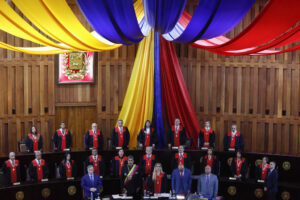
Why do some hybrid regimes remain stable over time, while others become more authoritarian? Venezuela’s autocratic turn has been driven by the ruling party’s declining electoral fortunes and by a foreign policy that has shielded it from international scrutiny.
April 2016, Volume 27, Issue 2
Seymour Martin Lipset argued that economic development would enlarge the middle class, and that the middle class would support democracy. To what extent will this general proposition prove true of China?
July 2007, Volume 18, Issue 3
Since the early 1990s, many African countries have undergone political liberalization, and so far this trend has been accompanied by a significant drop in the incidence of military coups.
October 1994, Volume 5, Issue 4
Reports on elections in Barbados, Belarus, Colombia, Dominican Republic, Guatemala, Guinea-Bissau, Mexico, Panama, Sri Lanka, Ukraine.
July 2004, Volume 15, Issue 3
As 2004 began, Afghanistan approved a new constitution that represents a key step forward in its political reconstruction. But it is not yet clear whether this new constitution will enable the country to surmount the many challenges that lie ahead.
January 2024, Volume 35, Issue 1
Separatists encounter a fundamental paradox: The very political flexibility that allows their aspirations to flourish in a democratic setting also provides the tools to snuff out their movements. It explains why they almost never succeed.
January 2015, Volume 26, Issue 1
As China’s power grows, will it seek to remake the world in its authoritarian image? For now, China shows no such missionary impulse, but the ways in which it pursues its interests can still threaten the fate of democracy.
January 2005, Volume 16, Issue 1
Both the supporters and the foes of President Hugo Chavez went into the August 2004 recall hoping for a complete and final win. While Chavez kept his job and even rides high, Venezuela is still nowhere close to closure.
October 2023, Volume 34, Issue 4
Turkey’s economic and political crises have only worsened, but the autocratic president remains in power. His secret? He uses the levers of the state to shield his supporters from harm, while punishing the rest.
October 2006, Volume 17, Issue 4
Latin America must find a way to include its newly urbanized informal workers in more regular channels of economic and political participation. Updating outmoded labor laws is a key to accomplishing this task.
April 2021, Volume 32, Issue 2
With brutal resolve, the ruling party sought not merely to win an election, but to annihilate the opposition. Now, with President John Magufuli gone, that strategic rationale will likely only grow stronger.

April 2025, Volume 36, Issue 2
The “third wave” of democracy started in 1974 — or so the story goes. But the crests and crashes of waves of democracy and authoritarianism have been neglected. A close look can help us understand the current moment, when democracy appears to be in retreat.
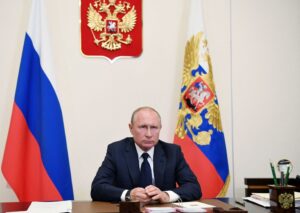
While widespread violence or civil war was averted, the consequences for Russia—and Putin—could be grave.

January 2010, Volume 21, Issue 1
Democracy has held its own or gained ground in just about every part of the world except for the Arab Middle East. Why has this crucial region remained such infertile soil for democracy?
April 2017, Volume 28, Issue 2
Despite pre-election fears, the victory of the opposition NPP over the ruling NDC in Ghana’s December 2016 elections became the prologue to a peaceful transfer of power. This outcome suggests that the advantage of incumbency in African elections may be on the wane.

So, why don’t they want to fix it?