
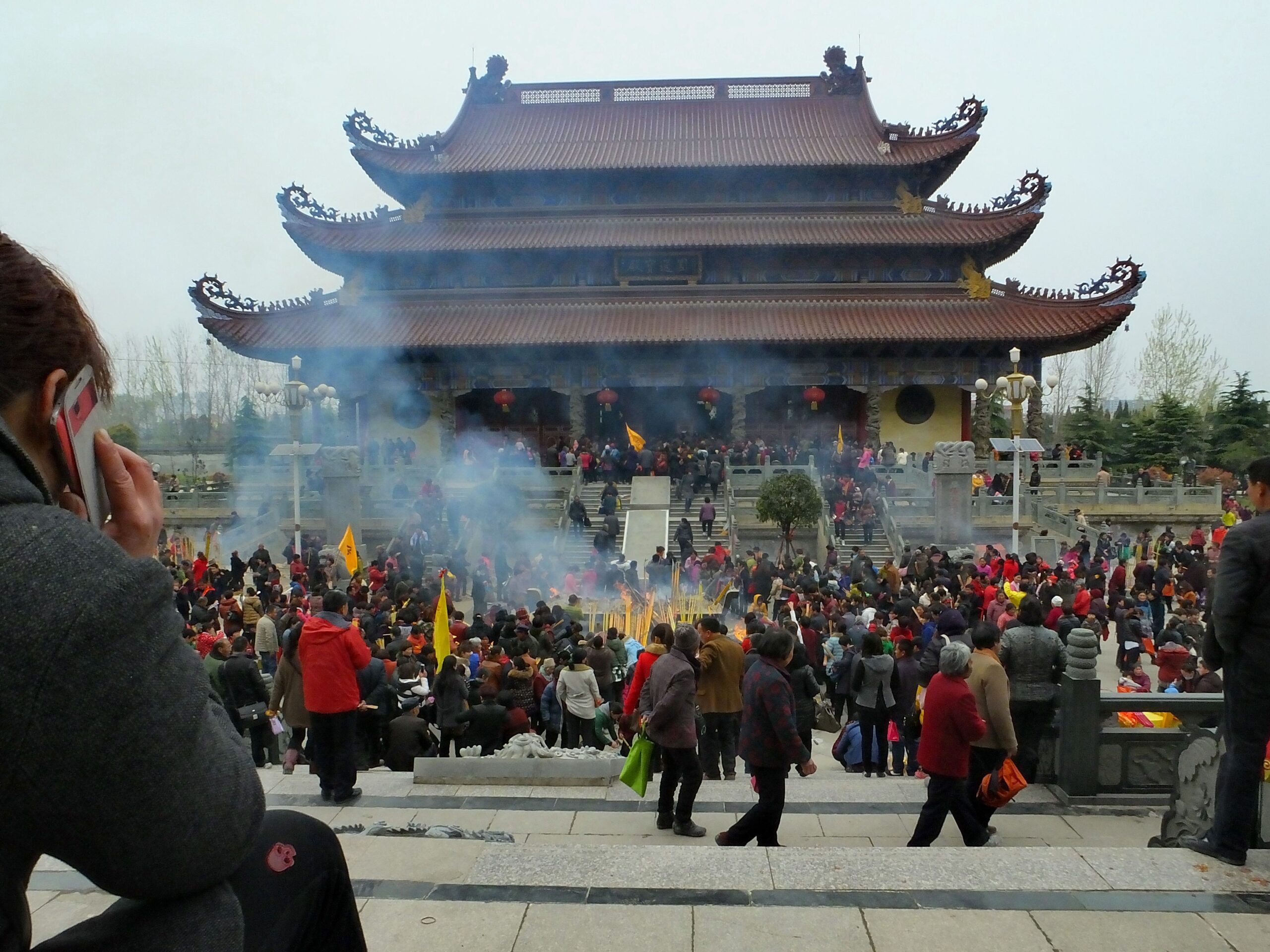
China is an atheist state, so why does it promote Buddhism? That’s because the CCP thinks it can be a tool for political control. But the strategy actually exposes Beijing’s deepest fears.
August 2026
China is officially atheist. The Chinese Communist Party (CCP) has long declared religion to be superstition, a relic of feudalism, and a distraction from socialist modernization. Yet walk through Beijing, Shanghai, or Chengdu today and you will find Buddhist temples restored, incense burning, monks in saffron robes chanting sutras. The contradiction is striking: an atheist state that not only tolerates Buddhism but actively promotes it. The reason is not spiritual awakening but political calculation. Buddhism, stripped of its transcendence, has become a tool of political control — a way to shape belief, channel devotion, and reinforce loyalty to the state.
The CCP’s ideological foundation rests on Marxism. Religion, in this worldview, is an “opiate of the masses,” a distraction from class struggle and revolutionary progress. For decades, especially during the Cultural Revolution, temples were destroyed, monks defrocked, scriptures burned. Faith was treated as a disease to be eradicated.
But the Party learned a lesson: Religion cannot be eliminated by decree. It persists in human longing for meaning, ritual, and transcendence. By the 1980s, as China opened to the world, the CCP shifted strategy. Instead of suppressing religion entirely, it would manage it. Faith would be permitted — but only under strict supervision, and only when it served the state’s interests.
Among China’s five officially recognized religions — Buddhism, Taoism, Islam, Catholicism, and Protestantism — Buddhism occupies a special place. It is seen as indigenous, culturally Chinese, and politically quietist. Unlike Christianity, which is linked to foreign missionaries, or Islam, which is tied to ethnic minorities like the Uyghurs, Buddhism is perceived as safe.
Buddhism emphasizes harmony, compassion, and detachment from worldly struggle. These values can be reframed to support social stability and obedience. A monk preaching patience and harmony is less threatening than a pastor calling for conscience against injustice. For the CCP, Buddhism is the perfect candidate for a “civil religion” — a moral framework that reinforces authority without challenging it.
Since the 1980s, Buddhism has experienced a state‑managed revival. Temples once destroyed have been rebuilt, often with government funding. Monasteries are registered, abbots vetted for political loyalty, and clergy trained in “patriotic education.”
Estimates suggest that around 100 million Chinese identify as Buddhist today, roughly 10 percent of adults. But their practice is shaped by state oversight. Temples double as tourist attractions, monks as cultural ambassadors, and rituals as spectacles of “heritage.” The spiritual pursuit of enlightenment is overshadowed by the political pursuit of harmony.
The CCP’s use of Buddhism is not passive; it is systematic. Every monastery must register with the state. Abbots are often selected for their political reliability rather than spiritual authority. Buddhist teachings are reinterpreted to emphasize obedience, patriotism, and harmony. Sutras are quoted in speeches to support socialist values. And sacred sites like Shaolin Temple are commercialized, blending spirituality with state‑approved cultural consumption. The result is a Buddhism that looks authentic but functions as propaganda. Temples are open, incense burns, but the faith is hollowed out, its independence stripped away.
Tibetan Buddhism Under Siege
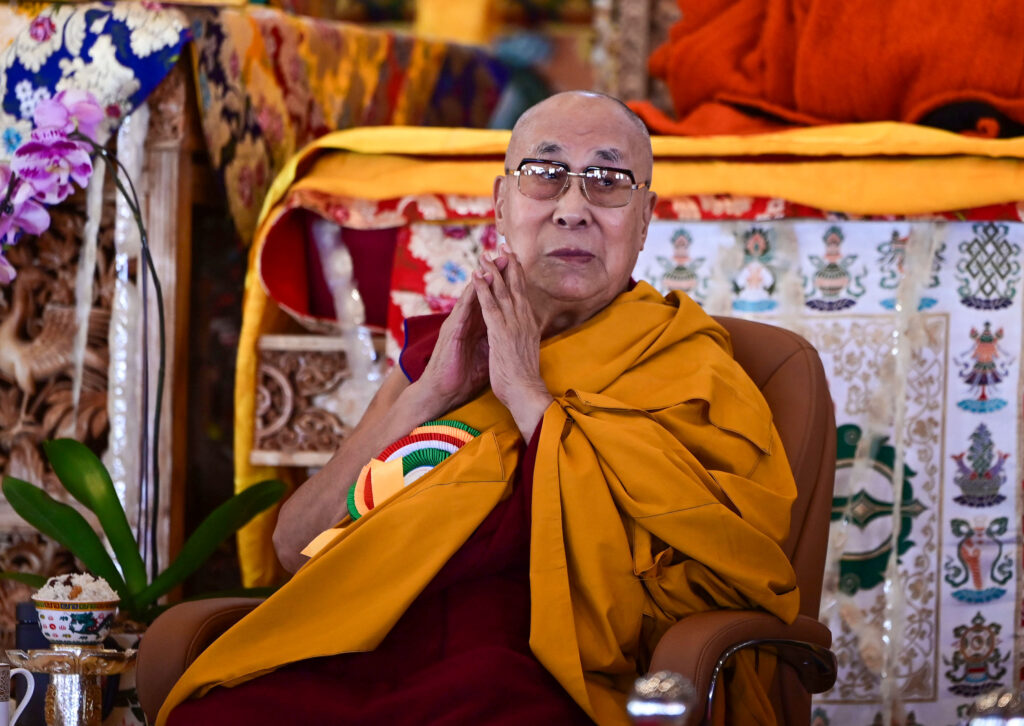
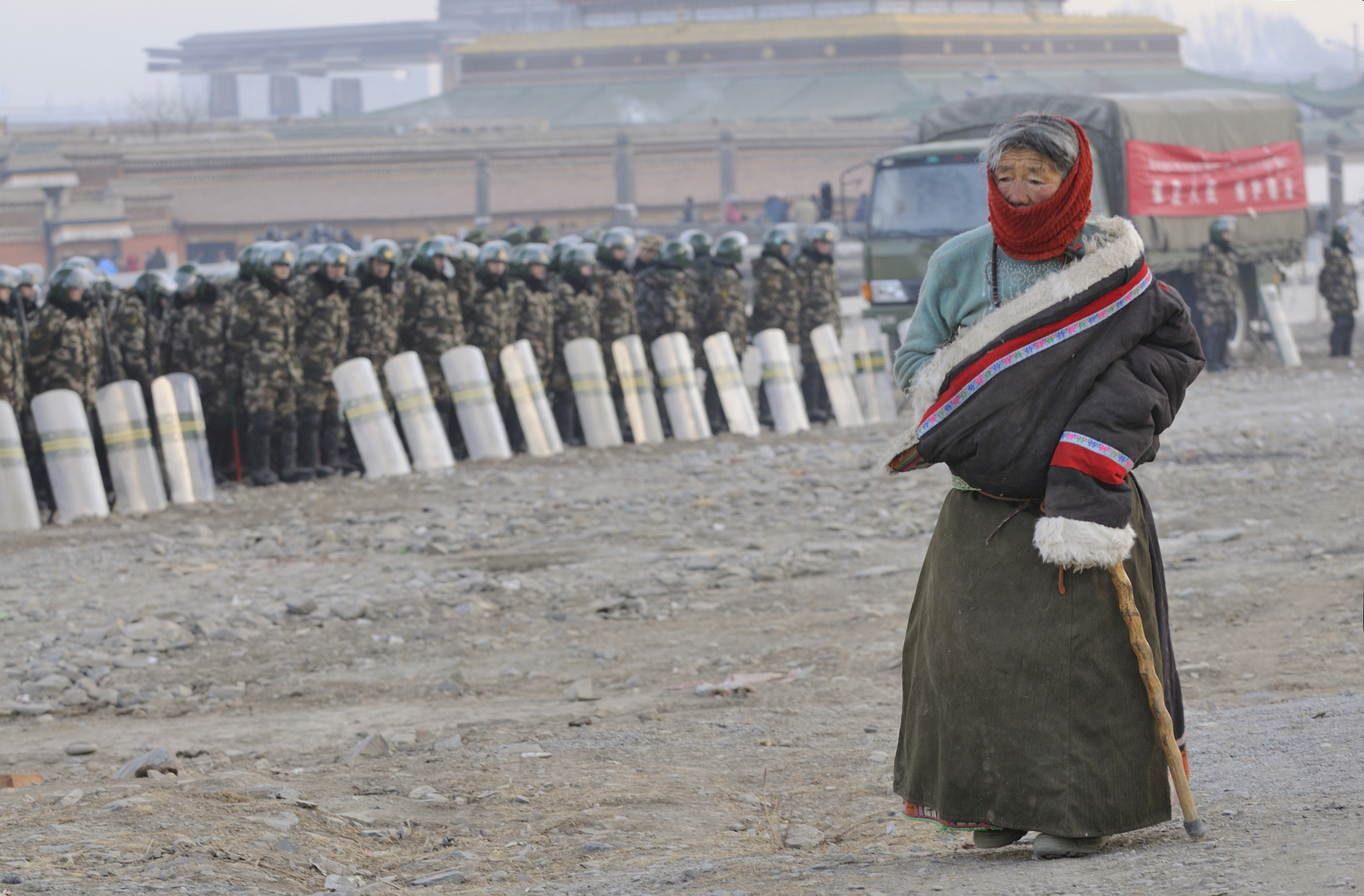
Nowhere is this paradox more acute than in Tibet. Tibetan Buddhism is not just a religion but an identity, a source of resistance to assimilation. For Beijing, this makes it dangerous. The CCP insists it has the authority to approve the reincarnation of Tibetan lamas, including the future Dalai Lama. This is a direct attempt to sever Tibetan Buddhism from its spiritual lineage and bind it to state power. Monasteries in Tibet are also heavily monitored, with monks required to undergo “patriotic education.” Religious study is subordinated to political indoctrination. Tibetan Buddhist rituals, festivals, and teachings are restricted or rebranded as “folk culture,” stripping them of their spiritual depth. Any allegiance to the Dalai Lama is criminalized, casting devotion itself as subversion.
In Tibet, Buddhism is not merely managed but weaponized. Faith itself becomes evidence of disloyalty, and devotion is treated as dissent.
Internationally, the CCP promotes Buddhist heritage as part of its cultural diplomacy. Temples are restored, conferences hosted, pilgrimages funded. In Buddhist‑majority countries like Thailand, Sri Lanka, and Myanmar, China presents itself as a steward of Buddhist civilization.
This soft power strategy serves two purposes: It enhances China’s cultural image abroad and counters criticism of its repression in Tibet. By showcasing Buddhist temples in Beijing, the CCP masks the destruction of monasteries in Lhasa. By funding Buddhist exchanges, it distracts from the criminalization of devotion to the Dalai Lama.
The paradox of China’s Buddhism is that it is faith without freedom. Temples are open, but monks are monitored. Sutras are chanted, but their meaning is reframed. Pilgrimages are permitted, but only under surveillance.
The spiritual pursuit of enlightenment — liberation from suffering, transcendence of worldly attachments — is replaced by the political pursuit of loyalty. Buddhism becomes not a path to liberation but a tool of obedience.
This hollowing of faith has consequences. It erodes authenticity, suppresses diversity, and creates a cultural contradiction. An atheist state that relies on religion exposes its own insecurity: It cannot trust belief to flourish freely, so it must control it.
China’s paradoxical embrace of Buddhism shows that even an atheist regime recognizes the enduring power of faith. Religion cannot be eradicated; it can only be managed. But management is not freedom. By hollowing out Buddhism, the CCP turns temples into tourist sites, monks into state employees, and scriptures into propaganda.
In Tibet, this distortion is most acute. The attempt to control reincarnation, devotion, and ritual reveals the limits of the CCP’s strategy. Faith, at its core, resists control. The more Beijing tries to own it, the more it exposes its own insecurity.
China’s use of Buddhism is a lesson in paradox: An atheist state that relies on religion, a regime that fears belief yet cannot live without it. In the end, the CCP’s Buddhism is not about enlightenment but obedience — a hollow faith that reveals the fragility of power.
Khedroob Thondup is the nephew of the Dalai Lama.
Copyright © 2026 JoD Productions
Image Credit: Visual China Group via Getty Images/Visual China Group via Getty Images
|
FURTHER READING |
||
Why China Can’t Hijack Tibetan Buddhism |
Beijing Wants to Erase Tibet’s Name. Don’t Let Them.
|
China’s Campaign Against Tibetan Children
|