
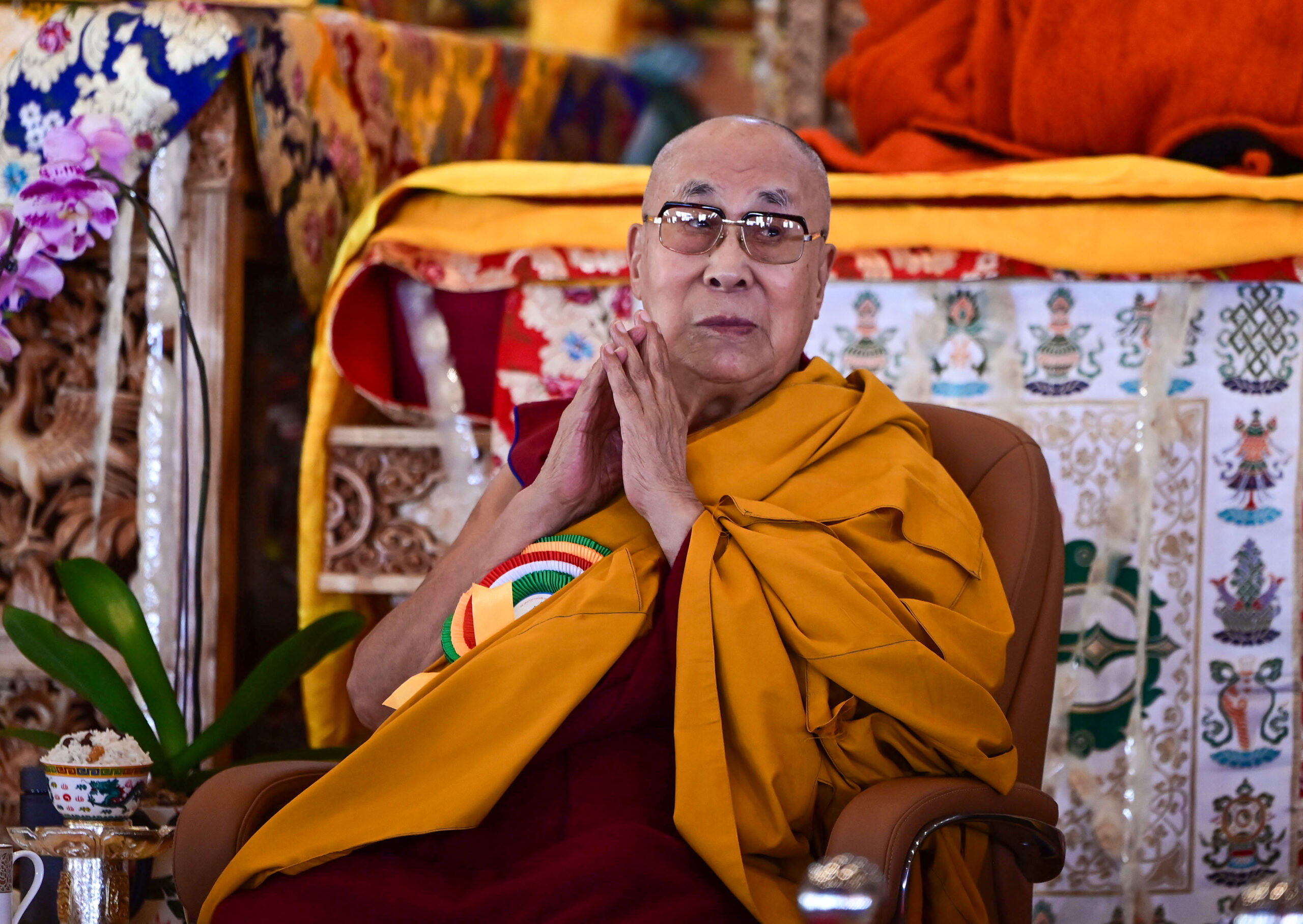
The Chinese Communist Party has sought to control the Tibetan people by attacking their religious leaders. But the strategy has failed. Faith can’t be commanded or coerced.
May 2026
In 1995, the Chinese Communist Party (CCP) abducted a six-year-old boy, Gedhun Choekyi Nyima, recognized by the fourteenth Dalai Lama as the eleventh Panchen Lama. In his place, Beijing installed Gyaincain Norbu, a figure groomed to embody the Party’s vision of Tibetan Buddhism under state control. Three decades later, the results are undeniable: Norbu remains a ceremonial presence with no legitimacy among Tibetans, no spiritual authority in the Buddhist world, and no recognition beyond the machinery of the CCP itself. This failure is not merely a religious matter — it is a geopolitical lesson. If Beijing attempts to apply the same formula to the succession of the Dalai Lama, it will face rejection by Tibetans, repudiation by the global Buddhist community, and condemnation from the international system. Manufactured lamas are not a path to stability but a guarantee of failure.
The Panchen Lama is one of the most revered figures in Tibetan Buddhism, second only to the Dalai Lama. Historically, the Panchen Lama plays a crucial role in recognizing the Dalai Lama’s reincarnation, making the lineage central to the continuity of Tibetan spiritual authority. By abducting Gedhun Choekyi Nyima and installing Gyaincain Norbu, Beijing sought to secure leverage over the future of Tibetan Buddhism. The strategy has backfired.
Norbu is paraded at official events, photographed at Party congresses, and presented as a symbol of “religious harmony.” But he is absent from Tibetan monasteries, absent from the hearts of the faithful, and absent from the global Buddhist community. His presence is a reminder not of continuity but of coercion. The Tibetan people have refused to accept him, and international Buddhist leaders have largely ignored him. The CCP’s attempt to manufacture legitimacy has produced only silence and rejection.
The disappearance of Gedhun Choekyi Nyima remains one of the most glaring human-rights violations of our time. His fate is unknown, and his absence is a wound that continues to undermine China’s credibility. The Panchen Lama case demonstrates that spiritual legitimacy cannot be engineered by authoritarian power. Faith cannot be commanded, and recognition cannot be coerced.
Beijing has already signaled its intent to control the succession of the Dalai Lama, insisting that the fifteenth incarnation must be approved by the state. The CCP has invoked the Qing dynasty’s “Golden Urn” system, claiming historical precedent for state involvement in Tibetan succession. Yet this argument is historically tenuous and strategically misguided.
The Dalai Lama is not merely a religious figure but a global symbol of compassion, resilience, and nonviolent resistance. His legitimacy flows from centuries-old religious practice, not political fiat. The Tibetan people, and the world at large, will not accept a “Dalai Lama” chosen by decree. Just as Gyaincain Norbu remains a figure without followers, any CCP-appointed “fifteenth Dalai Lama” would be a hollow symbol, rejected by Tibetans and ignored by the global Buddhist community.
The precedent of the Panchen Lama demonstrates the futility of Beijing’s strategy. Far from securing stability, a state-appointed Dalai Lama would fracture the religious landscape, intensify Tibetan resistance, and invite global censure. Instead of consolidating control, Beijing would entrench mistrust and perpetuate conflict.
The abduction of Gedhun Choekyi Nyima violates multiple international conventions, including the UN Convention on the Rights of the Child (1989) and International Covenant on Civil and Political Rights (1966). Beijing’s attempt to dictate spiritual succession contravenes the principle of religious freedom enshrined in international law. Recognition of the Dalai Lama has always flowed from authenticity, not coercion. The international community has consistently affirmed that legitimacy in Tibetan Buddhism cannot be conferred by the state.
The United Nations has repeatedly raised concerns about the Panchen Lama’s disappearance, and governments around the world have called for his release. U.S. congressional resolutions, European Parliament statements, and declarations by Buddhist leaders across Asia have underscored the principle that spiritual succession is not the domain of political authorities. The Panchen Lama case has become a symbol of coercion, weakening China’s credibility in dialogues on human rights. Repeating this mistake with the Dalai Lama would magnify the costs, transforming a spiritual dispute into a geopolitical liability.
Beijing has invested heavily in projecting cultural influence through initiatives such as the Belt and Road, Confucius Institutes, and global media outreach. Yet its handling of Tibetan succession undermines these efforts. A state-appointed Dalai Lama would be seen not as a spiritual leader but as a political puppet, eroding China’s credibility and alienating Buddhist communities across Asia — from Mongolia to Sri Lanka, from Nepal to Japan.
The strategic costs would extend farther. Tibet remains a flashpoint in China’s relations with India, the United States, and Europe. The Dalai Lama’s global stature ensures that his succession will be closely watched by governments and civil society alike. A manufactured Dalai Lama would invite condemnation, deepen mistrust, and complicate China’s diplomatic engagements. Instead of securing stability, Beijing would entrench conflict.
Decades of repression have not extinguished Tibetan identity. The Tibetan people have endured cultural erasure, religious restrictions, and political marginalization, yet they have preserved their traditions, language, and faith. The failure of the CCP’s Panchen Lama experiment underscores the resilience of Tibetan identity. Despite state control, Tibetans have refused to accept a manufactured spiritual leader. This resilience will extend to the succession of the Dalai Lama.
The Dalai Lama himself has prepared for this eventuality. He has stated that his reincarnation may occur outside Tibet, and that recognition will follow centuries-old religious practice rather than political decree. This strategy ensures that legitimacy will remain beyond Beijing’s reach. The Tibetan people, and the global Buddhist community, will recognize authenticity, not coercion.
The succession of the Dalai Lama is not merely a Tibetan issue — it is a global matter. The Dalai Lama’s stature as a moral leader ensures that his succession will resonate far beyond Tibet. Governments, religious communities, and civil society will scrutinize the process, and Beijing’s attempt to manufacture legitimacy will invite global condemnation.
The CCP’s selection of the eleventh Panchen Lama is a case study in failure. It demonstrates that legitimacy cannot be coerced, and authenticity cannot be faked. If Beijing persists in its plan to install a fifteenth Dalai Lama, it will face the same outcome: rejection by Tibetans, repudiation by the world, and exposure of its own insecurity. For China, the lesson is clear — manufactured lamas are not a path to stability but a guarantee of failure.
Khedroob Thondup is the nephew of the Dalai Lama.
Copyright © 2026 JoD Productions
Image credit: Waseem Andrabi/Hindustan Times via Getty Images
|
FURTHER READING |
||
Why China’s Effort to Erase Tibetan Identity Can’t Succeed |
Beijing Wants to Erase Tibet’s Name. Don’t Let Them.
|
China’s Campaign Against Tibetan Children
|