
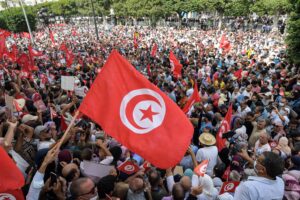
How to Stop Democratic Backsliding
Democracy is in decline, growing weaker from within. But why? And can we reverse the damage before it’s too late?
870 Results
Democracy is in decline, growing weaker from within. But why? And can we reverse the damage before it’s too late?

Ecuador’s presidents have a history of asking the public to back their initiatives rather than building political coalitions to accomplish their goals. The country’s current president is no different — and it comes at a high cost.
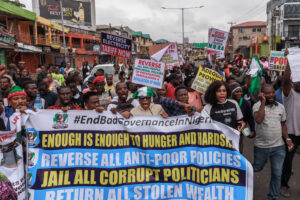
Democracy’s very survival is at the top of our readers’ minds this month. Democratic backsliding is a major concern, but democratic resilience appears shaky at best. Can anything be done? Read this month’s top ten essays to find out.
When voters are asked to cast ballots for or against important national policies — whether to draft or adopt a new constitution, to abolish or reinstate term limits, or, perhaps most famously, to leave or remain in the European Union — they take that job seriously. Yet national referendums are not always put forward in…
Reports on elections in Argentina, Ecuador, Gibraltar, Liberia, Luxembourg, Madagascar, New Zealand, Oman, Poland, and Switzerland.
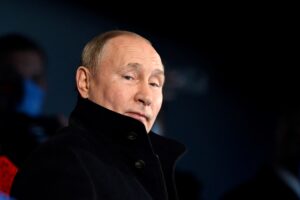
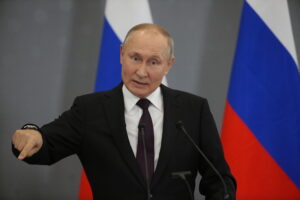
The Kremlin’s political theater shouldn’t be mistaken for an election or symbol of stability. It’s a sign of Putin’s weakness and the country’s descent into a deeper tyranny.

She was just elected Mexico’s first woman president in a landslide. The future of Mexico’s democracy rests on whether she can break from her predecessor’s ways and carve her own democratic path.
Reports on elections in Chad, the Dominican Republic, Iceland, India, Iran, Lithuania, Mexico, North Macedonia, Panama, South Africa, and Togo.
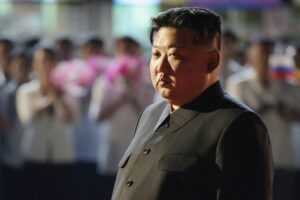
South Korea is about to elect a new president. North Korea has changed in recent years. Seoul’s approach to the Kim regime must change to reflect new risks — and Korea’s democratic strength.
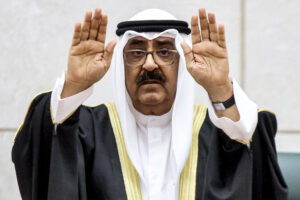
The Gulf kingdom has been a rare democratic experiment. But gridlock and the Emir’s mounting impatience with Kuwaiti politics may be on the cusp of bringing it to an end.
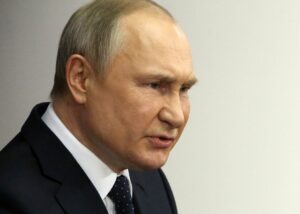
Why we must tackle the threat posed by Putin and his authoritarianism head on.
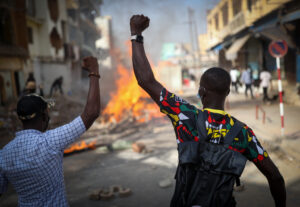
Democracy is more resilient than many people realize, but that doesn’t mean there aren’t worrying signs on the horizon.
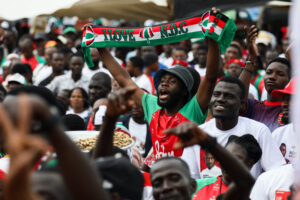
The West African democracy is one of the continent’s most enduring, but it shouldn’t be taken for granted. It’s a bulwark for democracy beyond its borders.

The country’s 2024 presidential contest was a big surprise, as voters elected a new party for the first time. Despite decades of dominant-party rule, a strong democratic culture has long been ingrained in Botswana.

Election observers are the first line of defense for democratic rights and freedoms, and they work in some of the most challenging places. They deserve the same protections as human-rights defenders.

South Koreans have elected Lee Jae-myung president. Will he be a pragmatic democratic reformer? Or will he continue the polarizing political warfare of recent South Korean leaders?

Political blunders, distrust of elites, and Donald Tusk’s inability to deliver on his promises helped make an unknown, far-right former bodyguard the country’s next president. Worse, it will be far harder now to safeguard Polish democracy.

India just held five state elections that did more than declare winners and losers: They offered a roadmap for how to win the national contest in the world’s most populous democracy next year.
From Putin’s invasion to Kim’s nuclear saber rattling, the West has punished the world’s worst regimes. But have sanctions missed their targets?