
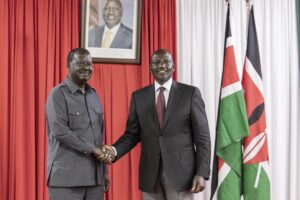
Kenya’s Shaky Handshake Deals
The country has a long history of power-sharing deals that are sealed with a handshake. The truth is that this type of political bargaining typically does more harm than good.
1005 Results
The country has a long history of power-sharing deals that are sealed with a handshake. The truth is that this type of political bargaining typically does more harm than good.

A free market can foster pluralism and insulate civilians from authoritarian coercion. But money used the wrong way has enormous potential for destruction. The Journal of Democracy essays below, free for a limited time, explore the complex relationship between capitalism and democracy.
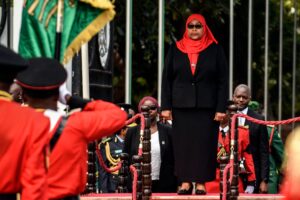
After years of increasingly authoritarian rule, Tanzanian president Samia Suluhu Hassan was hailed as a democratic reformer. But as Dan Paget and Aikande Clement Kwayu write in the July issue of the JoD, the president is more performer than reformer, relying on theatrics to delay real reform while sharpening her tools of repression.
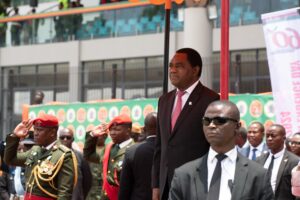
There’s a fine line between genuine cybersecurity and digital authoritarianism. Many autocrats use the pretext of digital order to surveil, silence, and suppress their citizens. State cyber repression creates a climate of fear around social media and the internet, shrinking one of the last remaining spaces for free speech.
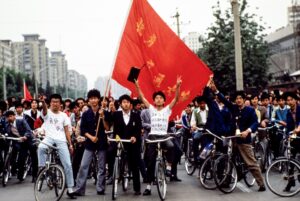
On this International Day of Democracy, we reflect on democracy’s inherent value, try to understand why faith in self-rule is waning, and consider what we can do to strengthen the cause, sharing a selection of milestone essays to aid in this effort.
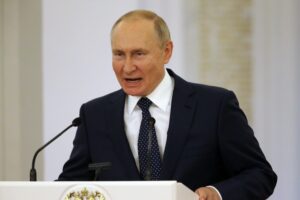
Yevgeny Prigozhin’s rebellion has exposed the fundamental instability of Putinism.
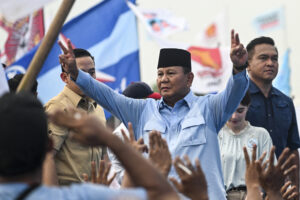
Indonesian voters have made Prabowo Subianto, a special-forces commander with a dark past, their next president. Even as voters flocked to the polls, his election is a harbinger of democracy’s decline.
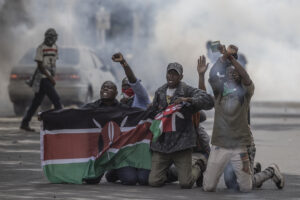
The country’s young people are no longer willing to accept politics without accountability, and the government’s repressive crackdown is only fueling their movement. Gen Z is reshaping the future of Kenyan democracy.
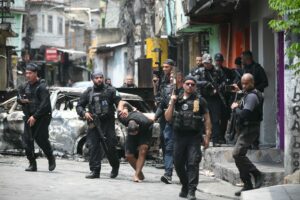
Last month Rio’s police conducted the deadliest police operation in Brazil’s history, killing 117 people. It is one episode in a long history of state violence. Not only are such iron-fisted methods ineffective, they pose a danger for democracy itself.
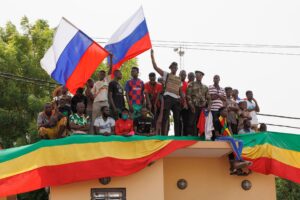
A string of Kremlin-backed military coups have brought a collection of juntas to power. The West should resist calls to placate them, and instead stick to its values and push for a return to civilian rule.

The French president risked it all to hand the far right a stinging loss. But the celebration can’t last long. If the country is to avoid greater political chaos, voters must be encouraged to think about broader coalitions that go beyond a narrow left-right divide.
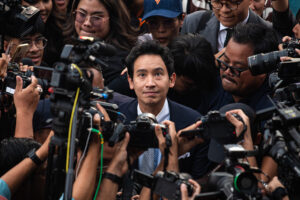
Thai politics appears to be in a loop, with the military keeping people’s democratic hopes under wraps. But there is reason to believe the streets won’t be quiet for long.
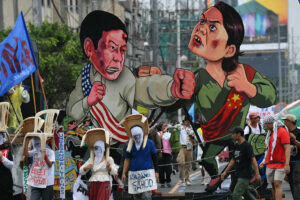
The ICC arrest of former Philippine president Rodrigo Duterte is a shocking blow for the Duterte clan, and the Marcos family isn’t letting up. Is this the political last stand for the Dutertes?
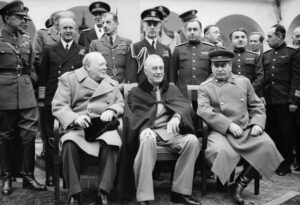
It is tempting to believe the horrors of the past will not haunt our future. Vladimir Putin is proving that we hold such beliefs at our peril.
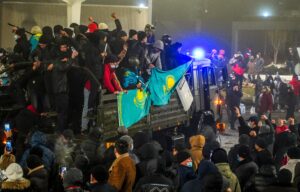
Thousands took to the streets to protest. While the regime promises to listen, its actions make clear: Dissent will not be tolerated.
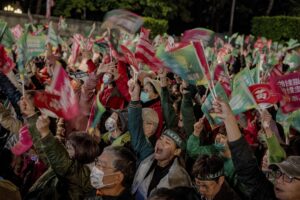
Millions of voters are casting ballots in a string of elections across the globe. At the midyear point, how well is democracy holding up?