
1005 Results

t magrium tablet uses

April 2010, Volume 21, Issue 2

Mozambique’s Slide into One Party Rule

Once touted as a regional success story, Mozambique has been backsliding toward one-party-dominant rule, and has now slipped off the Freedom House list of electoral democracies. How and why did this happen?
April 2009, Volume 20, Issue 2

NATO at Sixty

The North Atlantic Treaty Organization played a key role in safeguarding Western democracy during the Cold War. With that conflict over, NATO must continually adapt and evolve in a fast-changing world.

April 2009, Volume 20, Issue 2

Another Step Forward for Ghana

Ghana held its fourth successful elections in late 2008 and subsequently witnessed the peaceful handover of power from ruling party to opposition. The country’s leaders must now reform its institutions of governance.

July 2008, Volume 19, Issue 3

Islamist Parties and Democracy: Are They Democrats? Does It Matter?

The journalistic and policy communities have been alive with speculation as to whether Islamist groups involved in politics—including Egypt’s Muslim Brotherhood and Palestine’s Hamas— are true believers in democracy or calculating pragmatists who, in Steven Cook’s words, are “seeking to use democratic procedures in order to advance an antidemocratic agenda.”

January 2007, Volume 18, Issue 1

The Case for Presidential Term Limits

Presidential term limits have spread across the world, but in many countries presidents and their allies seek to circumvent or eliminate them. Advocates of democracy must protect this institution, as its role in democratization may be far more powerful than is conventionally recognized.

January 2007, Volume 18, Issue 1

Pathways from Authoritarianism

Does the nature of an authoritarian regime affect the potential for democratic transition? Data since 1972 indicate that some kinds of authoritarian regimes are more likely to democratize than others.

January 2007, Volume 18, Issue 1

Candidate Selection: The Choice Before the Choice

Voters casting ballots are an indispensable element of free government, but who decides which names go on those ballots? Although methods of candidate selection have received surprisingly little study by political scientists, they merit the attention of students of democracy everywhere.

October 2006, Volume 17, Issue 4

Belarus: Learning From Defeat

The Belarusian presidential election of March 2006 appeared to be an exercise in meaninglessness, while the protests against manipulation by the Lukashenka regime seemed a study in futility. But appearances can deceive.

April 2022, Volume 33, Issue 2

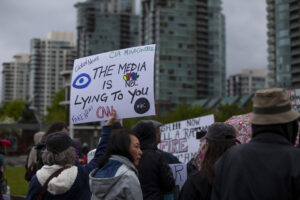
Why Democracy Fuels Conspiracy Theories

Conspiracy theories are not the sole preserve of dictatorships, but a global phenomenon. Worse, the political competition that is inherent to democracy is driving the spread of lies, fake schemes, and half-truths.