

October 2020, Volume 31, Issue 4
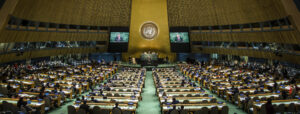
How Authoritarians Use International Law
Through greater savvy engagement with international law, authoritarians are seeking not only to shield themselves from criticism, but to reshape global norms in their favor.
2036 Results
October 2020, Volume 31, Issue 4
Through greater savvy engagement with international law, authoritarians are seeking not only to shield themselves from criticism, but to reshape global norms in their favor.

April 2025, Volume 36, Issue 2
Ukraine versus Russia is a modern David versus Goliath conflict that matters not only for the future of Ukraine, but for that of democracy itself.

January 2021, Volume 32, Issue 1
India’s Constitution has long seemed stable, but the rise of an ethnic, absolute, and opaque state is changing the constitutional order in momentous and disturbing ways.

January 2019, Volume 30, Issue 1
Chinese authorities are wielding facial-recognition software, big-data analytics, and other digital technologies to control China’s citizens by monitoring and assessing their activities, both online and off.
April 2025, Volume 36, Issue 2
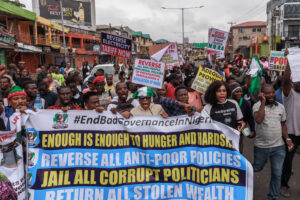
Voters around the world are losing faith in democracy’s ability to deliver and increasingly turning toward more authoritarian alternatives. To restore citizens’ confidence, democracies must show they can make progress without sacrificing accountability.

His military didn’t just fail. Ordinary Ukrainians, Russians, and people across the globe are creatively and nonviolently protesting Putin’s war on Ukraine, and they are making a difference. | Srdja Popovic and Steve Parks
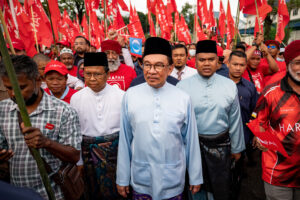
The democratic icon’s path to prime minister has been tortuous and long. But is Malaysia’s pluralism slipping away precisely when Anwar is getting his shot to lead the nation? | Sophie Lemière

October 2020, Volume 31, Issue 4
Well-organized demonstrations are rocking the 26-year-old dictatorship of President Alyaksandr Lukashenka. Inside the movement and why it rose when it did.
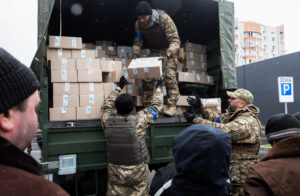
Afghanistan taught us that a firehose of unaccountable aid can destroy a country’s democratic future. In Ukraine, we are making the same mistake all over again. | By Jennifer Brick Murtazashvili and Nataliia Shapoval
October 2018, Volume 29, Issue 4
What factors help a democracy to survive a crisis? A study of cases in which democracy suffered a steep decline, yet ultimately recovered and endured, offers new insights. In moments of crisis, unelected and nonmajoritarian actors can play a pivotal role.
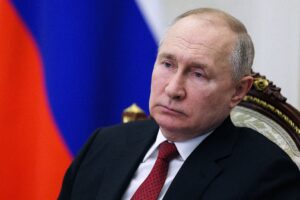
The Russian autocrat wanted to go down in history on par with Russia’s greatest leaders. He is increasingly looking like one of its weakest. | Michael McFaul
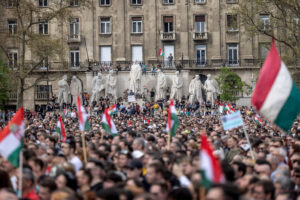
January 2025, Volume 36, Issue 1
With illiberal forces ascendant across the globe, protecting individual liberties and the democratic process is crucial. But when institutions empower minority groups over the majority, can democracy survive?
January 2018, Volume 29, Issue 1
Despite high hopes for progress toward democracy, the military’s power remains stubbornly entrenched, while Aung San Suu Kyi seems to lack the skills to run the government effectively.
July 2022, Volume 33, Issue 3
Swarms of “nano-influencers,” are rapidly reshaping social-media propaganda campaigns, upending political discourse in democracies around the world.
July 2018, Volume 29, Issue 3
In Romania today, as in Italy twenty years ago, the gradual politicization of anticorruption has come to shape the political scene.
July 2005, Volume 16, Issue 3
Even after its successful elections, Iraq remains a divided society. Democracy did not create these divisions, but it could be the key to managing them.
January 2005, Volume 16, Issue 1
By mid-2003, Afghanistan appeared in danger of reverting to “failed-state” status. Happily, the resilience of the Afghans plus some policy changes by the United States and its parners have put things on the right track, though daunting challenges remain.
April 2004, Volume 15, Issue 2
Events last November confouned expectations set by the failure of democratization in Russia and other ex-Soviet republics, and should prompt new reflections on how fragile openings to democacy may be sustained and widened.
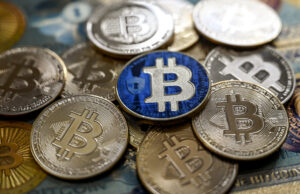
October 2025, Volume 36, Issue 4
Today, governments can see who buys what, who pays whom, and who donates to which cause. But they cannot easily trace or confiscate Bitcoin. The digital currency offers a lifeline to democratic movements operating in the most repressive places.