2855 Results

less and more coffee ii

July 2008, Volume 19, Issue 3

The Remarkable Story of Somaliland

Emerging from one of the world’s most notorious failed states, Somaliland has become an oasis of relative democratic stability in the troubled Horn of Africa. What does its story teach us about democratic state-building?
April 2006, Volume 17, Issue 2

Azerbaijan’s Frustrating Elections

The 2005 elections were marked by massive fraud, but the democratic world mostly looked the other way. Azerbaijani society remains receptive to democracy, but the regime clearly has other plans—and will soon have massive oil wealth to fund them.

January 2006, Volume 17, Issue 1

Measuring Public Integrity

Measurements that rely on perceptions of corruption can be misleading. What is needed is a method of gauging how well a country has set itself up to defend public integrity systematically and in all its dimensions.

April 2004, Volume 15, Issue 2

Change in Uganda: A New Opening?

The decision by Uganda’s leaders to abandon the country’s “movement” system and adopt multiparty pluralism creates a significant opportunity for democratic progress.

July 2003, Volume 14, Issue 3

Why Post-Settlement Settlements?

The decaying trajectory of democratization in South Africa represents a kind of settlement failure, resulting for the main parties in the transition having come to the table with incompatible cultural paradigms of negotiation.

January 2002, Volume 13, Issue 1

What Democracy Can Do for East Asia

The implicit social bargain that carried many East Asian countries through the Cold War has lost its currency. If the peoples of this region are to secure the blessings of peace, liberty, and prosperity in the century ahead, they will need to have a new and explicitly democratic bargain working for them.

July 1998, Volume 9, Issue 3

India Defies the Odds: Enduring Another Election

Indians appear to love the practice of democracy so much that they are in danger of overdoing it. In February and March of 1998, the world's largest democracy held its twelfth general election since gaining its independence a half-century ago. The voting was largely fair and peaceful. New, right-of-center rulers led by the Bharatiya Janata…

July 2024, Volume 35, Issue 3

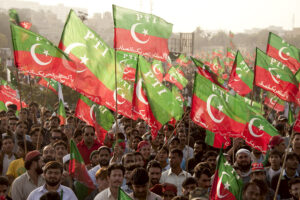
Pakistan’s Coming Crisis

Pakistani voters sent the military a message in the February elections: They no longer trust the “guardian of the country.” Worse for the generals, they can no longer escape accountability for their corruption and incompetence because everyone knows the military is in charge.

April 2025, Volume 36, Issue 2

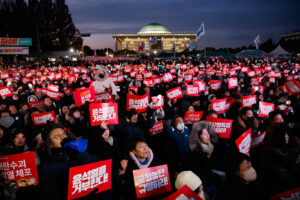
The Perils of South Korean Democracy

When South Korea’s president declared martial law last December, he shocked the country and sparked a political crisis that laid bare deep-seated divisions. Can Korean democracy overcome the nationalist polarization that has always defined it?

October 2025, Volume 36, Issue 4

AI’s Real Dangers for Democracy

Artificial intelligence and its effects on democracy are a matter of choice, not fate. The concerns are longer term than the recent spate of worry about “generative” AI would suggest. The democratic conversation about AI has hardly begun.

Final Day to Read the October Issue for Free

The latest issue of the Journal of Democracy covers important and alarming global trends, including authoritarian aggression, political violence, rising nationalism, and the far right’s resurgence. Don’t miss your chance to read it for free!

April 2002, Volume 13, Issue 2

Documents on Democracy

Excerpts from: a resolution adopted by the Third International Conference on North Korean Human Rights and Refugees; Eduardo Duhalde’s first address as president of Argentina; the opening address of Hussain Sinjari a a seminar entitled “Prospects for Democracy in Iraq”; the introductory speech of the European Convention by Convention chairman, former French president Valéry Giscard-d’Estaing.