103 Results

gbgb.org.uk/racing/results/2015-03-03 wayback machine

October 2020, Volume 31, Issue 4

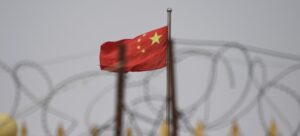
China’s Message Machine

The People’s Republic of China uses massive amounts of propaganda to influence how it is perceived beyond its borders. “Big data” reveal how that image is carefully and deliberately shaped for different audiences in different places.
July 2010, Volume 21, Issue 3

Ukraine: The Uses of Divided Power

The 2010 presidential election shows that Ukraine is both a surprisingly stable electoral democracy and a disturbingly corrupt one. The corruption, moreover, may have a lot to do with the stability.

October 2022, Volume 33, Issue 4

The Mandarin in the Machine

Beijing is bent on deploying mass surveillance to eliminate threats to its rule. It is terrifying—and the latest example of its determination to remold society.

Free

October 2008, Volume 19, Issue 4

Thailand Since the Coup

Torn between populism and those who fail to respect democratic limits in combating it, Thailand badly needs to locate a middle ground where the best of its old traditions can help it adjust to the new challenges that it faces.

January 2019, Volume 30, Issue 1

Pakistan: Voting Under Military Tutelage

With its recent electoral turnover of power, Pakistan seemingly passed a milestone of democratic consolidation. But beneath the surface, power remains where it long has been—with the military.

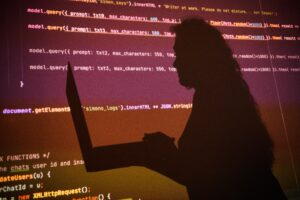
Just a month after its introduction, ChatGPT, the generative artificial intelligence (AI) chatbot, hit 100-million monthly users, making it the fastest-growing application in history. For context, it took the video-streaming service Netflix, now a household name, three-and-a-half years to reach one-million monthly users. But unlike Netflix, the meteoric rise of ChatGPT and its potential for…

Free

October 2023, Volume 34, Issue 4

How AI Threatens Democracy

Generative AI can flood the media, internet, and even personal correspondence, sowing confusion for voters and government officials alike. If we fail to act, mounting mistrust will polarize our societies and tear at our institutions.

April 2012, Volume 23, Issue 2

Documents on Democracy

Excerpts from: Tawakkol Karman's acceptance speech for the 2011 Nobel Peace Prize; a statement issued by the Democratic Republic of Congo’s National Conference of Bishops on the DRC's disputed 2011 presidential election; the concluding statement of the February 22 extraordinary meeting of the Commonwealth Ministerial Action Group regarding the resignation of Maldives president Mohamed Nasheed.

Free

January 2020, Volume 31, Issue 1

30 Years of World Politics: What Has Changed?

Democracies are grappling with an era of transformation: Identity is increasingly replacing economics as the major axis of world politics. Technological change has deepened social fragmentation, and trust in institutions is falling. As our most basic assumptions come under question, can liberal democracy rebuild itself?

Free

October 2023, Volume 34, Issue 4

AI and Catastrophic Risk

AI with superhuman abilities could emerge within the next few years, and there is currently no guarantee that we will be able to control them. We must act now to protect democracy, human rights, and our very existence.

July 2014, Volume 25, Issue 3

Documents on Democracy

Excerpts from: the inaugural address of Ukrainian president Petro Poroshenko; “My Ideals and the Career Path I Have Chosen,” an autobiographical essay by by Ilham Tohti; a speech given by Chinese lawyer and civil-rights activist Chen Guangcheng to mark the impending twenty-fifth anniversary of the massacre at Tiananmen Square.

April 2024, Volume 35, Issue 2

Documents on Democracy

Yulia Navalnaya’s speech after her husband’s death; Russian human-rights activist Oleg Orlov’s closing court statement; “Dictateur” by Senegalese hip-hop artist and social-justice activist Gunman Xuman; a speech from Mexico’s “March for Democracy”; a letter to Nicaraguans from the Group of 94; “120 Days in Secret Detention” by Chinese activist Li Qiaochu.