
Journal of Democracy Featured in the LA Times
The LA Times’ Matt Pearce cites JoD editor Will Dobson and cofounder Larry Diamond in his article on U.S. media’s growing efforts to defend democracy.
2779 Results
The LA Times’ Matt Pearce cites JoD editor Will Dobson and cofounder Larry Diamond in his article on U.S. media’s growing efforts to defend democracy.

The war in Ukraine, stolen elections, student revolutions, and the climate crisis: The latest issue of the Journal of Democracy offers incisive analysis and illuminating debates on some of today’s biggest challenges.
Should Ukraine end the war with Russia at the bargaining table or in the trenches? Can democratic institutions survive when they empower minorities over the majority? Is democracy better suited than authoritarianism to confront climate change? The new issue of the Journal of Democracy provides key insights and answers to some of today’s most pressing…

A week from today, voters across all 27 European Union countries will head to the polls to elect the next European Parliament. The following Journal of Democracy essays chronicle the far right’s rise across Europe and consider the dangers it presents in the region and beyond.
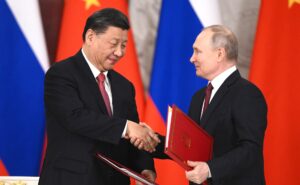
Authoritarians are evolving — becoming more unconstrained and repressive at home, and more destructive on the global stage. The following essays unpack the authoritarians’ toolkit, revealing their strategies for taking power and upending the liberal world order.
On March 11, Ukraine agreed to a thirty-day ceasefire with Russia. But Vladimir Putin is holding out, insisting that his harsh demands must first be met. Does Putin really hold all the bargaining chips, or is he weaker than we think?

There’s a fine line between genuine cybersecurity and digital authoritarianism. Many autocrats use the pretext of digital order to surveil, silence, and suppress their citizens. State cyber repression creates a climate of fear around social media and the internet, shrinking one of the last remaining spaces for free speech.
The ten most-read online exclusives this year focused on the Russia-Ukraine war as well as events in China, Iran, Western Europe, and Latin America.

The latest issue of the Journal of Democracy covers important and alarming global trends, including political polarization and rising illiberalism, as well the struggle between autocrats and democrats in Africa, Latin America, South Asia, and beyond. Read it before it goes behind a paywall.

Artificial Intelligence has become autocrats’ newest tool for surveilling, targeting, and crushing dissent. But this supercharged technology doesn’t need to favor tyrants. Activists must learn how to harness it in the fight for freedom.
The Reagan-Fascell Democracy Fellows Program at the NED invites applications for fellowships in 2014–15.
October 8, 2013

Moscow and China pose a great danger to the democratic world. But they pose threats that need to be managed, not won. Every great foreign-policy battle doesn’t end with a decisive victory.

Georgia’s opposition is facing a pivotal election. But it isn’t enough to win: They need to be prepared to move quickly, mobilize the public, and force the regime to concede.
Putin’s war on Ukraine, AI’s threat to democracy, and democracy’s crisis of confidence have been at the forefront of readers’ minds this month. Read May’s top 10 essays for free now!
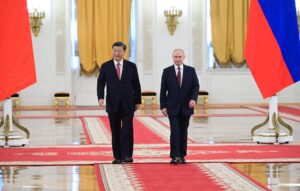
Xi Jinping, Vladimir Putin, and Narendra Modi, along with the presidents of Turkey, Iran, and other states are working together to amass power at home and project it abroad. These essays explain how they’re doing this, and what democracies can do to prevent it.

Latin American voters are aggrieved, impatient, and eager to elect candidates who offer a break with the past—sometimes whatever that break may be. This factor, combined with high crime and middling economic growth, has led to wild swings and shrinking political rights. But can the region get itself unstuck?

Beijing is bent on curbing democratic freedoms and imposing totalitarianism at home and abroad. The following Journal of Democracy essays dissect China’s influence operations and offer ways for even fragile democracies to combat autocratic influence.

On November 19, a Hong Kong court sentenced 45 prominent prodemocracy activists to years in prison in the biggest crackdown yet under the city’s draconian, Beijing-imposed National Security Law. The Journal of Democracy essays below, free for a limited time, detail Hong Kong’s decades-long fight for freedom, and the CCP’s unrelenting repression.

If mainstream parties don’t listen to voters, extremists will be rewarded at the ballot box.

In February, the West African country appeared to be on the cusp of chaos as its president tried to seize power for himself. How Senegal became one of 2024’s biggest democratic success stories.