
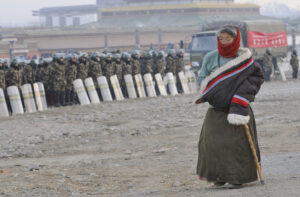
Beijing Wants to Erase Tibet’s Name. Don’t Let Them.
The Chinese Communist Party is attempting to rename the Tibetan people’s homeland, part of a wider effort to eradicate Tibet’s cultural identity. For Tibet, it’s more than just a name.
2772 Results
The Chinese Communist Party is attempting to rename the Tibetan people’s homeland, part of a wider effort to eradicate Tibet’s cultural identity. For Tibet, it’s more than just a name.
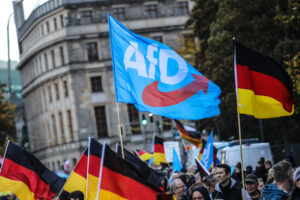
For years, they were a fringe vote. Now they are broadening their agenda, tapping into voter frustration, and getting Germans to favor them once again.

The suffragists imagined that a greater role for women in democratic politics would lead to a more peaceful world. Few realize how right they were.
ABOUT THE EVENT A populist and illiberal tide is gaining strength across the globe, posing a serious threat to liberal democracy. Prominent political scientists and commentators William A. Galston and Yascha Mounk discussed the factors fueling populism’s rise and how democracies can effectively respond. Both Galston and Mounk have written articles addressing these questions that appear in the April…
April 3, 2018
Larry Diamond, the leading scholar of democracy, helped to found the Journal of Democracy more than 32 years ago. “Democracy’s Arc: From Resurgent to Imperiled,” published on the eve of the war in Ukraine, was his final essay as our coeditor. But Larry penned numerous pieces for the Journal. Ten of these landmark essays are…
Is global democracy really in freefall? Here’s what they think.
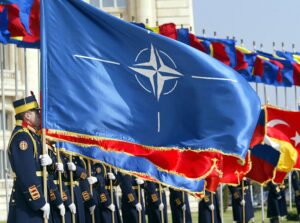
For 75 years, NATO has played a crucial role in defending democracy across the West. The following Journal of Democracy essays track NATO’s role in supporting democracy’s fight against autocracy.
Reports on elections in Rwanda, Syria, and Venezuela.
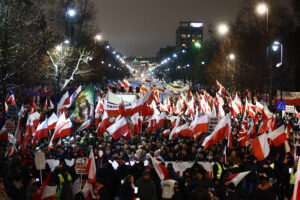
The biggest election in this “year of elections” is finally over. In contests across the world, voters have spoken. But what do their choices tell us about the state of democracy globally?

DeepSeek’s new frontier AI model is the CCP’s most powerful tool yet for surveillance and control. The following Journal of Democracy essays show how authoritarian governments leverage emerging tech to enhance repression. Read free for a limited time.
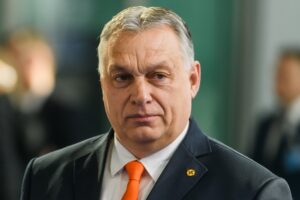
Viktor Orbán, a proud advocate for “illiberal democracy,” has become a favorite of the far-right by using the tools of democracy against democracy. His secret? Restructuring Hungary’s political playing field in favor of his ruling party, effectively locking in his power with the force of law.
What explains democracy’s declining fortunes — governments’ failure to deliver or institutions’ failure to stop power-hungry leaders? Why Ukraine’s defeat would jeopardize the entire liberal-democratic order. And how Syria must navigate the complexities of transitional justice and sectarian violence now that the hard work of rebuilding has begun.

The country’s polls were marred by delayed results and charges of rigging. Worse, they might plunge Pakistan into an even deeper political crisis.

Our rising levels of inequality have put its ideals in crisis. These are the simple principles that can help bring it back from the edge.
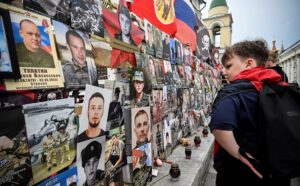
The Kremlin works hard to indoctrinate Russia’s youth to support Putin’s war in Ukraine. But a strong percentage support an immediate ceasefire and don’t think it’s a cause worth dying for.
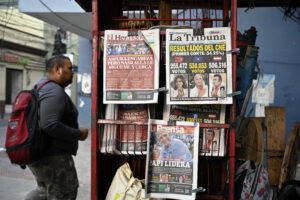
Days after the election and no one knows who the next president will be. Even worse, none of the likely winners offer much hope for the country’s democracy.

He has created a new office with massive investigatory powers that are vaguely defined and leave everyone on edge. In other words, it’s classic Orbán.
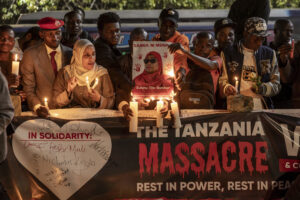
Tanzania’s October election was a sham. When people rose up in protest, the regime responded with a brutal crackdown. That reign of terror marks a turning point for the country, and there is no going back.
"The Authoritarian Resurgence: China, Russia, Saudi Arabia, and Venezuela" panel discussion featuring JoD authors Javier Corrales, Andrew J. Nathan, Lilia Shevtsova, and Frederic Wehrey. (4/23, 12-2 pm, at NED)
April 14, 2015
Reports on elections in Azerbaijan, Belarus, Finland, Indonesia, Iran, Pakistan, Portugal, Russia, and Zimbabwe.