

The Legacy of a True Russian Patriot
Alexei Navalny loved Russia and was willing to risk everything for it. It is hard to grasp the magnitude of his death for his people and his country.
3272 Results
Alexei Navalny loved Russia and was willing to risk everything for it. It is hard to grasp the magnitude of his death for his people and his country.
July 2008, Volume 19, Issue 3
The rise of Islamist parties poses new challenges to efforts to understand the relationship between Islam and democracy. A diverse group of authors investigates this new phenomenon and its implications for the future of democracy in the Middle East.

April 2025, Volume 36, Issue 2
When the “third wave” reached Latin America in the 1970s and 1980s, it brought major advances for democracy. By the first decade of the current century, however, advances had given way to stasis and even erosion.

October 2025, Volume 36, Issue 4
Although an island of stability and democracy in a region often short of both, Costa Ricans’ faith in government is declining as the challenge of financing its costly welfare state grows. This democratic stalwart is no longer immune to the appeal of populism.
January 2018, Volume 29, Issue 1
Takis Pappas argues that certain nativist parties of the populist right should be counted as liberal-democratic. This is a mistake; these parties do not truly merit that name.
January 2015, Volume 26, Issue 1
From small beginnings, democracy aid has become a sizeable enterprise. Today it is beset by problems, however, as it must operate in a less friendly environment. Hard decisions will need to be made to maintain its relevance.
October 2014, Volume 25, Issue 4
Levitsky and Way’s account of linkage and leverage leaves out the key role of “gatekeeper” elites.

July 2024, Volume 35, Issue 3
LGBT+ rights are under threat across the globe. Populist leaders stirring fear and animosity for political gain understand how democratic institutions can be harnessed and manipulated to curtail these rights, not enshrine them.
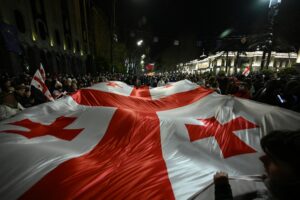
Even as the ruling party has grown more repressive, the people have swarmed the streets in protest — every day. The protesters know the government’s true goal is to appease Russia, and Georgians will never accept it.
October 2014, Volume 25, Issue 4
Modi promised “good days” to aspiring young Indians, and they voted for him in droves. But he is off to a slow start in carrying out the economic reforms necessary to ensure that better days lie ahead.
January 2012, Volume 23, Issue 1
The AKP’s 2011 election victory confirmed its status as the dominant force in Turkish politics, but also sparked fears that its unchecked power might threaten civil liberties. Now it must face the challenges of adopting a new constitution and dealing with the Kurdish question.
October 2024, Volume 35, Issue 4
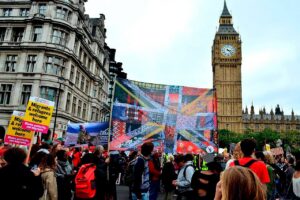
Some liberals attribute the origins of our polarized political era to “identity politics.” But multiculturalism need not provoke majoritarian anxieties — not if national identities can open ways for all citizens to be recognized and heard.
January 2023, Volume 34, Issue 1
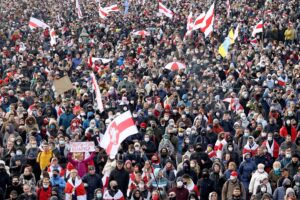
The record shows that movements using “dilemma actions”—creative protests that make a regime look foolish—are often more effective at undermining authoritarians. Activists should add such tactics to their toolkit.
January 2018, Volume 29, Issue 1
One of the world’s worst public-corruption scandals shows how a lax international financial system enables massive graft in developing countries.
October 2015, Volume 26, Issue 4
A close look at secular parties in the Middle East today raises doubts about whether they are ready for prime time.
October 2007, Volume 18, Issue 4
The countries of Central and Eastern Europe successfully transitioned to democracy. Do their ongoing political problems exist today because of or in spite of the European Union?

January 2025, Volume 36, Issue 1
The 2024 election led to a dramatic changing of the guard, ushering in new political leaders and ousting dynastic elites. Can a new president correct the corruption and misgovernance of the past?

July 2023, Volume 34, Issue 3
It is true that politics under the BJP is a break from the past. But attempts to reduce the country’s present condition to democratic backsliding misunderstands the moment and is an injustice to India’s journey as a democracy.
October 2019, Volume 30, Issue 4
In 2011–13, the undemocratic political outlook of both secular and Islamist actors helped to ensure the failure of democracy in Egypt. Today, the populace appears to have backed away from democratic demands, yet pockets of resilient activism offer a basis for hope.

October 2025, Volume 36, Issue 4
When Israel’s democratic safeguards came under attack, Israeli political scientists felt they had a duty to spread a shared, nonpartisan understanding of the dangers of democratic backsliding. Here is how they organized, built channels of communication, and reached the public.