
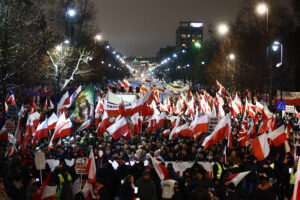
What Comes Now?
The biggest election in this “year of elections” is finally over. In contests across the world, voters have spoken. But what do their choices tell us about the state of democracy globally?
3272 Results
The biggest election in this “year of elections” is finally over. In contests across the world, voters have spoken. But what do their choices tell us about the state of democracy globally?
Journal of Democracy Web Exchange – Voeten_0 Erik Voeten–Are People Really Turning Away from Democracy?

Viktor Orbán, a proud advocate for “illiberal democracy,” has become a favorite of the far-right by using the tools of democracy against democracy. His secret? Restructuring Hungary’s political playing field in favor of his ruling party, effectively locking in his power with the force of law.
Drawing on their essays in the October 2011 and January 2012 issues of the Journal of Democracy, Andrew Reynolds and John Carey discussed the constitutional and electoral designs chosen by Tunisia, Libya, and Egypt.
March 29, 2012

A free market can foster pluralism and insulate civilians from authoritarian coercion. But money used the wrong way has enormous potential for destruction. The Journal of Democracy essays below, free for a limited time, explore the complex relationship between capitalism and democracy.
The Aug. 22 Washington Post editorial "China’s Half-Measure on the Rule of Law" cites Carl Minzner's JoD essay "China Tipping at Point: The Turn Against Legal Reform."
August 28, 2013
Marc Plattner tackles this question in an interview with the Levada Center's Denis Volkov.
April 6, 2015
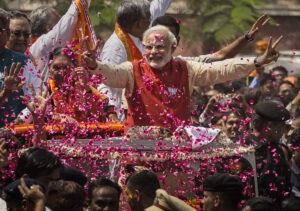
Democratic institutions, norms, and practices have been under threat in India. Should the country’s democracy fail, it will affect not only the lives of 1.4 billion Indians, but also democracy movements around the world.
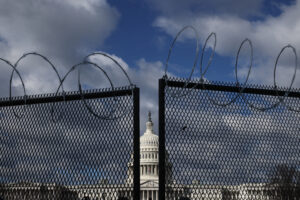
Rachel Kleinfeld and Nicole Bibbins Sedaca detail the dangers of deep polarization and lay out steps that leaders and citizens can take to stop the violence.
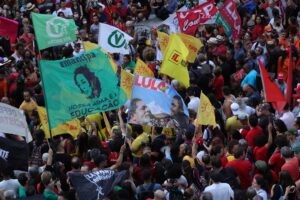
How resilient are democracies, really? While many countries have gone from democratic to authoritarian and back again, few have been able to sustain their recovery. The following essays offer strategies for defending and deepening democracy around the world.
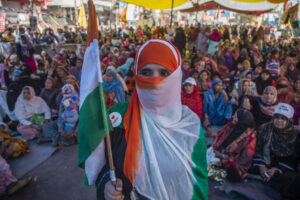
Prime Minister Narendra Modi and his Hindu-nationalist BJP explicitly exclude and routinely attack the country’s largest minority, but the political opposition is silent, too afraid to jeopardize its base of support. These essays explore India’s complex democratic history and its prospects for the future.

Donald Trump won a second — and, this time, overwhelming — victory on November 5. As the United States and the world take stock, the Journal of Democracy is looking back at 2016 and Trump’s unlikely rise to power.

Autocrats rely on propaganda and censorship to manipulate public opinion and maintain control. Journalists, activists, and the public must work together to counter media manipulation and keep press freedom alive.
Democracy in East Asia: A New Century, the latest in the Journal of Democracy book series, is now available.
April 26, 2013
In the new JoD podcast, Adrienne LeBas discusses her recent essay "A New Twilight in Zimbabwe? The Perils of Power Sharing."
June 20, 2014
Fareed Zakaria cites Pei’s “China: Totalitarianism’s Long Shadow” to explain the durability of China’s single-party regime.