
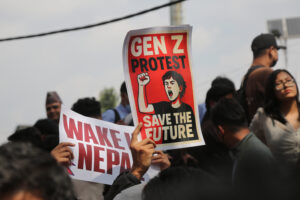
Why South Asia’s Regimes Keep Falling
The government of Nepal has become the third South Asian government to collapse amid mass protests in three years. It will take more than elections to restore stability. Young protesters want to see real change.
1256 Results
The government of Nepal has become the third South Asian government to collapse amid mass protests in three years. It will take more than elections to restore stability. Young protesters want to see real change.

The South American country may be on the verge of real change. But it isn’t going to descend into civil-war chaos like Libya. It will be difficult, imperfect, and far better than what Venezuelans have had to endure.

When voters are asked to cast ballots for or against important national policies — whether to draft or adopt a new constitution, to abolish or reinstate term limits, or, perhaps most famously, to leave or remain in the European Union — they take that job seriously. Yet national referendums are not always put forward in…

The small Latin American country was a brief democratic bright spot. But it appears to have fallen victim to a clash between populists and anti-populists, without a democrat in sight.
These excerpts pertain to Rachid al-Ghannouchi and the challenge of blending Islam and democracy.
October 3, 2011
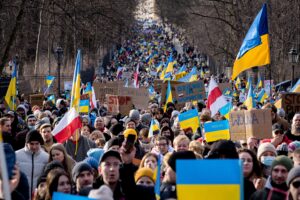
His military didn’t just fail. Ordinary Ukrainians, Russians, and people across the globe are creatively and nonviolently protesting Putin’s war on Ukraine, and they are making a difference.

After losing a confidence vote and triggering snap elections, can Olaf Scholz lead mainstream parties back to power, or will more radical forces prevail?
Six new podcast episodes featuring JoD authors discussing their essays with political scientists, historians, and journalists. Listen, read, and learn!
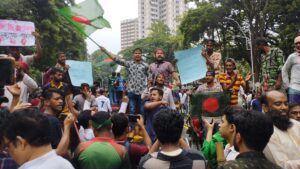
Last week, a Bangladeshi court convicted deposed prime minister Sheikh Hasina of crimes against humanity and sentenced her to death. Hasina, now exiled in India, was ousted by a student uprising in August 2024 after unleashing a vicious crackdown on protesters, killing more than a thousand.

The election of Rodrigo Paz Pereira as Bolivia’s new president signals the end of the MAS era. But it is more than an end to Evo Morales’s leftist party. It showcases how Indigenous political power has transformed the country’s political landscape.

Why are the French protesting this time? Emmanuel Macron is imposing deeply unpopular reforms, and it’s one of the only ways left to check an arrogant and tone-deaf president.

The popular Chinese-owned app is enabling Beijing to collect data on people nearly everywhere. Not only can such platforms track people’s preferences and whereabouts, but they give the Chinese government control over a powerful tool for shaping people’s worldview.

The last Soviet leader brought down his regime and ended the Cold War. The free world owes him a debt of gratitude.

Alexis de Tocqueville’s Democracy in America is as insightful today as in 1835. On this Fourth of July, the Journal of Democracy is sharing three essays reflecting on the prescience of Tocqueville’s observations from nearly two centuries ago.
Washington is pressuring Ukraine to agree to a peace deal with Russia that bows to many Russian demands while leaving Ukraine vulnerable. Robert Person argues that Putin cannot be trusted and Kyiv must not surrender to these demands.

The French president risked it all to hand the far right a stinging loss. But the celebration can’t last long. If the country is to avoid greater political chaos, voters must be encouraged to think about broader coalitions that go beyond a narrow left-right divide.

Masoud Pezeshkian won’t be a “reformer” in any genuine sense. Like all Iranian presidents, he has pledged his loyalty to Iran’s supreme leader. What he really offers is a softer version of Iran’s grim repression.