
April 2003, Volume 14, Issue 2
Latin America’s Lost Illusions: The Future of Structural Reform
As Latin America suffers from its worst economic crisis in decades, the reform of political institutions remains the region’s best hope.
2024 Results
April 2003, Volume 14, Issue 2
As Latin America suffers from its worst economic crisis in decades, the reform of political institutions remains the region’s best hope.
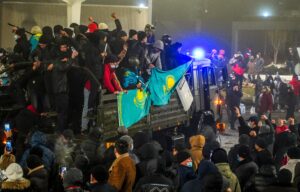
Thousands took to the streets to protest. While the regime promises to listen, its actions make clear: Dissent will not be tolerated.
January 2016, Volume 27, Issue 1
Excerpts from: remarks given by Iranian historian Ladan Boroumand at the opening of the Eighth Assembly of the World Movement for Democracy; a speech given by Venezuelan opposition leader Jesús Torrealba; remarks given by Russian opposition activist Vladimir Kara-Murza as as he accepted on behalf of slain opposition leader Boris Nemtsov a posthumous freedom award.
January 2000, Volume 11, Issue 1
Excerpts from: a statement by Cuban dissidents entitled “All United”; a letter by former dissidents of the Soviet bloc to the so-called “Group of Four” critics of the Castro regime in Cuba; an address delivered by the Commonwealth’s outgoing secretary-general Chief Emeka Anayaoku; the “Seoul Statement” on human rights in North Korea; Abdurrahman Wahid’s speech…
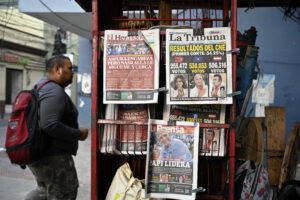
Days after the election and no one knows who the next president will be. Even worse, none of the likely winners offer much hope for the country’s democracy.
January 1999, Volume 10, Issue 1
On the evening of 20 November 1998, Galina Vasilievna Starovoitova was shot to death outside her St. Petersburg apartment. She was the sixth member of the Russian Duma to have been murdered since that body’s creation in 1993. Most observers agree that this was a political assassination. Starovoitova was a tireless, persistent voice for freedom,…
January 2001, Volume 12, Issue 1
Excerpts from: a statement by Yugoslav presidential candidate Vojislav Kostunica; Mexican president Vicente Fox’s inaugural address; the declaration of Syrian president Bashar Al-Assad.
January 2023, Volume 34, Issue 1
McKinsey’s work is bankrolled by major corporations and governments around the world. How should the famous consulting firm choose the clients it represents and the projects it takes on?
July 1998, Volume 9, Issue 3
India has long baffled theorists of democracy. Democratic theory holds that poverty, widespread illiteracy, and a deeply hierarchical social structure are inhospitable conditions for the functioning of democracy. Yet except for 18 months in 1975-77, India has maintained its democratic institutions ever since it became independent of Britain in 1947. Over those five decades, there…
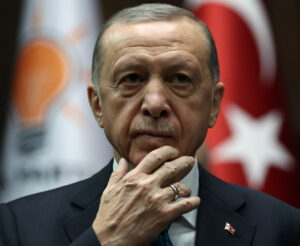
The Turkish president came to power as an antiestablishment everyman. Twenty years later he is an authoritarian leader clinging to power. Will the forces that catapulted him to power be his demise? | Philip Balboni

July 2015, Volume 26, Issue 3
Rwanda under Paul Kagame has been hailed for its visionary leadership, economic progress, and reforms in education, health, and agriculture. Yet the regime’s autocratic rule, human-rights abuses, persecution of the Hutu majority, and growing inequality point to an ominous future.
October 2014, Volume 25, Issue 4
The protests that have been erupting around the world may signal the twilight of both the idea of revolution and the notion of political reformism.
April 2013, Volume 24, Issue 2
In light of the “Arab Spring,” how should students of democratic transition rethink the relation between religion and democracy; the nature of regimes that mix democratic and authoritarian features; and the impact of “sultanism” on prospects for democracy?
October 2017, Volume 28, Issue 4
Liberal democracy can never put down truly firm roots in Asia unless and until the fundamentals of democratic constitutionalism take hold. There are seven practical imperatives that friends of constitutionalism in the region must pursue.
April 2013, Volume 24, Issue 2
Greece was an early success story of the “third wave,” but since the 2008 financial crisis, it has become a poster child for the pains of austerity and unrest. Its troubles at one level are fiscal and economic, but there is a political dimension that may be even more critical.
January 2014, Volume 25, Issue 1
In 2013, Bulgaria’s historically passive citizenry exploded in outrage over soaring energy bills and shady elite actions. What does Bulgaria’s year of protest tell us about how civic anger is generated and when it becomes a transformative political resource?
October 2023, Volume 34, Issue 4
Almost no one expected a little-known candidate to defeat the ruling antidemocratic regime at the ballot box. But the Guatemalan opposition, backed by the international community, exploited the criminal oligarchy’s fissures to halt the country’s authoritarian slide.
October 2023, Volume 34, Issue 4
Theocratic democracy, the de facto grand bargain between religious groups and political leaders, offers key insights into the relationship between faith, freedom, and the global democratic recession.
January 2022, Volume 33, Issue 1
Tunisia’s once-promising democratic transition had long failed to de-liver on its promises. It was a crisis waiting to be exploited. Kais Saied is simply the man who set it aflame.