
April 2004, Volume 15, Issue 2
Change in Uganda: Museveni’s Machinations
Uganda’a move to a multiparty system is really a maneuver by President Yoweri Museveni to prolong his stay in power beyond the two-term limit mandated by the constitution.
2785 Results
April 2004, Volume 15, Issue 2
Uganda’a move to a multiparty system is really a maneuver by President Yoweri Museveni to prolong his stay in power beyond the two-term limit mandated by the constitution.
October 2003, Volume 14, Issue 4
Four years after his bloodless coup, Pervez Musharraf is executing a military “exit strategy” from politics that involves lots in the way of problematic strategy and little in the way of real exit from political power.
October 2003, Volume 14, Issue 4
The rules that govern voting will always be of vital importance in any democracy. The beginning of wisdom is to turn from the usual focus on electoral systems in order to reflect on larger goals and the trade-offs among them that may be necessary.
April 2003, Volume 14, Issue 2
After enduring years of paternalism punctuated by trauma, Turkish voters have pointed their country in a new direction.
April 2003, Volume 14, Issue 2
Decentralization, heralded as a means of increasing state efficiency and improving representation, has fragmented Latin America’s already weak party systems
January 2003, Volume 14, Issue 1
The Communist Party’s adaptation to China’s new social elites will lead to a democratic transition only, if at all, at the expense of regime continuity.
July 1998, Volume 9, Issue 3
Indians appear to love the practice of democracy so much that they are in danger of overdoing it. In February and March of 1998, the world's largest democracy held its twelfth general election since gaining its independence a half-century ago. The voting was largely fair and peaceful. New, right-of-center rulers led by the Bharatiya Janata…
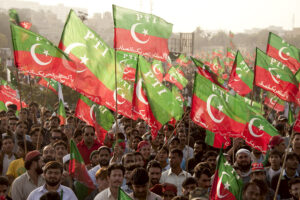
July 2024, Volume 35, Issue 3
Pakistani voters sent the military a message in the February elections: They no longer trust the “guardian of the country.” Worse for the generals, they can no longer escape accountability for their corruption and incompetence because everyone knows the military is in charge.
July 2012, Volume 23, Issue 3
Ghana has won praise for its steady progress toward democratic consolidation. In late 2010 it joined the ranks of the world’s oil producers. Will the democratic institutions be able to resist the “resource curse”?
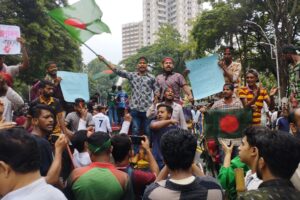
January 2025, Volume 36, Issue 1
The student movement that toppled Bangladesh’s longtime autocratic ruler wants more than a return to the old order. These young revolutionaries are seizing a chance to start anew. How and by whom will the country’s future be decided?
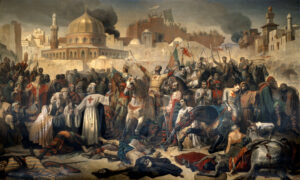
July 2025, Volume 36, Issue 3
The most challenging type of diversity for democracy is religious diversity. This also helps explain why modern democracy first took root in Western Europe: Religiously homogenous populations went hand in hand with the early formation of parliaments.

October 2018, Volume 29, Issue 4
From enhancing physical security to encouraging mutual trust, an inclusive sense of national identity continues to be crucial to the flourishing of modern states.
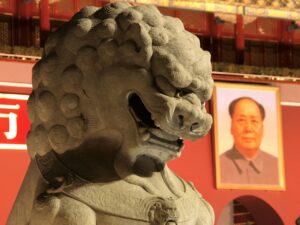
January 2003, Volume 14, Issue 1
Successful institutionalization will help the regime survive the pressures of advanced modernization and integration with the global economy.
January 2008, Volume 19, Issue 1
Excerpts from: a Washington Post op-ed written by U Gambira, a pseudonym for the leader of the All-Burma Monks Alliance; remarks by Liberian president Ellen Johnson Sirleaf, accepting the W. Averell Harriman Democracy Award; the keynote address given by Indonesian president Dr. Susilo Bambang Yudhoyono at the 40th Annual Conference of the International Association of Political…
January 2015, Volume 26, Issue 1
Excerpts from: an open letter by the Hong Kong Federation of Students to Chinese premier Li Keqiang; the campaign manifesto of former finance minister Ashraf Ghani, who was proclaimed Afghanistan’s president; the third annual Carlos Cardoso Memorial Lecture; an open letter calling for the release of human-rights activist Liu Xiaobo.
April 1994, Volume 5, Issue 2
Excerpts from: speeches by ANC President Nelson Mandela and South African President F.W. De Klerk from the International Press Institute’s 43rd General Assembly; a UN General Assembly resolution criticizing the continuing denial of human rights and democracy in Burma (Myanmar).
April 2002, Volume 13, Issue 2
Excerpts from: a resolution adopted by the Third International Conference on North Korean Human Rights and Refugees; Eduardo Duhalde’s first address as president of Argentina; the opening address of Hussain Sinjari a a seminar entitled “Prospects for Democracy in Iraq”; the introductory speech of the European Convention by Convention chairman, former French president Valéry Giscard-d’Estaing.
April 2001, Volume 12, Issue 2
Reports on elections in Benin, Cape Verde, Côte d’Ivoire, Ghana, Moldova, Samoa, Thailand, Trinidad and Tobago, and Yugoslavia (Serbia).

July 2007, Volume 18, Issue 3
Sub-Saharan Africa has been traditionally depicted as a place where formal institutional rules are largely irrelevant-yet in the past fifteen years these rules have come to matter, and this trend is unlikely to reverse.
April 2002, Volume 13, Issue 2
Although Islamist terror groups invoke a host of religious references, the real source of their ideas is not the Koran but rather Leninism, fascism, and other strains of twentieth-century thought that exalt totalitarian violence.