
July 2010, Volume 21, Issue 3
In Praise of Václav Havel
A tribute to Václav Havel, Czech playwright and former dissident, who became not only president but the symbol of the “velvet revolutions.”
2785 Results
July 2010, Volume 21, Issue 3
A tribute to Václav Havel, Czech playwright and former dissident, who became not only president but the symbol of the “velvet revolutions.”
January 2010, Volume 21, Issue 1
This is a central problem—perhaps the central problem—for classical liberal theory and its crucial distinction between the state of nature and the civil state. Which is better for liberty: nature or the state?
October 2009, Volume 20, Issue 4
The recent global progress of democracy has been accompanied by increasing economic inequality. What are the implications for the quality of democracy and for its ability to endure?
October 2009, Volume 20, Issue 4
Democracy in India remains robust, but the scope and intensity of the corruption that pervades the political system are steadily eroding public trust.
April 2009, Volume 20, Issue 2
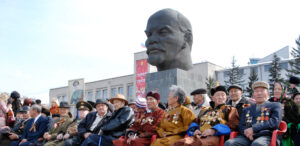
There is no consensus about the nature of the political system in Moscow today. Yet how one understands the motivations propelling Russian policy abroad depends on how one understands its regime at home.
April 2009, Volume 20, Issue 2
A fan of Mario Puzo’s Godfather novels will see the Putin government for what it is: a mafia.
April 2009, Volume 20, Issue 2
Read the full essay here. Arguably a flawed democracy in the 1990s, Russia took a distinctly authoritarian turn under President Vladimir Putin from 2000 to 2008. The country now lives under a façade democracy that barely conceals the political and administrative dominance of a self-interested bureaucratic corporation. The regime manufactures consent by means of three…
April 2009, Volume 20, Issue 2
Read the full essay here. Twenty years ago, there was a more thoroughgoing political pluralism in Russia than there is today. In some respects, the forms of democracy-including party consolidation-have been enhanced, but they have been so manipulated as to deprive them of substance. Either “electoral authoritarianism” of “multiparty authoritarianism” (Juan Linz’s terms) may reasonably…
April 2009, Volume 20, Issue 2
Ghana held its fourth successful elections in late 2008 and subsequently witnessed the peaceful handover of power from ruling party to opposition. The country’s leaders must now reform its institutions of governance.
January 2009, Volume 20, Issue 1
Levels of regime strength and links to the West help to explain authoritarian breakdown, but the ruler’s popularity also matters.
January 2009, Volume 20, Issue 1
A decade after the handover of their city to China, Hong Kong’s “pandemocrats” remain able to stand their ground at the ballot box.
April 2008, Volume 19, Issue 2
Despite key improvements during Néstor Kirchner's presidency, Argentine democracy remains vulnerable to crisis. The near collapse of the party system and weakness of political and economic institutions continue to threaten stability.
October 2007, Volume 18, Issue 4
To understand how East-Central European societies have evolved since 1989, we must understand the building blocks that contribute to the establishment and functioning of open societies.
April 2007, Volume 18, Issue 2
Tiny Montenegro gained its independence in a referendum in May 2006. What forces lay behind its completely peaceful break from its much larger neighbor, Serbia?
January 2007, Volume 18, Issue 1
Examining Mexico’s electoral rules, political institutions, and the ways in which they interact with one another can tell us much about how current difficulties developed and how they might be resolved.
January 2007, Volume 18, Issue 1
Democracy is and always will be in some kind of crisis, for it is constantly redirecting its citizens’ gaze from a more or less unsatisfactory present toward a future of still unfulfilled possibilities.
July 2006, Volume 17, Issue 3
On the surface, intelligence-sector reform since the fall of apartheid has been a model of success, but the growing politicization of security-sector forces by the ruling ANC may pose a threat to the consolidation of South Africa's young democracy.
April 2006, Volume 17, Issue 2
The March 2005 “Tulip Revolution” that toppled President Askar Akeyev is often grouped with the “color revolutions” in Georgia and Ukraine, but in many ways the Kyrgyz case was unique.
October 2004, Volume 15, Issue 4
Responsiveness may be conceived as a series of linkages intended to ensure that governments respect the preferences of the governed.
April 2004, Volume 15, Issue 2
A through, deliberat, and consultative constitution-making process, which takes account of key lessons learned in other countries, will be essential to the legitimacy of a new Iraqi constitution and to the future of democracy.