
April 2007, Volume 18, Issue 2
India’s Unlikely Democracy: Civil Society Versus Corruption
Pervasive corruption hampers India's democracy, yet anticorruption movements may be helping to improve governmental accountability.
3264 Results
April 2007, Volume 18, Issue 2
Pervasive corruption hampers India's democracy, yet anticorruption movements may be helping to improve governmental accountability.
January 2007, Volume 18, Issue 1
When Abdullah Ahmad Badawi succeeded Mahathir Mohamad as prime minister in 2003, many expected far-reaching change in Malaysia. So far, however, turnover at the top has not led to significant democratic progress.
January 2007, Volume 18, Issue 1
Democracy is and always will be in some kind of crisis, for it is constantly redirecting its citizens’ gaze from a more or less unsatisfactory present toward a future of still unfulfilled possibilities.
October 2006, Volume 17, Issue 4
As leftist victories accumulate, it becomes increasingly clear that they represent a regional trend. But why is this trend happening now, and how far will it spread?
July 2006, Volume 17, Issue 3
January’s remarkably free and fair parliamentary elections broke the PLO’s longstanding monopoly over Palestinian politics. Given Fatah’s disarray and the difficulties facing Hamas, there is now a window of opportunity for a third and avowedly liberal-democratic option to emerge.
July 2006, Volume 17, Issue 3
Authoritarian regimes around the world hold elections and manipulate them every step of the way. How do we understand and work around the challenges these regimes pose to what should be a clean and democratic electoral process?
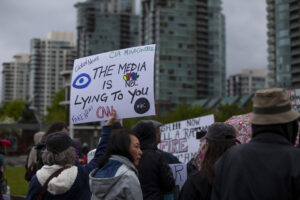
April 2022, Volume 33, Issue 2
Conspiracy theories are not the sole preserve of dictatorships, but a global phenomenon. Worse, the political competition that is inherent to democracy is driving the spread of lies, fake schemes, and half-truths.
April 2005, Volume 16, Issue 2
In three of the six democracies surveyed by the East Asia Barometer, a majority of respondents prefer democracy to its alternatives. In the other three, however, a lingering nostalgia for authoritarianism stands in the way of democratic consolidation.
October 2004, Volume 15, Issue 4
The notion that the Muslim world as a whole does not suffer from a deficit in terms of competitive democracy is apealing, but rests on evidence and assumptions that cannot withstand critical scrutiny.
April 2004, Volume 15, Issue 2
Uganda’a move to a multiparty system is really a maneuver by President Yoweri Museveni to prolong his stay in power beyond the two-term limit mandated by the constitution.
January 2002, Volume 13, Issue 1
The implicit social bargain that carried many East Asian countries through the Cold War has lost its currency. If the peoples of this region are to secure the blessings of peace, liberty, and prosperity in the century ahead, they will need to have a new and explicitly democratic bargain working for them.

July 2020, Volume 31, Issue 3
Although South Korea is praised for its success at fighting covid-19, the triumph came at a cost to rights and privacy, and is drawing attention away from a larger drift toward illiberalism and bitterly factionalized politics.
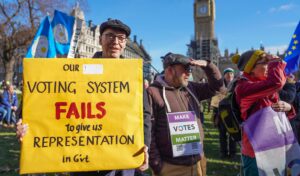
January 2025, Volume 36, Issue 1
Citizens across the globe still value democracy, but they have become dissatisfied with the way it is working. A new era of representation is in order — one featuring more diverse leaders, responsive politicians, and empowered publics.

January 2025, Volume 36, Issue 1
Climate change is an urgent and unparalleled threat. Our best hope lies in radical, principled activism — at once more democratic and more authoritarian.

October 2025, Volume 36, Issue 4
Artificial intelligence and its effects on democracy are a matter of choice, not fate. The concerns are longer term than the recent spate of worry about “generative” AI would suggest. The democratic conversation about AI has hardly begun.

January 2024, Volume 35, Issue 1
Populism is a mortal threat to liberal democracy, but it rarely hits the mark. The evidence shows that these would-be strongmen require an extraordinary set of circumstances to succeed, which is why they so rarely do.

July 2018, Volume 29, Issue 3
Today’s authoritarians are using “sharp power” to project their influence internationally, with the objective of limiting free expression, spreading confusion, and distorting the political environment within democracies.
October 1998, Volume 9, Issue 4
Excerpts from: Mexican president Ernesto Zedillo’s annual address; Thai foreign minister Surin Pitsuwan’s opening statement at a ministerial meeting of the Association of Southeast Asian Nations; a statement by Panamanian president Ernesto Pérez Balladares; a speech by Romanian president Emil Constantinescu addressed to a joint session of the U.S. Congress.
October 1999, Volume 10, Issue 4
Reports on elections in Indonesia, Kuwait, Malawi, and Venezuela.
April 2016, Volume 27, Issue 2
Guatemala, Honduras, and El Salvador are weighed down by high crime, sluggish economies, and heavy reliance on remittances. And when significant political change has taken place, it has resulted in frightening political fragmentation.